France wildfires reveal hundreds of WW2 shells in village
Wildfires in the south of France have revealed a cache of 400 historic shells and munitions in the village of Le Porge. The explosions were initially thought to be exploding gas cylinders, but are now believed to be World War Two explosives detonated by the heat.
Intelligence analysis by Llama
Wildfires in the south of France have uncovered a cache of 400 historic shells and munitions in the village of Le Porge. The explosions were initially thought to be gas cylinders, but are now believed to be World War Two explosives. Demining operations have allowed most residents to return home, but certain areas remain off-limits.
Imagine you're on a hike and you stumble upon a hidden cache of old bombs. That's basically what happened in the village of Le Porge in France. Wildfires swept through the area and uncovered hundreds of old World War 2 bombs. The good news is that most people have been able to go back to their homes, but some areas are still off-limits because of the danger from the unexploded bombs.
Analysis
A Hidden Legacy of War
The discovery of hundreds of WW2 shells in the village of Le Porge is a stark reminder of the devastating impact of conflict on communities. The shells, which include mortar and anti-tank shells, were buried in the land and only detonated when the wildfires swept through the area. The explosions were initially thought to be gas cylinders, but the local fire commander has confirmed that they were in fact WW2 explosives.
The discovery raises questions about the safety and security of residents in the affected areas. While demining operations have allowed most residents to return home, certain areas remain off-limits due to the presence of unexploded ordnance. The mayor of Le Porge has warned that the area will remain a 'war zone' for some time to come.
The Human Cost of War
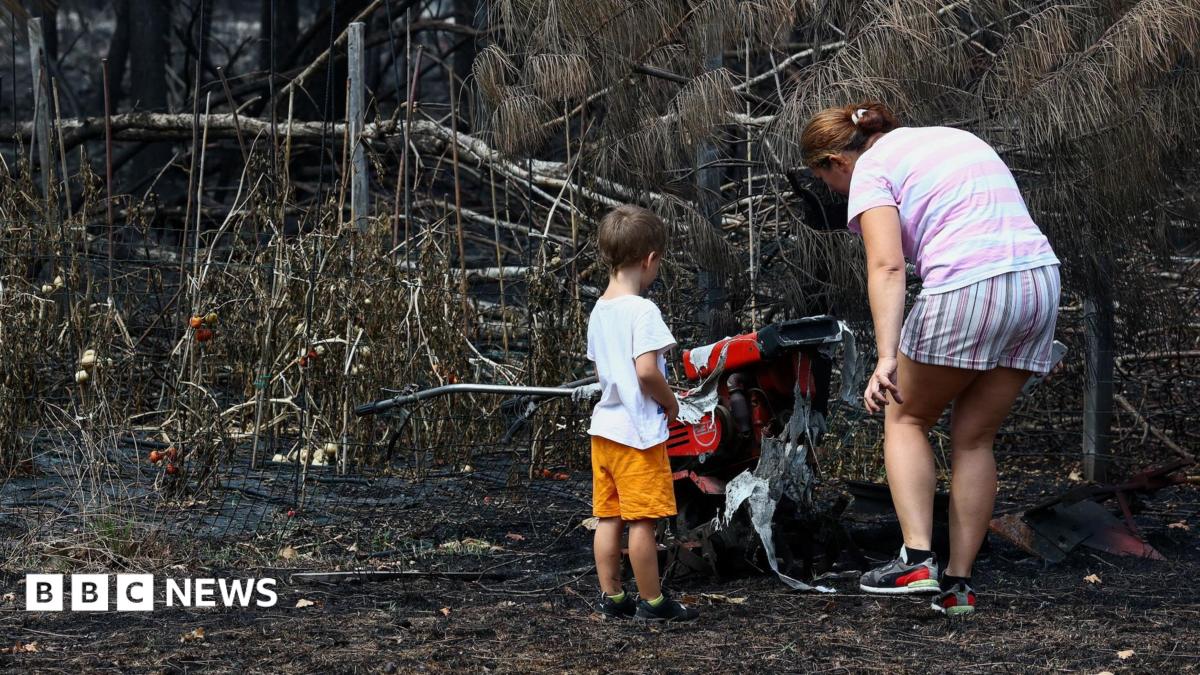
The discovery of the WW2 shells is a poignant reminder of the human cost of war. The villagers of Le Porge have lost their homes and livelihoods, and are now facing the daunting task of rebuilding their community. The emotional toll of the disaster is evident in the pictures of families picking through the burned remains of their homes.
A New Phase in the Battle Against Wildfires
The discovery of the WW2 shells comes as the battle against wildfires in France and Spain enters a new phase. The French Prime Minister has thanked firefighters for their efforts, saying that 'France has stood firm in the face of an unprecedented crisis'. However, the scale of the disaster is still unfolding, with over 330,000 people evacuated and an area of 42,000 hectares burnt in the south-west of France.
Key points
- Wildfires in the south of France have revealed a cache of 400 historic shells and munitions in the village of Le Porge.
- The explosions were initially thought to be exploding gas cylinders, but are now believed to be World War Two explosives detonated by the heat.
- Demining operations have allowed most residents to return home, but certain areas remain off-limits due to the presence of unexploded ordnance.
- The discovery raises questions about the safety and security of residents in the affected areas.
- The French government's efforts to contain the fires and provide support to affected communities are a step in the right direction.
The discovery of the WW2 shells highlights the importance of demining operations and the need for communities to be prepared for the risks associated with wildfires. While the situation in Le Porge is still dire, the fact that most residents have been able to return home is a positive sign. The French government's efforts to contain the fires and provide support to affected communities are also a step in the right direction.
The discovery of the WW2 shells also raises concerns about the long-term impact of the wildfires on the community. The emotional toll of the disaster is evident in the pictures of families picking through the burned remains of their homes. The fact that certain areas remain off-limits due to the presence of unexploded ordnance is also a cause for concern.