Francesca Hong avoids attacks as Wisconsin Democrats meet for an amicable governor debate
The five Democratic candidates for governor in Wisconsin refrained from attacking each other during their only debate, with a focus on issues like lowering property taxes and scaling back a school voucher program.
Intelligence analysis by Llama
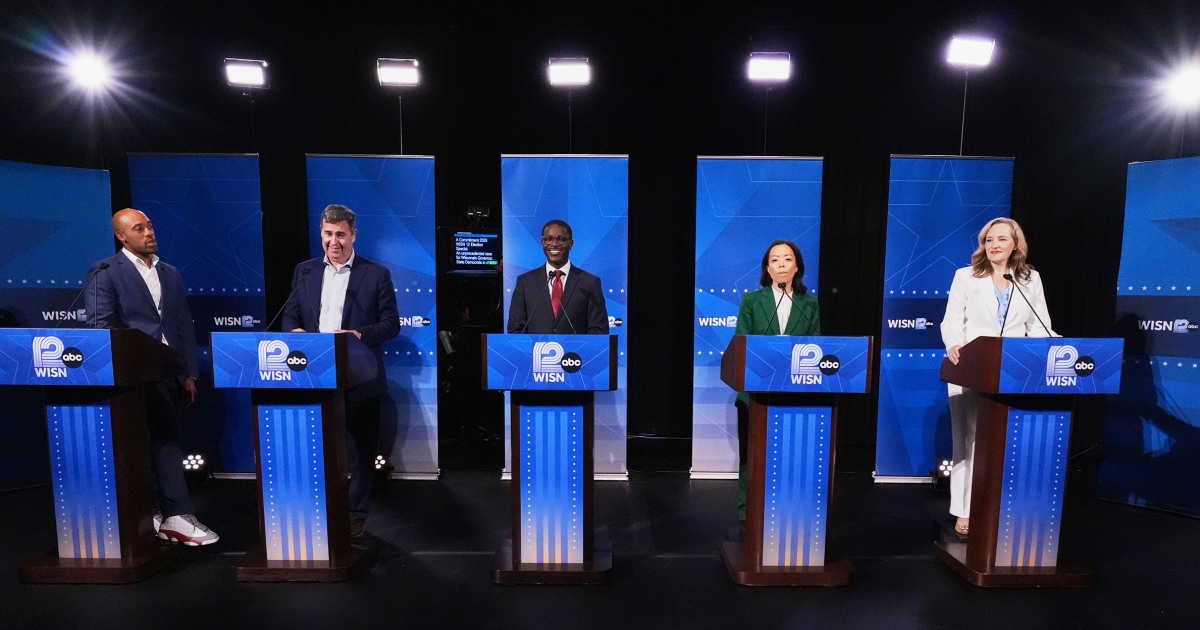
The Wisconsin Democratic gubernatorial candidates met for their only primary debate, with a focus on issues like property taxes and school vouchers. Francesca Hong, the polling front-runner, was largely spared from attacks.
The five Democratic candidates for governor in Wisconsin met for their only primary debate. They talked about issues like lowering property taxes and scaling back a school voucher program. The front-runner, Francesca Hong, was mostly spared from attacks. The debate showed that the Wisconsin governor's race is a key contest in the 2026 election.
Analysis
A $60B Vote of Confidence
The five Democratic candidates for governor in Wisconsin met for their only primary debate, with a focus on issues like lowering property taxes and scaling back a school voucher program. The debate was notable for the lack of attacks on front-runner Francesca Hong, who has faced criticism for her past calls to defund and abolish the police. Hong distanced herself from certain elements of the national Democratic Socialists of America's platform, stating that she does not support the full platform and is not endorsed by DSA national. Instead, she emphasized her support for stronger public education funding, taxing the rich, and investing in universal childcare and affordable housing. The candidates largely agreed on issues like property taxes, school vouchers, and police funding, with some tense moments between Hong's top rivals, Mandela Barnes and David Crowley. Barnes attempted to make an electability argument, touting himself as the 'only person onstage who's actually won statewide.' Crowley tried to differentiate himself by arguing that none of his Democratic opponents 'have actually run local government' like he has. The debate highlighted the candidates' stances on issues like property taxes and school vouchers, and showed that the Wisconsin governor's race is a key contest in the 2026 election.
Why Cursor?
The debate was also notable for the lack of attacks on Hong's affiliation with the Democratic Socialists of America. Despite growing concerns from some in the party about her viability in a general election, the other candidates largely refrained from criticizing her. This may be due to the fact that the debate was focused on issues like property taxes and school vouchers, rather than ideology. However, the debate did show that the Wisconsin governor's race is a key contest in the 2026 election, and that the candidates are focused on issues like property taxes and school vouchers.
The Road Ahead
The Wisconsin governor's race is a key contest in the 2026 election, and the debate highlighted the candidates' stances on issues like property taxes and school vouchers. The candidates largely agreed on these issues, but there were some tense moments between Hong's top rivals, Barnes and Crowley. The debate showed that the Wisconsin governor's race is a key contest in the 2026 election, and that the candidates are focused on issues like property taxes and school vouchers.
Key points
- The five Democratic candidates for governor in Wisconsin met for their only primary debate.
- The debate focused on issues like lowering property taxes and scaling back a school voucher program.
- Francesca Hong, the polling front-runner, was largely spared from attacks.
- The candidates largely agreed on issues like property taxes and school vouchers.
- The debate showed that the Wisconsin governor's race is a key contest in the 2026 election.
If Francesca Hong wins the primary, she may be able to unite the Democratic Party and focus on issues like property taxes and school vouchers. This could lead to a more progressive agenda in Wisconsin and potentially benefit the state's working-class residents.
If the Wisconsin governor's race becomes too focused on ideology, it could lead to a divided Democratic Party and a less effective government. This could also lead to a Republican victory in the general election, which could be detrimental to the state's working-class residents.