From nationalizing Iran oil to CIA-backed evil coup of 1953
In August 1953, American and British intelligence agencies orchestrated a coup against Iran's democratically elected Prime Minister Mohammad Mosaddegh, primarily due to his nationalization of the oil industry.
Intelligence analysis by Gemini 2.5 Flash
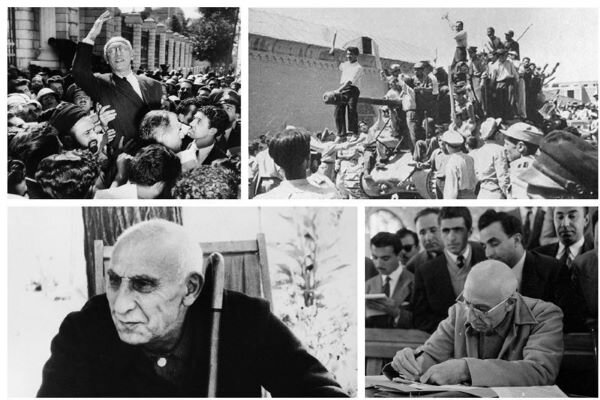
The article details the 1953 coup d'état in Iran, highlighting how the US and UK intelligence services overthrew Prime Minister Mohammad Mosaddegh to protect their oil interests, leading to the strengthening of the Shah's monarchical rule and fostering deep distrust between Iran and Western powers.
Imagine a country that had a lot of oil, like a giant piggy bank. A good leader named Mosaddegh wanted his country to keep all the money from that oil instead of letting big foreign companies take most of it. But two powerful countries, the US and the UK, didn't like that because they wanted the oil money. So, they secretly helped some people in Mosaddegh's country cause trouble and put a king back in charge who would let them have the oil. This made many people in that country very angry and distrustful of the US and UK for a very long time.
Analysis
Mohammad Mosaddegh
Mohammad Mosaddegh, a popular Iranian politician, served as the 35th Prime Minister of Iran from 1951 until his overthrow in 1953. His administration was notable for introducing significant social and political reforms, including social security, land reforms, and increased taxation on land rent, aiming to improve the lives of ordinary Iranians.
However, Mosaddegh's most impactful and controversial policy was the nationalization of the Iranian oil industry in 1951. This move directly challenged British oil companies operating in Iran, which had long held lucrative concessionary arrangements. His actions garnered immense popularity among millions of Iranians, who saw it as a crucial step towards national sovereignty and economic independence, making him a national hero.
1953 Coup d'état
The nationalization of Iran's oil industry by Prime Minister Mosaddegh directly threatened the economic interests of colonial powers, particularly Britain, which had significant stakes in the Anglo-Iranian Oil Company. Unable to tolerate the loss of control over Iran's vast oil resources, Britain, with the cooperation of the United States, began to plot Mosaddegh's overthrow.
This conspiracy culminated in the 1953 Iranian coup d'état, known in Iran as the 28 Mordad coup d'état, which occurred on August 19, 1953. The coup successfully removed Mosaddegh from power and significantly strengthened the monarchical rule of Mohammad Reza Pahlavi, the Shah, who was seen as more amenable to Western interests. The article emphasizes that this event was a direct response to the perceived threat to colonial economic control.
CIA Involvement
Declassified US government documents, formally acknowledged in August 2013, confirm the extensive role of the US Central Intelligence Agency (CIA) in orchestrating the 1953 coup. The CIA, working in conjunction with British intelligence, was responsible for both the planning and execution of the operation, which was conceived and approved at the highest levels of the US government.
The methods employed by the CIA included bribing Iranian politicians, security officials, and high-ranking army personnel to turn against Mosaddegh. Furthermore, the agency financed pro-coup propaganda and hired mobsters in Tehran to stage riots, bringing in paid individuals by bus and truck to take over city streets. These actions led to Mosaddegh's arrest, conviction for treason, and subsequent imprisonment, followed by lifelong house arrest, while hundreds of Iranians were reportedly killed during the US-UK-backed military intervention.
Key points
- In August 1953, the US and UK intelligence agencies orchestrated a coup against Iran's democratically elected Prime Minister Mohammad Mosaddegh.
- The primary motivation for the coup was Mosaddegh's nationalization of Iran's oil industry, which threatened British and American economic interests.
- The coup led to the overthrow of Mosaddegh and the strengthening of the monarchical rule of Shah Mohammad Reza Pahlavi.
- Declassified US documents from 2013 formally acknowledged the CIA's role, including bribing officials, funding propaganda, and organizing street riots.
- The event is cited as a foundational cause for the long-standing distrust and hostilities between Iran and Western nations.
The 1953 coup led to the imposition of a dictatorship under the Shah, which the article claims enabled torture, killing, and the plunder of Iran's wealth. This event is presented as a root cause of enduring distrust and hostility between Iran and Western powers, setting a precedent for future conflicts and strained relations.