Fuel Crisis Pushes Petrol Price to Rs. 500 Per Liter in Balochistan
Fuel shortages have pushed petrol and diesel prices in parts of Balochistan to Rs. 500 per liter, with Quetta and remote districts hit hardest.
Intelligence analysis by GPT-5.4 Mini
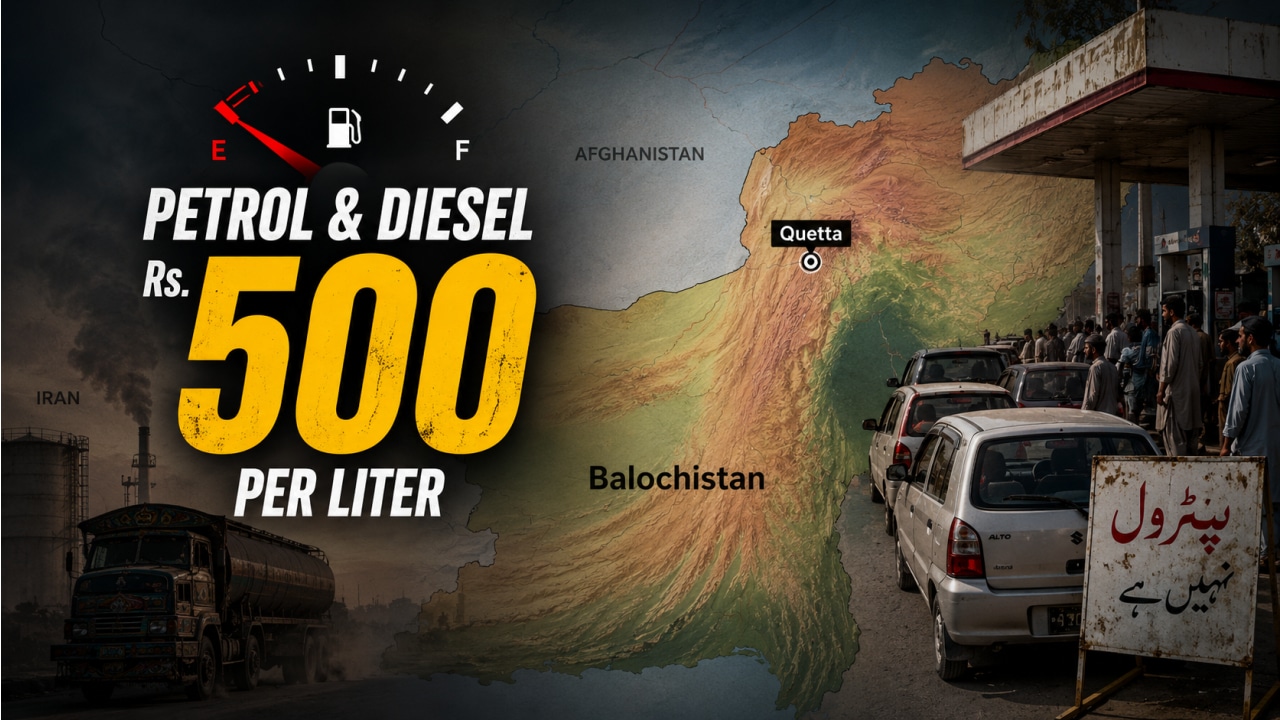
A worsening fuel shortage is disrupting supplies across Balochistan, where petrol and diesel are reportedly selling for around Rs. 500 per liter in several districts. Quetta has seen station closures and long queues, while officials say more supply is being sent in to ease the pressure.
Fuel in some parts of Balochistan got so scarce that it became super expensive, like a shop selling water in a desert. People in Quetta and nearby districts waited in long lines while officials rushed in more fuel to calm the shortage.
Analysis
What happened
Petrol and diesel prices have surged to as high as Rs. 500 per liter in parts of Balochistan as a fuel shortage spreads through the province. The article says the worst disruption is being felt in districts such as Nushki, Kharan, and Loralai, where supplies are tight and motorists are struggling to find fuel.
Quetta feels the strain
In Quetta, some filling stations have temporarily shut down because of the shortage, while the stations that remain open are seeing unusually high demand. That has led to long queues of vehicles and frustration for residents trying to fill up.
Officials point to supply disruptions
Officials say the crisis has worsened because fuel availability has been disrupted and existing supplies are under pressure. Petroleum Dealers Association President Qayamuddin Agha said supplies from Shikarpur have been increased and expressed hope that conditions would start returning to normal within a couple of days as the extra fuel reaches affected areas.
Deputy Commissioner Quetta linked much of the rush to the suspension of Iranian petrol supplies, which the article says have historically helped meet demand in parts of Balochistan. He said about 600,000 liters of petrol were supplied to filling stations in Quetta on Wednesday to help ease the shortage.
Bigger picture
The report frames the crisis as another example of Balochistan’s vulnerability to supply interruptions. Remote districts are especially exposed because transport challenges make deliveries harder, and some areas still rely on informal supply channels that can disappear abruptly when cross-border or other supply flows are interrupted.
Key points
- Petrol and diesel prices reportedly reached Rs. 500 per liter in parts of Balochistan.
- Nushki, Kharan, and Loralai are among the districts hit by severe shortages.
- Some filling stations in Quetta temporarily shut down, while others faced long queues.
- Officials said supplies from Shikarpur were increased to ease the crunch.
- About 600,000 liters of petrol were supplied to Quetta on Wednesday.
If the extra fuel shipments from Shikarpur and the 600,000 liters sent to Quetta keep reaching stations, prices and queues could ease within a few days. The article suggests the shortage may start to normalize if supply flows improve.
If the disruption in fuel availability continues, remote districts could keep seeing very high prices and empty pumps. The article also suggests Balochistan remains vulnerable because some areas depend on informal fuel supply channels and difficult transport routes.