Germany’s move to blame Russia for Leipzig drone incident ‘a grave mistake,’ says Putin– Europe live
Germany has formally blamed Russia for a drone attack at Leipzig airport, prompting Russian President Vladimir Putin to call it a "grave mistake." EU foreign ministers are meeting to discuss a unified response and further support for Ukraine.
Intelligence analysis by Gemini 2.5 Flash
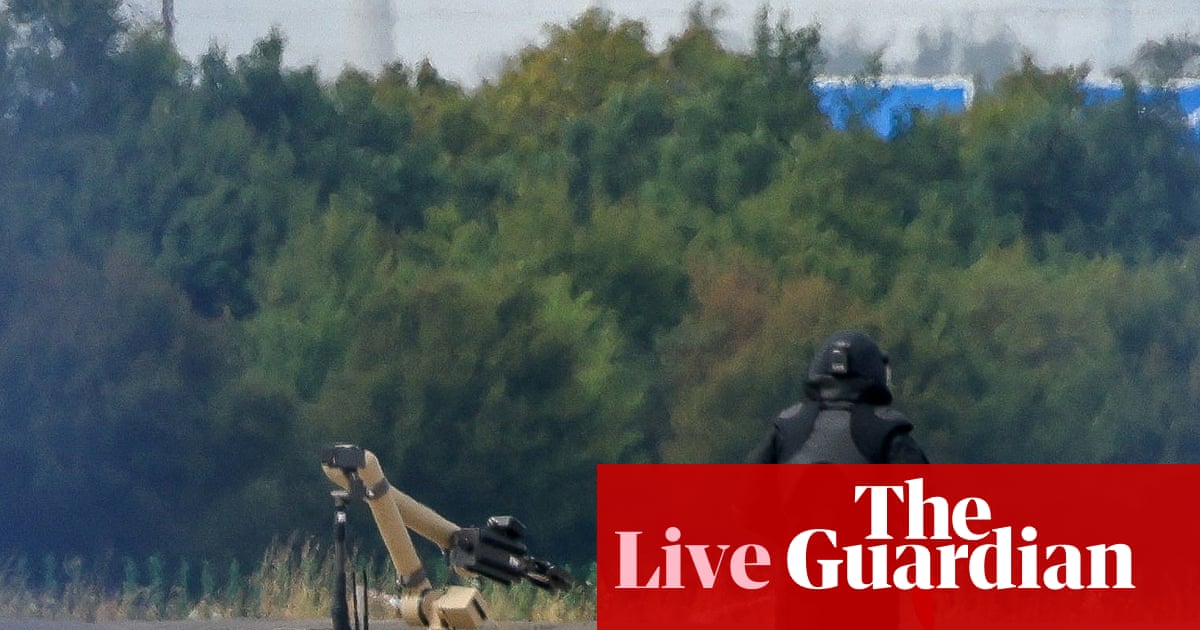
Following a drone attack at Leipzig airport, which Germany attributes to Russia, EU foreign policy chief Kaja Kallas described the incident as having "all the hallmarks of state sponsored terrorism." This has spurred urgent talks among EU foreign ministers in Ireland to formulate a political reaction and consider additional sanctions against Moscow, while Russia vehemently denies invo…
Imagine a big playground where some kids are playing nicely, and one kid, Russia, is causing trouble in a corner. Suddenly, a toy drone flies into another kid's (Germany's) sandcastle, causing a small mess. Germany says Russia did it, but Russia says, "No way!" Now, all the other kids in the European Union are gathering to figure out what to do, like how to make sure everyone feels safe and how to help the kid whose sandcastle was attacked, because they worry Russia might try to cause more trouble.
Analysis
The drone attack on Leipzig airport and Germany's subsequent attribution of blame to Russia mark a significant escalation in the ongoing geopolitical friction between Moscow and the European Union. This development comes at a critical juncture, with EU foreign ministers convening to deliberate on a coordinated response. The incident is not isolated, as Germany is also investigating a suspected attempt to disrupt the power grid near Brandenburg, suggesting a broader pattern of potential sabotage targeting critical infrastructure within NATO territory. The direct accusation by Germany, a major European power, against Russia for an act of aggression on its soil carries substantial weight and demands a robust, unified reaction from the bloc.
Leipzig
The drone incident at Leipzig airport last month has been formally blamed on Russia by Germany, a move that Russian President Vladimir Putin has dismissed as a "grave mistake." This accusation has intensified the diplomatic standoff, with the EU foreign policy chief, Kaja Kallas, characterizing the attack as bearing "all the hallmarks of state sponsored terrorism." The incident serves as a stark reminder of the evolving nature of hybrid warfare, where non-conventional methods are employed to sow discord and disrupt stability within adversary nations. The German investigation into the Leipzig attack, alongside a separate probe into a power substation incident near Brandenburg, underscores a heightened state of alert across Germany regarding potential foreign interference.
The implications of the Leipzig attack extend beyond immediate security concerns, touching upon the broader European energy landscape and political cohesion. The incident has prompted calls for a stronger, more unified European stance against Russian aggression, with Kallas urging countries to overcome their reluctance on further sanctions. The discussions among EU foreign ministers in Wicklow, Ireland, are expected to focus on both punitive measures against Russia and increased support for Ukraine, which continues to face Russian escalation. The attack has effectively served as a "wake-up call," pushing hesitant member states to reconsider their positions on collective security and the necessity of a firm response to perceived state-sponsored aggression.
Kaja Kallas
EU foreign policy chief Kaja Kallas has taken a prominent role in galvanizing a European response to the Leipzig drone attack, unequivocally stating that the incident displayed characteristics of state-sponsored terrorism. Her leadership in hosting the informal talks among EU foreign ministers in Ireland highlights the urgency with which the bloc views this security breach. Kallas's strong rhetoric aims to foster greater unity among member states, particularly those that have been perceived as dragging their feet on implementing further sanctions against Russia. She emphasized the need for a collective and intensified effort to address the ongoing conflict in Ukraine, linking the Leipzig incident directly to Russia's broader aggressive actions.
Kallas's agenda for the ministerial talks includes not only formulating a political reaction to the drone attack but also exploring additional avenues for supporting Ukraine. This dual focus underscores the interconnectedness of European security with the conflict in Eastern Europe. By framing the Leipzig incident as a direct challenge to European stability, Kallas seeks to reinforce the argument that a robust response to Russia is essential for the continent's overall security. Her efforts are crucial in shaping a cohesive European strategy that balances deterrence, sanctions, and continued assistance to Kyiv, especially as Russia continues its escalation and targets civilians.
AfD
The timing of these security incidents, particularly the suspected attempts to disrupt critical infrastructure, is notably sensitive given the upcoming state election in Saxony-Anhalt, Germany. Opinion polls suggest that the AfD, an anti-immigrant party with significant support in eastern Germany, could potentially gain power at the state level for the first time. This political context adds another layer of complexity to Germany's response to the alleged Russian aggression. The AfD has historically advocated for an end to German support for Ukraine and a resumption of energy agreements with Moscow, which provided Germany with cheap oil and gas until 2022.
The potential rise of the AfD could introduce internal divisions within Germany regarding its foreign policy orientation and its stance on Russia. Should the party gain influence, it could complicate Germany's ability to maintain a unified front with its European partners against Russian actions. The party's platform, which includes calls for renewed energy ties with Moscow, directly contrasts with the current European efforts to isolate Russia and reduce reliance on its energy resources. This internal political dynamic within Germany could therefore have significant implications for the broader European response to incidents like the Leipzig drone attack and the ongoing conflict in Ukraine, potentially undermining collective security efforts.
Key points
- Germany formally blames Russia for a drone attack at Leipzig airport last month.
- Russian President Vladimir Putin calls Germany's accusation a "grave mistake."
- EU foreign ministers are meeting in Ireland to discuss a unified political response and further support for Ukraine.
- EU foreign policy chief Kaja Kallas described the attack as having "all the hallmarks of state sponsored terrorism."
- Germany is also investigating a suspected attempt to disrupt the power grid near Brandenburg, raising concerns about broader sabotage.
The incident could galvanize stronger European unity, leading to a more decisive and coordinated response against state-sponsored aggression. Increased solidarity and a renewed commitment to collective security could deter future attacks and strengthen support for Ukraine, fostering greater stability in the long term.
The blame game could further escalate tensions between Russia and Europe, potentially leading to retaliatory actions or cyberattacks. Internal divisions within the EU, particularly with the rise of parties like the AfD, could weaken the bloc's resolve, making it harder to implement effective sanctions or maintain a unified front against Russia.
Market signals
- OIL Escalating geopolitical tensions and concerns over critical infrastructure security, particularly regarding energy supplies, could lead to increased oil prices.
- XAU Heightened geopolitical instability and the risk of conflict escalation typically drive investors towards safe-haven assets like gold.
AI-generated analysis of potential market relevance. Not financial advice.