Goodbye Ohio, hello Virginia: US navy's next-gen submarines to carry 40 Tomahawks
The US Navy has announced that future Virginia-class submarines equipped with the Virginia Payload Module (VPM) will be redesignated as guided missile submarines (SSGNs), marking a significant shift in how the service plans to employ its next generation of undersea strike…
Intelligence analysis by Llama
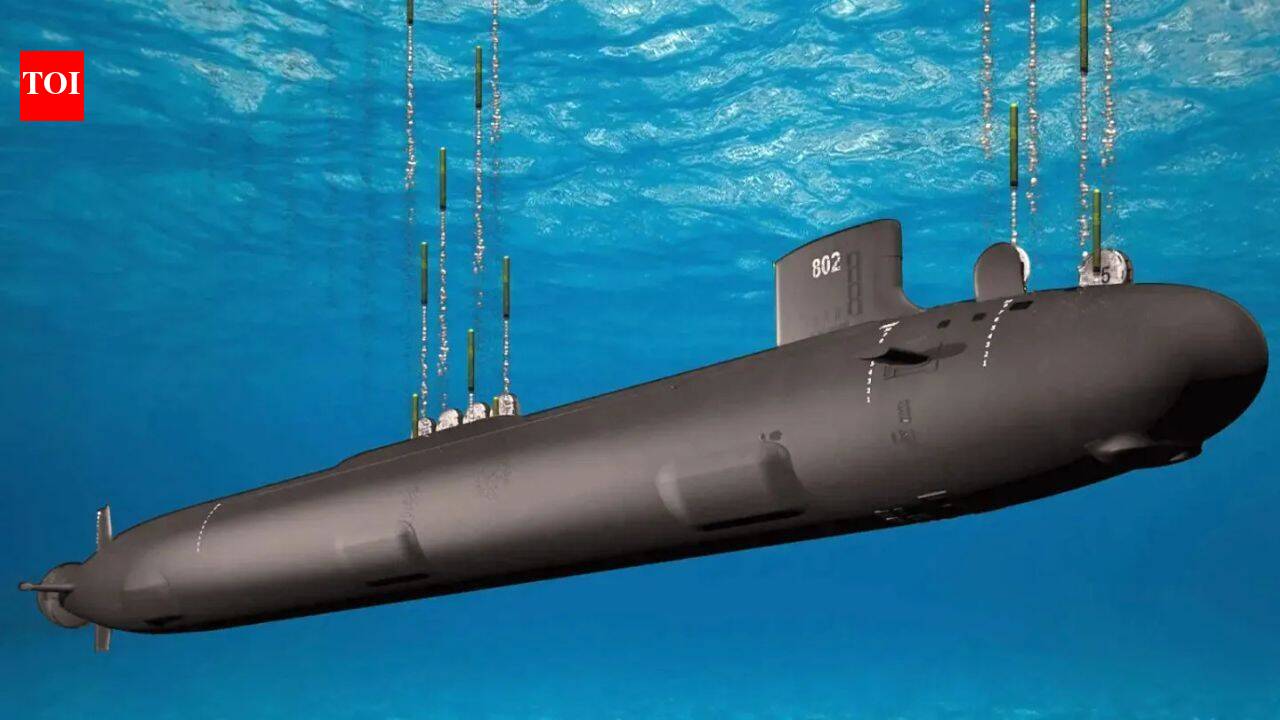
The US Navy is redesignating its Virginia-class submarines equipped with the Virginia Payload Module (VPM) as guided missile submarines (SSGNs), increasing their conventional strike capability to 40 Tomahawk land-attack cruise missiles.
Imagine a big submarine that can carry a lot of special missiles that can fly to targets on land. The US Navy is making these submarines even better by adding more missiles and making them more powerful.
Analysis
A $60B Vote of Confidence
The US Navy's decision to redesignate its Virginia-class submarines equipped with the Virginia Payload Module (VPM) as guided missile submarines (SSGNs) is a significant shift in how the service plans to employ its next generation of undersea strike platforms. This move comes as the Navy prepares to retire its four Ohio-class guided missile submarines (SSGNs), which currently serve as its primary conventional land-attack platforms. Each Ohio-class SSGN can carry up to 154 Tomahawk land-attack cruise missiles, making them among the world's most heavily armed conventional strike submarines.
Why Cursor?
The VPM is a 70-foot hull extension that contains four additional large vertical tubes designed to launch Tomahawk land-attack cruise missiles, Intermediate-range conventional prompt strike (IRCPS) hypersonic missiles, and other payloads. The module is a significant upgrade to the Virginia-class submarines, increasing their length from around 377 feet to 460 feet and boosting displacement to nearly 10,200 tonnes when submerged. Powered by an S9G nuclear reactor, they have virtually unlimited endurance, requiring resupply only for food and other consumables.
The Road Ahead
The US Navy currently plans to acquire 19 Virginia-class submarines equipped with the Virginia Payload Module (VPM), all of which will be designated as SSGNs. The first submarine in the fleet to receive the module will be the future USS Arizona, the second Block V boat under construction. The lead Block V submarine, USS Oklahoma, is being built without the VPM, while the remaining 10 Block V submarines are expected to be fitted with the module, significantly enhancing their missile strike capability.
Key points
- The US Navy is redesignating its Virginia-class submarines equipped with the Virginia Payload Module (VPM) as guided missile submarines (SSGNs).
- The VPM is a 70-foot hull extension that contains four additional large vertical tubes designed to launch Tomahawk land-attack cruise missiles and other payloads.
- The US Navy currently plans to acquire 19 Virginia-class submarines equipped with the VPM, all of which will be designated as SSGNs.
If this development plays out positively, the US Navy's next-generation submarines will provide a significant boost to its military capabilities, enabling it to project power more effectively and maintain undersea dominance for decades to come.
However, there are also potential risks associated with this development, including the possibility of increased tensions with other nations and the potential for accidents or miscalculations.