Govt consults for options on impasse over judges' appointment summary
The government is moving ahead with the appointment of judges under the constitution after a delay in approval of the judges' appointment summary sent to the President. Consultations are underway over the issuance of the notification of the appointment of judges.
Intelligence analysis by Llama
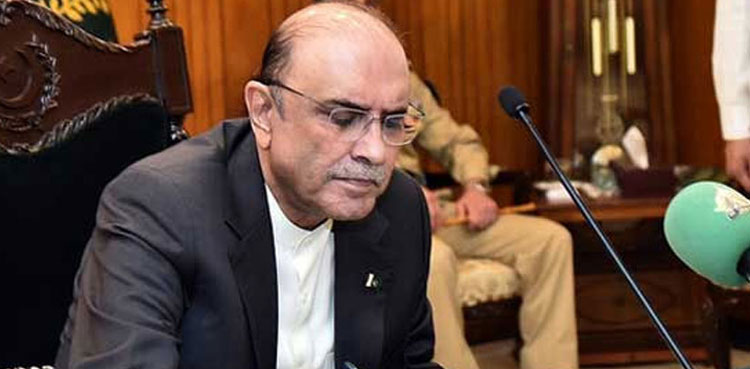
The government is facing an impasse over the appointment of judges, with the President yet to approve the Judicial Commission of Pakistan's (JCP) recommendations. The government is moving ahead with the appointment process, but the President has the power to return the summary with objections.
The government is having trouble appointing new judges to the courts in Pakistan. The President has to approve the appointments, but he hasn't done it yet. The government is moving ahead with the appointments anyway, but the President can still object. This is a big deal because it affects the independence and fairness of the courts.
Analysis
A Delicate Balance of Power
The government's decision to move ahead with the appointment of judges under the constitution is a significant development in the ongoing impasse over the judges' appointment summary. The President has the power to return the summary with objections, but the government is choosing to proceed with the appointment process. This decision is a delicate balance of power between the executive and the judiciary.
The Role of the Judicial Commission of Pakistan
The Judicial Commission of Pakistan (JCP) has recommended the appointment of 24 judges, including three additional judges to the Islamabad High Court, 10 to the Lahore High Court (LHC), three to the Sindh High Court (SHC) and three to the Balochistan High Court (BHC). The JCP has also recommended the confirmation of four additional judges of the Peshawar High Court (PHC) and a six-month extension in the tenure of an additional judge of the SHC. The government's decision to move ahead with the appointment process is a significant endorsement of the JCP's recommendations.
The Implications of the Delay
The delay in the appointment of judges has significant implications for the judiciary and the rule of law in Pakistan. The judiciary is facing a crisis of confidence, with many judges facing criticism for their handling of high-profile cases. The delay in the appointment of judges has only added to the crisis, with many lawyers and judges expressing concern about the impact on the judiciary's independence and impartiality.
Key points
- The government is moving ahead with the appointment of judges under the constitution.
- The President has the power to return the summary with objections, but the government is choosing to proceed with the appointment process.
- The Judicial Commission of Pakistan has recommended the appointment of 24 judges, including three additional judges to the Islamabad High Court, 10 to the Lahore High Court (LHC), three to the Sindh High Court (SHC) and three to the Balochistan High Court (BHC).
- A petition has been filed in the Islamabad High Court with regard to the delay in approval of a summary for appointment of judges in the IHC.
If the President approves the appointments, it could lead to a more efficient and effective judiciary, which would be a positive development for Pakistan. The government's decision to move ahead with the appointment process is a step in the right direction, and it could lead to a more stable and predictable judiciary.
If the President objects to the appointments, it could lead to a further delay in the appointment of judges, which would exacerbate the crisis of confidence in the judiciary. This could have serious implications for the rule of law in Pakistan and the independence and impartiality of the courts.