GP Resource for Pre-University Students: Geopolitics in a Brave New World
The intensifying US-China rivalry has led to economic fragmentation, rising trade protectionism, a relentless technology race, bifurcated supply chains, contested maritime boundaries, and the risk of chokepoint leverage.
Intelligence analysis by Llama
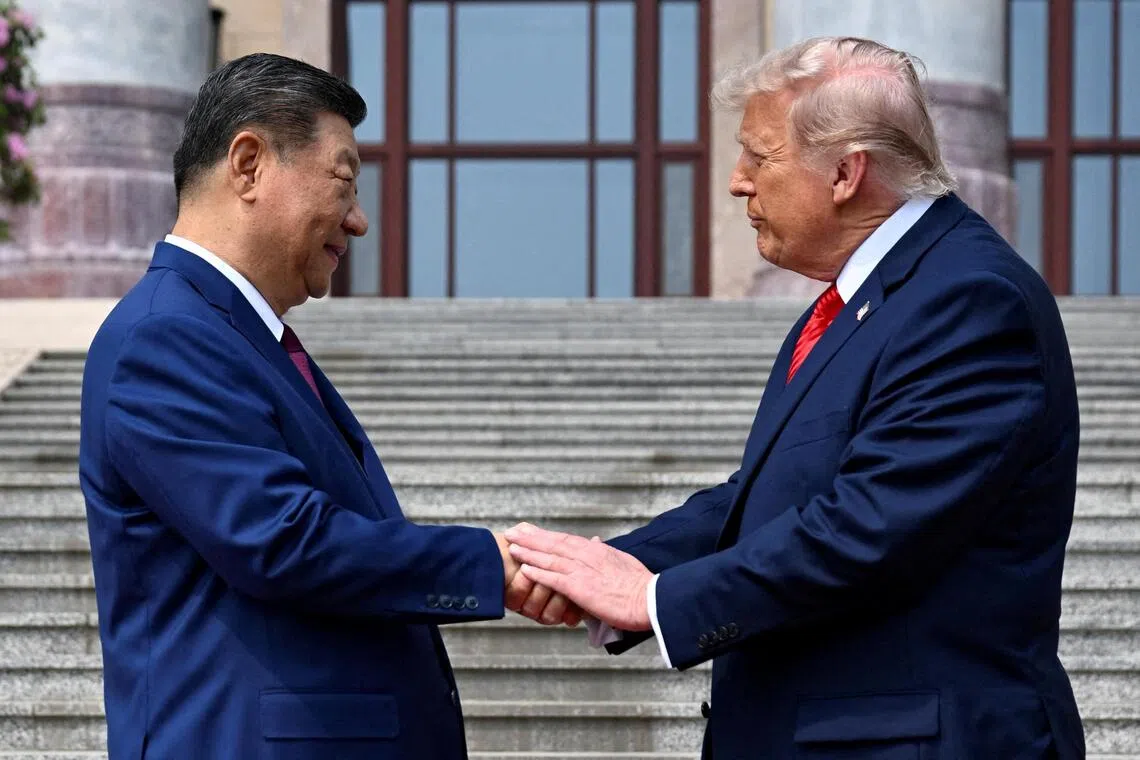
The US-China rivalry has led to economic fragmentation, rising trade protectionism, and a technology race, with implications for global cooperation and new economic rules.
Imagine the world as a big game of chess, where countries are pieces moving around the board. The US and China are two powerful players, each trying to outmaneuver the other. This rivalry has led to a new world order, with economic fragmentation, rising trade protectionism, and a technology race. It's like a big puzzle, and we need to understand the pieces to navigate the challenges and opportunities of the 21st century.
Analysis
A Brave New World: The US-China Rivalry and Its Implications
The intensifying US-China rivalry has led to a new world order, characterized by economic fragmentation, rising trade protectionism, and a relentless technology race. This rivalry has significant implications for global cooperation, new economic rules, and the lives of nations. The US is adopting a tougher 'America First' policy towards ASEAN, while China remains key in shaping global cooperation and new economic rules, says PM Lawrence Wong.
The Rise of Protectionism
The US-China rivalry has led to a rise in protectionism, with both countries imposing tariffs and trade restrictions on each other. This has resulted in economic fragmentation, with supply chains being bifurcated and contested maritime boundaries becoming a major concern. The risk of chokepoint leverage is also a significant threat, as both countries seek to control key trade routes and resources.
The Technology Race
The US-China rivalry has also led to a relentless technology race, with both countries investing heavily in artificial intelligence, quantum computing, and other emerging technologies. This has significant implications for global cooperation, as both countries seek to shape the rules of the digital economy and control the flow of data and information.
The Way Forward
In conclusion, the US-China rivalry has significant implications for global cooperation, new economic rules, and the lives of nations. As pre-university students, it is essential to understand the complexities of geopolitics and its impact on our world. By doing so, we can better navigate the challenges and opportunities of the 21st century.
Key points
- The US-China rivalry has led to economic fragmentation, rising trade protectionism, and a relentless technology race.
- The US is adopting a tougher 'America First' policy towards ASEAN, while China remains key in shaping global cooperation and new economic rules.
- The rivalry has significant implications for global cooperation, new economic rules, and the lives of nations.
If the US and China can find a way to cooperate and reduce tensions, it could lead to a more stable and prosperous world. This could also lead to increased investment in emerging technologies, such as artificial intelligence and quantum computing, which could drive economic growth and improve living standards.
If the US-China rivalry continues to escalate, it could lead to a global economic downturn, increased trade tensions, and a rise in nationalism. This could also lead to a decrease in investment in emerging technologies, which could slow down economic growth and improve living standards.