Greatest financial offensive admission of defeat, not victory
Iran's Deputy Foreign Minister Kazem Gharibabadi says the US's greatest financial offensive against Iran is an admission of defeat, not victory. He criticized US Treasury Secretary Scott Bessent for claiming victory in the economic war against Iran.
Intelligence analysis by Llama
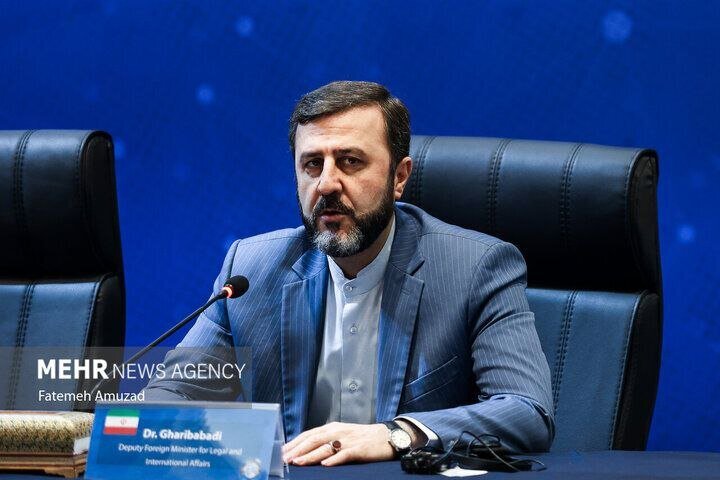
Iran's Deputy Foreign Minister Kazem Gharibabadi has responded to US Treasury Secretary Scott Bessent's claims of victory in the economic war against Iran, saying that the greatest financial offensive in history is an admission of defeat, not victory.
Iran's Deputy Foreign Minister Kazem Gharibabadi said that the US's biggest economic attack on Iran is actually a sign of defeat, not victory. He was responding to the US Treasury Secretary's claim that the US had won the economic war against Iran.
Analysis
Iran's Response to US Claims of Victory
Iran's Deputy Foreign Minister Kazem Gharibabadi has responded to US Treasury Secretary Scott Bessent's claims of victory in the economic war against Iran. In a post on his X account, Gharibabadi criticized Bessent for claiming victory, saying that the greatest financial offensive in history is an admission of defeat, not victory.
Gharibabadi's statement is a clear indication of the Iranian government's stance on the economic war. The US has imposed numerous sanctions on Iran, including restrictions on its oil exports, in an attempt to weaken the country's economy. However, Iran has managed to find ways to circumvent these sanctions and continue to export oil.
The Iranian government's response to US claims of victory is a sign of its confidence in its ability to withstand the economic war. It also highlights the fact that the US's economic sanctions have not had the desired effect of weakening Iran's economy.
The Impact of the Economic War
The economic war between the US and Iran has had a significant impact on the country's economy. The sanctions imposed by the US have restricted Iran's access to international markets, making it difficult for the country to export its oil. However, Iran has managed to find ways to circumvent these sanctions and continue to export oil.
The Iranian government has also taken steps to mitigate the impact of the economic war. It has implemented policies to reduce the country's dependence on oil exports and has invested in other sectors of the economy, such as manufacturing and agriculture.
The Future of the Economic War
The future of the economic war between the US and Iran is uncertain. The US has continued to impose sanctions on Iran, despite the fact that the country has managed to find ways to circumvent them. The Iranian government has also continued to respond to US claims of victory, highlighting its confidence in its ability to withstand the economic war.
It is likely that the economic war will continue for the foreseeable future. However, the Iranian government's response to US claims of victory is a sign of its confidence in its ability to withstand the economic war. It also highlights the fact that the US's economic sanctions have not had the desired effect of weakening Iran's economy.
Key points
- Iran's Deputy Foreign Minister Kazem Gharibabadi responded to US Treasury Secretary Scott Bessent's claims of victory in the economic war against Iran.
- Gharibabadi said that the greatest financial offensive in history is an admission of defeat, not victory.
- The Iranian government has managed to find ways to circumvent US sanctions and continue to export oil.
- The economic war between the US and Iran has had a significant impact on the country's economy.
- The Iranian government has implemented policies to reduce the country's dependence on oil exports and has invested in other sectors of the economy.
If the economic war continues, Iran may find new ways to export its oil and continue to grow its economy. The Iranian government's response to US claims of victory is a sign of its confidence in its ability to withstand the economic war.
If the economic war continues, Iran's economy may suffer further, and the country may struggle to find new ways to export its oil. The US's continued imposition of sanctions may also have a negative impact on Iran's economy.