Heat, hardware and high stakes at China's biggest World Artificial Intelligence Conference
President Xi Jinping delivered his first keynote at Shanghai's World AI Conference, framing AI as a 'rare historic opportunity' and championing open-source collaboration. The six-year-old event drew record crowds amid a global agentic-AI frenzy.
Intelligence analysis by Llama
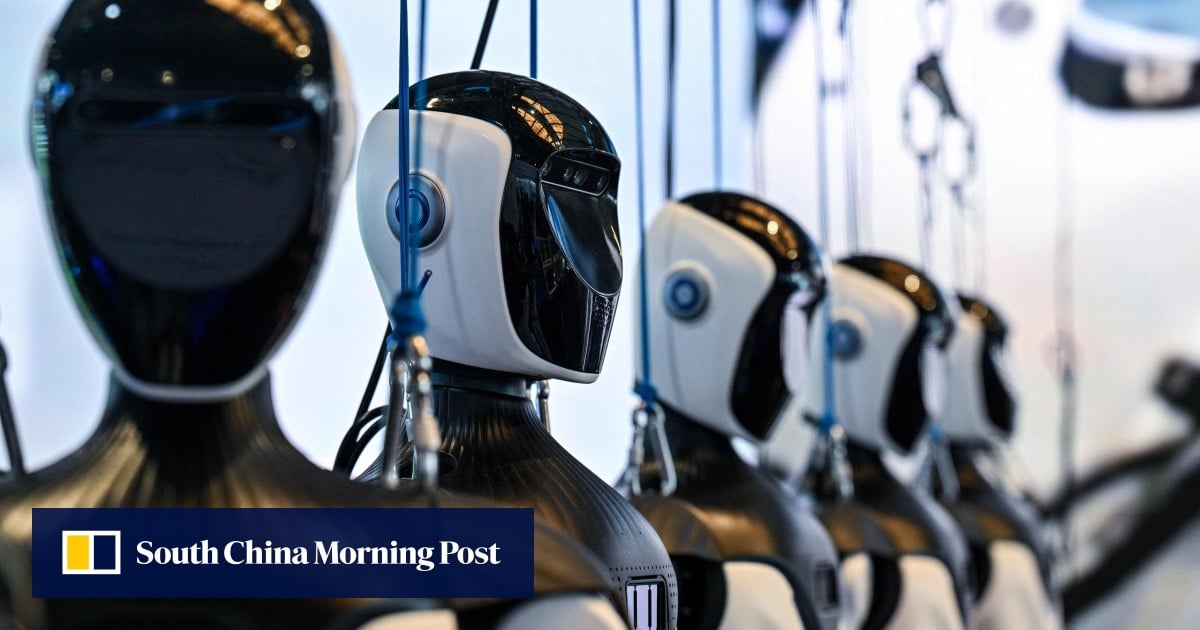
SCMP's Ann Cao files a first-person dispatch from the hottest, most crowded WAIC yet, where Xi Jinping made his debut keynote and Hong Kong unveiled an 'LLM Going Global Strategy' to export Chinese AI worldwide.
Imagine the world's biggest AI toy fair, but in a city so hot people walked instead of taking cabs. China's leader gave his first big speech there, saying China wants to share its AI toys with everyone. Hong Kong said it would help pass those toys to kids in other countries — and the tickets cost six times more because so many people wanted in.
Analysis
Xi's First WAIC Keynote and the 'Rare Historic Opportunity' Framing
President Xi Jinping's inaugural address at the World Artificial Intelligence Conference marks a notable escalation in how China's leadership publicly positions AI in national priorities. By calling AI a "rare historic opportunity" and pairing it with a call to "encourage open source, openness, collaboration and sharing", Xi framed the technology in terms that borrow from — and attempt to counter — the Western open-source narrative. The timing matters: the address comes amid US export controls on advanced AI chips and tightening scrutiny of Chinese model developers. Casting China as the champion of openness is a deliberate rhetorical move to differentiate Beijing's AI approach from Washington's restrictions-driven posture.
Hong Kong as Designated 'Superconnector'
The Hong Kong Generative AI Research and Development Centre's launch of an "LLM Going Global Strategy" is the practical complement to Xi's rhetoric. By leaning on Hong Kong's special administrative status, mainland Chinese AI labs gain a regulatory and financial bridge to international markets without directly exporting from the mainland — a useful workaround given data-flow and geopolitical sensitivities. The phrase "superconnector", long associated with Hong Kong's positioning toward Greater Bay Area integration, is now being repurposed for the AI race, signalling that Beijing sees model distribution as a diplomatic and commercial lever, not just a technical project.
Crowds, Heat, and the Economics of Hype
The physical atmosphere of WAIC 2026 tells its own story. Tickets officially priced at 168 yuan were resold for more than 1,000 yuan, with buyers including not only industry professionals but also parents and recent graduates hoping to break into the sector. That kind of grassroots demand — visible enough to fuel a secondary market — suggests agentic AI has crossed from a developer niche into a general cultural phenomenon in China. The 40-degree Shanghai heat and gridlock 2km from the venue underline the logistical strain of an event that has outgrown its original footprint, and hints at the scale of capital and attention now flowing into the Chinese AI sector.
Key points
- Xi Jinping delivered his first keynote at the World Artificial Intelligence Conference in Shanghai, calling AI a 'rare historic opportunity'
- Hong Kong's Generative AI R&D Centre unveiled an 'LLM Going Global Strategy' positioning the city as a 'superconnector' for Chinese AI exports
- Tickets priced at 168 yuan were resold for over 1,000 yuan as agentic-AI enthusiasm drove record attendance
- SCMP reporter Ann Cao described the 2026 edition as the hottest and most crowded WAIC since the event began in 2018
- Xi explicitly endorsed 'open source, openness, collaboration and sharing' as China's AI posture
If Beijing's open-source framing is matched by genuine technical contributions and Hong Kong's 'superconnector' role eases cross-border model distribution, Chinese AI labs could find faster paths to international adoption, especially in emerging markets underserved by US providers.
The 'openness' rhetoric risks being read as cover for state-directed model exports, potentially deepening US export-control scrutiny and complicating partnerships for Chinese AI firms abroad. The 168-yuan-to-1,000-yuan ticket scalping also points to an overheated expectations cycle that may not survive a model-launch disappointment.