Heavy rain soaks eastern Japan, prompting highest-level warning
Torrential rain pummelled eastern Japan on Thursday, triggering landslides and power outages, and prompting the weather authority to issue its highest-level heavy rain warning for the region for the first time.
Intelligence analysis by Llama
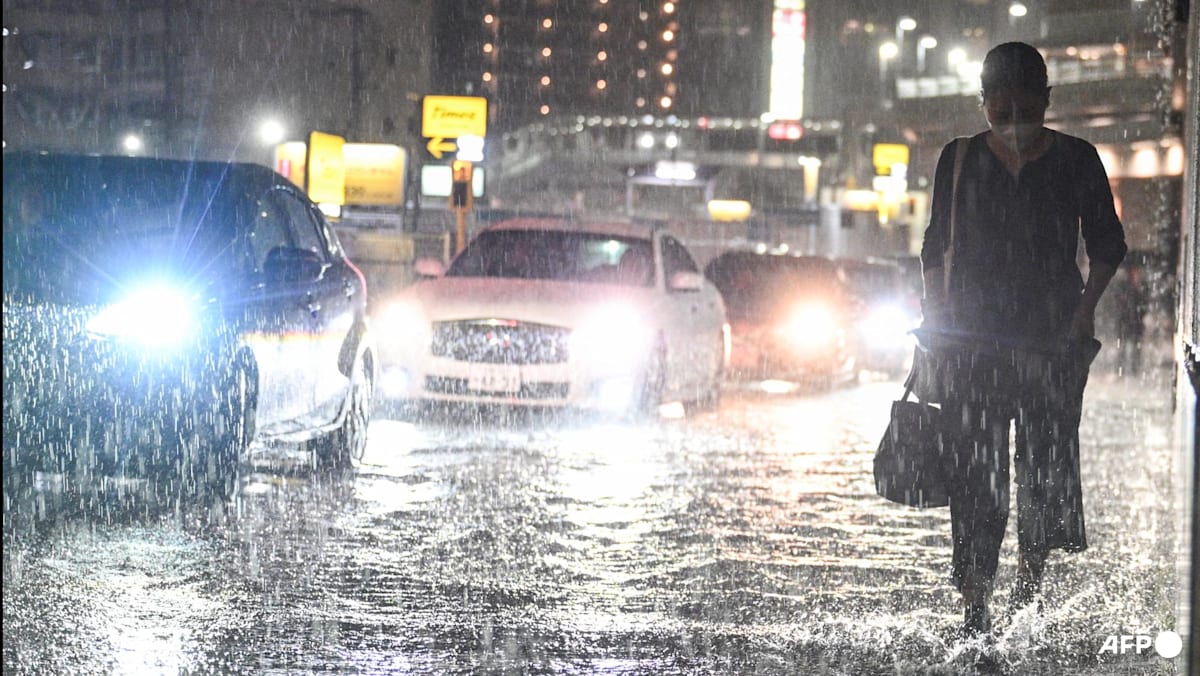
Heavy rain in eastern Japan has triggered landslides and power outages, prompting the highest-level warning from the Japan Meteorological Agency. Over 100,000 households have been urged to evacuate, with hundreds of people stranded in Chiba station due to suspended train services.
Imagine a really strong storm that brings a lot of rain and causes problems like landslides and power outages. That's what's happening in Japan right now. The weather is so bad that people are being told to evacuate their homes and stay safe. It's like a big storm that's making it hard for people to go about their daily lives.
Analysis
Unprecedented Heavy Rain Warning Issued for Eastern Japan
The Japan Meteorological Agency (JMA) has issued its highest-level heavy rain warning for the eastern region of Japan for the first time, indicating a high likelihood of an imminent disaster due to heavy rain. The warning has been issued for more than a dozen cities in Chiba, with over 100,000 households urged to evacuate. The extreme weather has triggered landslides, mudslides, and flooded houses in several cities in the region, with hundreds of people stranded in Chiba station due to suspended train services.
Human-Driven Climate Change to Blame
Scientists say that human-driven climate change is making extreme weather more frequent, prolonged, and intense. The heavy rain in Japan is a stark reminder of the need for preparedness and resilience in the face of such events. The warning has prompted evacuations and disruptions to daily life, highlighting the importance of taking proactive measures to mitigate the impacts of climate change.
Implications for Japan's Infrastructure and Economy
The heavy rain has exposed weaknesses in Japan's infrastructure and economy, particularly in the eastern region. The power outages and suspended train services have caused significant disruptions to daily life, with many businesses and residents affected. The economic implications of the heavy rain are still being assessed, but it is clear that the impact will be significant. The Japanese government will need to take a comprehensive approach to addressing the root causes of the heavy rain and ensuring that the country's infrastructure and economy are better equipped to withstand such events in the future.
Key points
- Heavy rain in eastern Japan has triggered landslides and power outages, prompting the highest-level warning from the Japan Meteorological Agency.
- Over 100,000 households have been urged to evacuate, with hundreds of people stranded in Chiba station due to suspended train services.
- The heavy rain is linked to human-driven climate change, making extreme weather events more frequent, prolonged, and intense.
- The Japanese government will need to take a comprehensive approach to addressing the root causes of the heavy rain and ensuring that the country's infrastructure and economy are better equipped to withstand such events in the future.
If the heavy rain in Japan subsides soon, the country can focus on rebuilding and recovering from the damage. The Japanese government can use this opportunity to invest in infrastructure and prepare for future extreme weather events, making the country more resilient and better equipped to handle such challenges.
The heavy rain in Japan has exposed weaknesses in the country's infrastructure and economy, and the economic implications of the event are still being assessed. The Japanese government will need to take a comprehensive approach to addressing the root causes of the heavy rain and ensuring that the country's infrastructure and economy are better equipped to withstand such events in the future.