Here is why a massive $1.6 billion in crypto liquidity is sitting idle and wasting away
About $1.6 billion in DeFi liquidity was underutilized in H1 2026, failing to generate returns. Roughly $542 million, or 29.5%, sat fully out of range in an average week.
Intelligence analysis by Llama
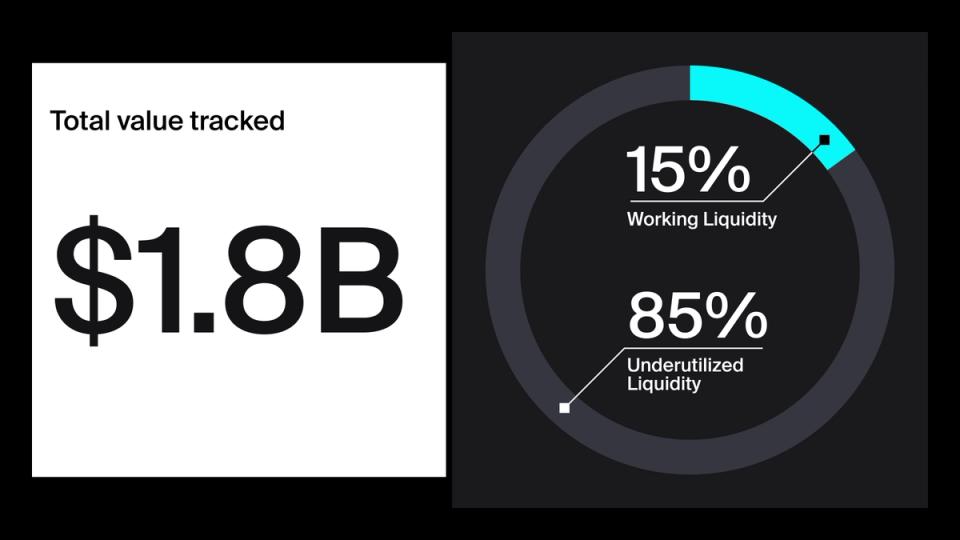
A new research finds that $1.6 billion in liquidity deposited across major decentralized exchanges was not being used to its full potential during the first half of 2026. The money had not left the decentralized finance ecosystem, but was priced so high that traders could not use it.
Imagine you have a big jar of money that you want to use to help people trade on the internet. But, for some reason, the money is stuck in the jar and can't be used. That's kind of what's happening with $1.6 billion in crypto liquidity. It's not being used to its full potential, and that's causing problems for the people who want to trade on the internet.
Analysis
A $60B Vote of Confidence
The decentralized finance (DeFi) ecosystem has grown significantly in recent years, with major decentralized exchanges (DEXs) becoming one of the deepest and most liquid markets in crypto. However, despite this growth, much of the liquidity deposited on these platforms remains underutilized. A new research by Dune, commissioned by decentralized exchange aggregator 1inch, found that $1.6 billion in liquidity was not being used to its full potential during the first half of 2026. This represents 85% of the $1.84 billion tracked across concentrated liquidity pools on Uniswap, PancakeSwap, and Aerodrome.
Why Cursor?
The research found that roughly $542 million, or 29.5%, of this liquidity sat fully out of range in an average week. This means that the money had not left the DeFi ecosystem, but was priced so high that traders could not use it. The study linked idle liquidity more closely to price movements than to volatility, with a steady price move in one direction being more likely to strand capital than a volatile week that ended near where it began.
The Road Ahead
The findings come as retail platforms bring more users and traditional assets onchain and financial firms expand their work on tokenized funds and blockchain-based settlement. If left unaddressed, idle liquidity will become more costly as markets grow, more capital will be stranded, and more trading fees will go unearned as liquidity becomes thinner. 1inch argues that decentralized exchanges have grown into one of the deepest, most liquid markets in crypto, but what their research shows is that it has reached this scale even though much of its liquidity is not yet fully at work.
Key points
- About $1.6 billion in DeFi liquidity was underutilized in H1 2026, failing to generate returns.
- Roughly $542 million, or 29.5%, sat fully out of range in an average week.
- The study linked idle liquidity more closely to price movements than to volatility.
- Larger positions are usually less likely to sit idle, but the research found that those pools of money still held most of the inactive capital.
- Individual wallets accounted for between 82% and 94% of the attributed idle capital on Uniswap v3, depending on the chain.
If the issue of idle liquidity is addressed, it could lead to more efficient use of capital, reduced transaction costs, and increased market depth. This, in turn, could attract more users and traditional assets to the DeFi ecosystem, further driving growth and innovation.
If left unaddressed, idle liquidity will become more costly as markets grow, more capital will be stranded, and more trading fees will go unearned as liquidity becomes thinner. This could lead to a decrease in market activity, reduced user engagement, and a decrease in the overall health of the DeFi ecosystem.