Hong Kong drivers to renew vehicle licences in 1 day by year-end under AI system
Hong Kong's Transport Department is launching an AI-driven "Easy Licence Application Approval" system by year-end, aiming to cut vehicle licence renewal processing time from 10 days to one.
Intelligence analysis by Gemini 2.5 Flash
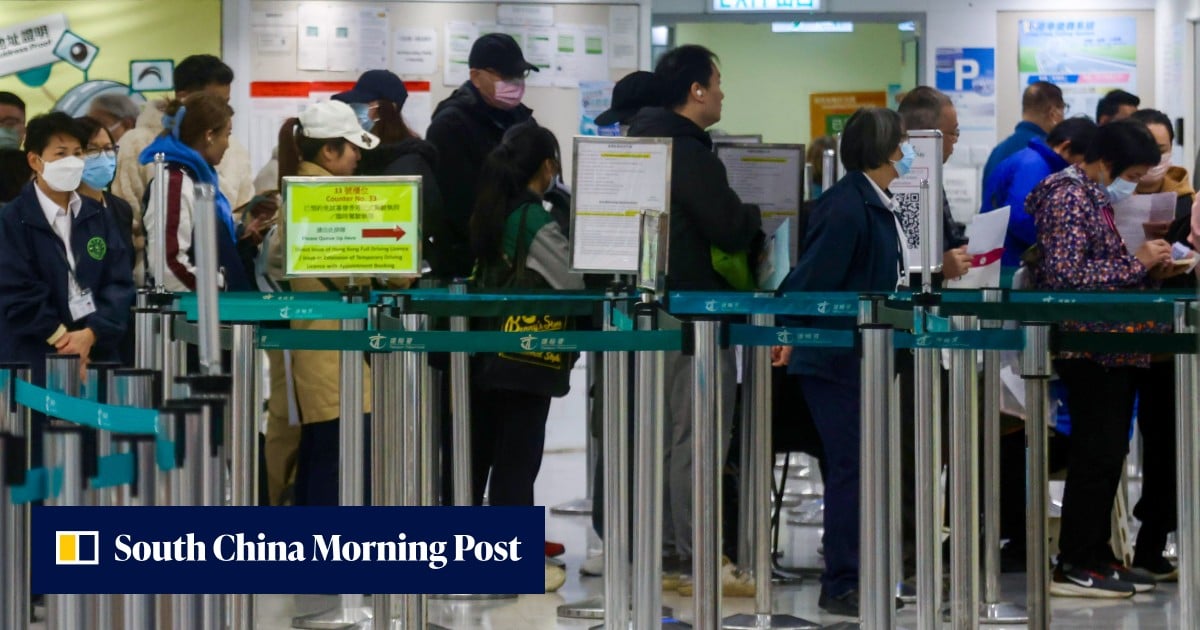
The new AI system will leverage large language models to automate the verification of documents for online vehicle licence renewals, expecting to auto-approve over 90% of applications. This initiative is part of a broader government strategy to streamline transport services and traffic management through artificial intelligence.
Imagine you need to get a new sticker for your toy car, but it usually takes a long time for the grown-ups to check all your papers. Now, Hong Kong is using a super-smart computer brain, like a super-fast helper, that can look at all the papers online in just one day, instead of many days, making it much quicker for everyone.
Analysis
Easy Licence Application Approval
The "Easy Licence Application Approval" system represents a significant leap in Hong Kong's digital transformation of public services. By integrating large language models, the Transport Department aims to automate the traditionally time-consuming process of verifying documents for vehicle licence renewals. This automation is projected to handle over 90 percent of online applications, drastically reducing the processing time from a potential ten working days to a single day. This efficiency gain is not merely about speed; it also implies a reduction in human error and a more consistent application of verification rules, potentially leading to a smoother experience for motorists. The system's ability to cross-reference various documents continuously learning from new data sets is a core advantage, as highlighted by Deputy Commissioner Candy Kwok Wai-ying.
Beyond standard vehicle licence renewals, the AI system is also designed to streamline applications for cross-border vehicle schemes, specifically the Northbound Travel for Hong Kong Vehicles and Southbound Travel for Guangdong Vehicles. For these more complex applications, the department targets an automatic approval rate exceeding 50 percent, alongside a 20 percent reduction in manual processing time. This expansion of AI capabilities into cross-border administrative processes underscores a broader strategic intent to facilitate regional connectivity and ease of movement, aligning with the Greater Bay Area integration efforts. The success in these areas could pave the way for similar AI applications in other government departments dealing with high volumes of document-based approvals.
Candy Kwok Wai-ying
Deputy Commissioner for Transport Candy Kwok Wai-ying articulated the core benefits of AI in this context, emphasizing its continuous learning capabilities and its proficiency in cross-referencing diverse documents. Her statement underscores the strategic thinking behind the adoption of this technology, particularly its utility in complex tasks like address verification and overall application approvals. Kwok's insights suggest that the Transport Department views AI not just as a tool for automation but as an intelligent assistant capable of improving accuracy and consistency in administrative decision-making. This perspective is crucial for building public trust and ensuring the long-term viability of such digital initiatives.
The leadership's clear articulation of AI's advantages helps to frame the initiative positively, highlighting the tangible benefits for both the public and the department. By focusing on "continuous learning," Kwok points to the system's potential for ongoing improvement and adaptation, which is vital in a dynamic regulatory environment. This forward-looking approach suggests a commitment to evolving the system based on performance data and user feedback, rather than a static deployment. Such leadership buy-in and clear communication are often critical factors in the successful implementation of large-scale technological transformations within government bodies.
2025 Policy Address
The establishment of the AI Efficacy Enhancement Team, which is overseeing these projects, directly stems from directives issued in the 2025 Policy Address. This indicates a top-down strategic push from the Hong Kong government to embed artificial intelligence across its operations. The team's mandate to coordinate AI adoption and advance the goals of the Transport Strategy Blueprint, announced in February, positions this initiative as a cornerstone of a broader, well-defined digital governance agenda. This strategic alignment ensures that individual projects, like the Easy Licence system, contribute to overarching governmental objectives for efficiency and modernization.
The integration of AI into transport services is therefore not an isolated effort but a component of a comprehensive strategy. The 2025 Policy Address likely laid out a vision for a smarter, more responsive government, with AI as a key enabler. The Transport Strategy Blueprint further refines this vision for the transport sector, identifying specific areas where AI can yield the most impact. This structured approach, moving from high-level policy to specific departmental implementation, suggests a thoughtful and coordinated effort to harness AI's potential for public good, aiming to enhance both service delivery and traffic management across the city.
Key points
- Hong Kong's Transport Department will launch an AI-driven "Easy Licence Application Approval" system by year-end.
- The system aims to reduce vehicle licence renewal processing time from up to 10 working days to just one day.
- Large language models will automatically recognise, cross-check, and verify submitted documents for online applications.
- Over 90% of online vehicle licence renewals are expected to be automatically processed by the AI.
- The AI will also handle applications for cross-border vehicle schemes, targeting over 50% automatic approval.
- This initiative is part of the government's broader AI adoption strategy outlined in the 2025 Policy Address and Transport Strategy Blueprint.
The successful implementation of the AI system could significantly improve public service efficiency and citizen satisfaction in Hong Kong, encouraging further adoption of AI in other government sectors. It could also reduce administrative burdens and free up human resources for more complex tasks.
Potential challenges include ensuring the AI system's accuracy and security against fraud, as well as addressing public concerns about data privacy. Technical glitches or unforeseen complexities in document verification could also hinder the system's promised efficiency gains.