Hong Kong must prepare for the impact of heat-related work stoppages
Hong Kong needs to urgently address the increasing frequency of extreme heatwaves and their impact on outdoor workers, prompting a re-evaluation of work safety protocols and urban functioning.
Intelligence analysis by Gemini 2.5 Flash
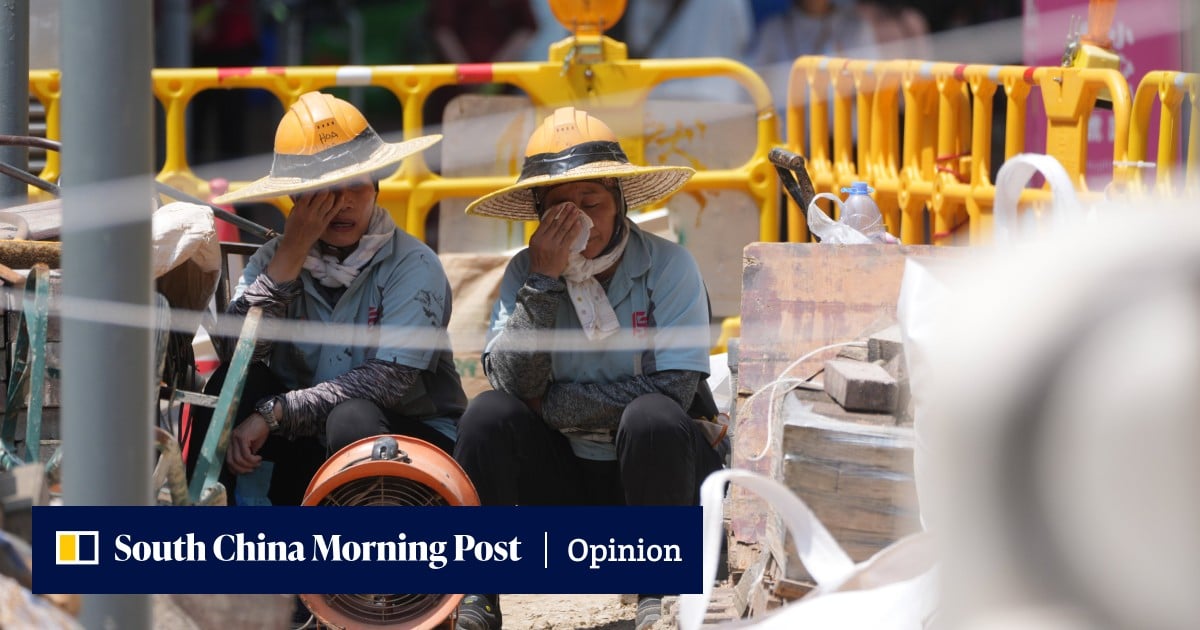
Amid record-breaking temperatures, Hong Kong's Labour Department faced scrutiny over its heat stress warning system, leading to announced changes. This development forces the city to confront the broader implications of dangerous heat becoming common, potentially conflicting with construction schedules, noise controls, workers' incomes, and overall urban operations.
Imagine it's super hot outside, like the hottest summer in your grandparents' time! Grown-ups who work outside, like builders, can get really sick from the heat. Hong Kong is trying to figure out how to tell them to stop working when it's too dangerous, but this also means buildings might take longer to finish, and workers might not earn as much money. It's like trying to keep everyone safe while still getting important things done in the city.
Analysis
Labour Department
At the beginning of August, Hong Kong experienced temperatures not seen in at least 140 years, yet the Labour Department's Heat Stress at Work Warning system remained at its lowest, amber level. This decision sparked considerable controversy, raising serious questions about the adequacy of existing protections for outdoor workers in the city. The public outcry and subsequent debate underscored a growing awareness of climate change's immediate impact on daily life and labor conditions.
In response to the criticism, the Labour Department has since announced forthcoming changes aimed at implementing earlier heat-stress warnings. These improvements are generally welcomed as a step towards better safeguarding worker health. However, they also bring to the forefront a more complex challenge: how to balance worker safety with the practical demands of a bustling metropolis.
140 years
The unprecedented high temperatures recorded this summer, the highest in at least 140 years, serve as a stark reminder of the escalating climate crisis. This historical benchmark indicates that extreme heat is no longer an anomaly but an increasingly common occurrence that Hong Kong must integrate into its long-term planning. The article suggests that heatwaves are expected to become both longer and more frequent, necessitating a fundamental shift in how the city operates.
Such prolonged and intense heat directly threatens the health and productivity of a significant portion of the workforce, particularly those engaged in outdoor labor. The implications extend beyond individual well-being to the broader economic fabric of the city. Preparing for these new climatic realities requires a comprehensive strategy that considers both immediate protective measures and sustainable long-term adaptations.
Construction schedules
The updated heat-stress rules, while crucial for worker protection, inevitably introduce potential conflicts with established urban operations, notably construction schedules. Halting or delaying work due to extreme heat can have significant economic repercussions, affecting project timelines, budgets, and the livelihoods of workers who rely on consistent employment. This tension between safety and economic output is a central dilemma for policymakers.
Beyond construction, the article points to wider impacts on noise controls and the normal functioning of the city. Discussions must now encompass not only when work stoppages are necessary but also who bears the financial burden of such interruptions and how the costs of adaptation can be equitably shared across society. Addressing these complex questions is vital for Hong Kong to build resilience against future climate challenges.
Key points
- Hong Kong experienced record-high temperatures this August, the highest in at least 140 years.
- The Labour Department's initial heat stress warning system was criticized for not adequately protecting outdoor workers.
- Changes to the warning system have been announced to provide earlier heat-stress alerts.
- The city must now address the broader implications of frequent dangerous heat, including conflicts with construction schedules, worker incomes, and urban functioning.
- Discussions are needed on when work should stop, worker compensation, and how adaptation costs will be shared.
With the Labour Department's announced changes, Hong Kong has an opportunity to implement more proactive and effective heat-stress warnings, significantly enhancing worker protection. This could lead to a more resilient workforce and a city better prepared to adapt to the realities of climate change, ensuring both safety and continued economic activity through thoughtful policy and shared responsibility.
Without comprehensive planning and clear policies, Hong Kong faces significant disruptions as heatwaves become more common. Conflicts between worker safety and economic demands, such as construction schedules and worker incomes, could escalate, leading to stalled projects, financial hardship, and broader challenges to the city's normal functioning and social stability.
