Hormuz Strait safe passage conditional on Iran's coordination
Iran's deputy foreign minister warns that maritime transit in Hormuz Strait cannot be guaranteed without coordination with Iran. Safe passage through the Strait of Hormuz under vague arrangements is not guaranteed.
Intelligence analysis by Llama 3.3 70B

Iran emphasizes the need for coordination with Iran for safe passage through the Hormuz Strait, warning against parallel arrangements or external decision-making frameworks.
Imagine a very important waterway that many ships use to transport goods. Iran is saying that it needs to be involved in decisions about how ships use this waterway, or it can't guarantee their safety. This is because Iran is located next to this waterway and has a lot of influence over what happens there.
Analysis
Iran's Strategic Positioning
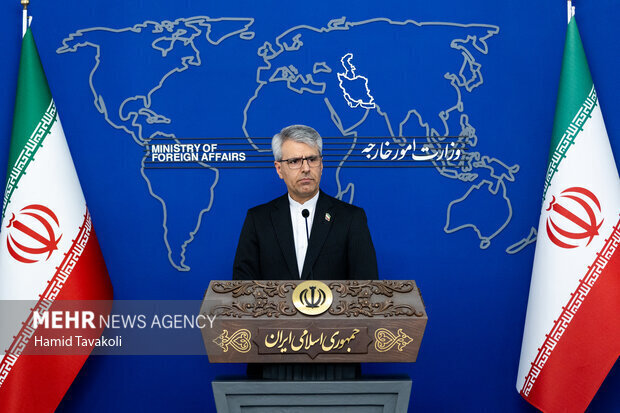
Iran's deputy foreign minister, Kazem Gharibabadi, has underscored the importance of coordination with Iran for ensuring safe passage through the Hormuz Strait. This stance is rooted in Iran's strategic position as a coastal state, which grants it significant influence over maritime traffic in the region. Iran's emphasis on coordination is also a reflection of its concerns about external interference in regional affairs. By stressing the need for coordination, Iran is asserting its role as a key player in regional security and trade.
Regional Implications
The Hormuz Strait is a critical waterway for international trade, with a significant portion of global oil exports passing through it. Iran's stance on maritime navigation rules and transit arrangements has significant implications for regional security and global commerce. Iran's warning against parallel arrangements or external decision-making frameworks is likely aimed at the United States and other external powers that have sought to exert influence over the region. By emphasizing the need for coordination with Iran, the country is seeking to limit the scope for external interference and assert its own influence over regional affairs.
Global Trade and Security
The Hormuz Strait is a vital artery for global trade, and any disruption to maritime traffic in the region could have significant consequences for the global economy. Iran's stance on maritime navigation rules and transit arrangements is therefore of considerable interest to global powers and trading nations. Iran's emphasis on coordination and its warning against external interference are likely to be closely watched by global powers, which will be seeking to balance their own interests in regional security and trade with the need to avoid antagonizing Iran. As the situation continues to evolve, it is likely that we will see further developments in the region, with significant implications for global trade and security.
Key points
- Iran's deputy foreign minister warns that maritime transit in Hormuz Strait cannot be guaranteed without coordination with Iran
- Iran emphasizes the need for coordination with Iran for safe passage through the Hormuz Strait
- The Hormuz Strait is a critical waterway for international trade and regional security
If Iran's stance on maritime navigation rules and transit arrangements is accepted by global powers, it could lead to increased stability and security in the region, which would be beneficial for global trade and commerce. Additionally, Iran's emphasis on coordination could lead to increased cooperation between regional powers, which could have positive implications for regional security.
If Iran's stance on maritime navigation rules and transit arrangements is not accepted by global powers, it could lead to increased tensions and conflict in the region, which would have negative implications for global trade and security. Additionally, Iran's warning against external interference could be seen as a provocation by some powers, which could lead to further escalation.