Hormuz will remain under Iranian control: Leader’s advisor
A senior adviser to the Leader of the Islamic Revolution says the Strait of Hormuz has been and will always remain Iranian, rejecting remarks by US President Donald Trump regarding the strategic waterway.
Intelligence analysis by Llama
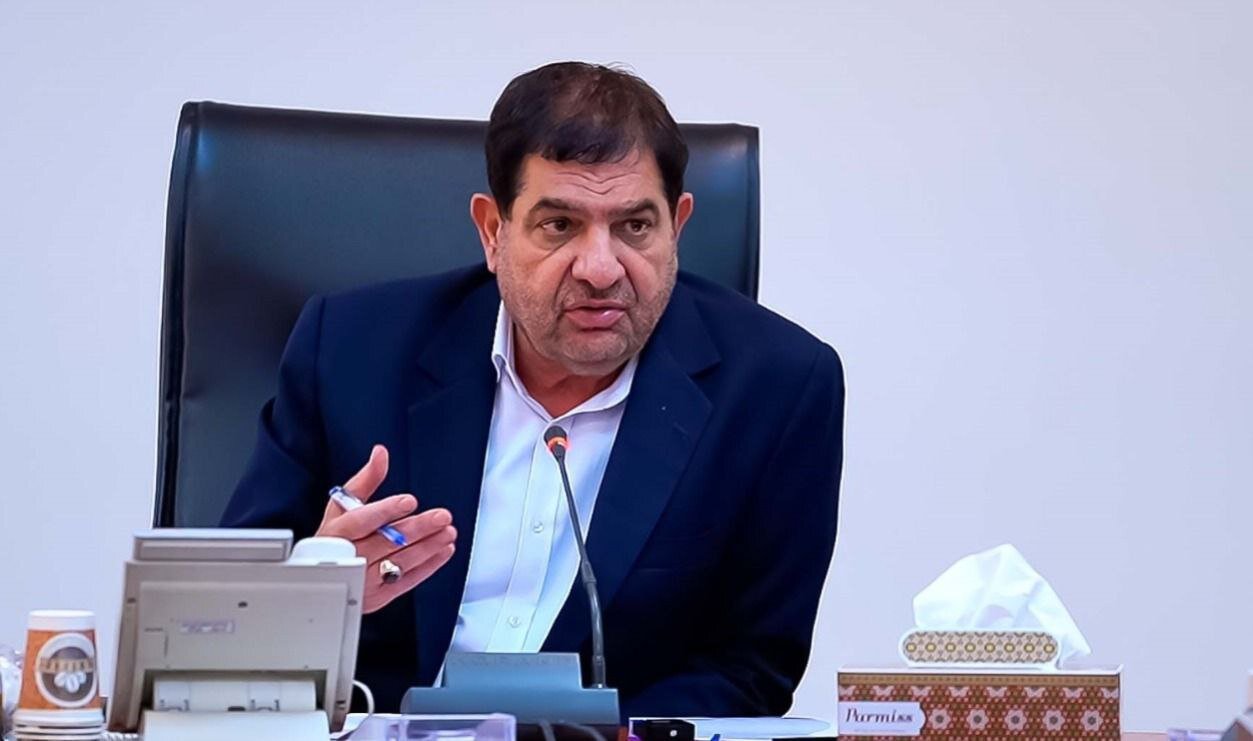
Iranian Leader's advisor, Mohammad Mokhber, has stated that the Strait of Hormuz will remain under Iranian control, dismissing US President Donald Trump's claims to seize the waterway. Mokhber emphasized that Iran is the sole party that will determine how the waterway is managed, citing a law in the Islamic Consultative Assembly and a decision made by the Leader.
Imagine the Strait of Hormuz is a busy highway that connects the Persian Gulf to the Gulf of Oman. Iran is like the traffic police who make sure the highway is safe and that all the ships and oil tankers can pass through without any problems. The US is like a driver who wants to take control of the highway and make its own rules. Iran is saying, 'No, we are the traffic police, and we will make sure the highway is safe and that all the ships and oil tankers can pass through without any problems.'
Analysis
Background on the Strait of Hormuz
The Strait of Hormuz is a vital waterway that connects the Persian Gulf to the Gulf of Oman, allowing for the passage of oil tankers and other ships. It has been a point of contention between Iran and the US, with the US having imposed sanctions on Iran in an attempt to limit its oil exports. The Strait of Hormuz is also a critical route for international trade, with over 20% of the world's oil passing through it.
Iran's Stance on the Strait
Iran has consistently maintained that the Strait of Hormuz is an Iranian territorial waterway and that it has the right to manage it. The country has also emphasized that it will not allow any foreign power to interfere with its control over the waterway. In this context, the statement by the Leader's advisor, Mohammad Mokhber, is significant because it reiterates Iran's stance on the Strait of Hormuz and its determination to manage it according to its own arrangements.
Implications of the Statement
The statement by the Leader's advisor has significant implications for the region and the global economy. It emphasizes Iran's control over the Strait of Hormuz and its determination to manage it according to its own arrangements. This could lead to increased tensions between Iran and the US, particularly if the US continues to impose sanctions on Iran in an attempt to limit its oil exports. The statement also highlights the importance of the Strait of Hormuz as a critical route for international trade and the need for countries to respect Iran's sovereignty over the waterway.
Key points
- Iran has consistently maintained that the Strait of Hormuz is an Iranian territorial waterway and that it has the right to manage it.
- The US has imposed sanctions on Iran in an attempt to limit its oil exports, which has led to increased tensions between the two countries.
- Iran has emphasized that it will not allow any foreign power to interfere with its control over the Strait of Hormuz.
- The statement by the Leader's advisor reiterates Iran's stance on the Strait of Hormuz and its determination to manage it according to its own arrangements.
If this development plays out positively, it could lead to increased cooperation between Iran and other countries in the region, particularly in the context of managing the Strait of Hormuz. This could result in increased trade and economic activity in the region, which would be beneficial for all parties involved.
On the other hand, if the US continues to impose sanctions on Iran in an attempt to limit its oil exports, it could lead to increased tensions between the two countries. This could result in a conflict over the Strait of Hormuz, which would have significant implications for the region and the global economy.