House passes $1.5tn defense bill despite standoff over Israel and Trump's voter agenda
The US House passed a $1.15tn defense policy bill in a 216-212 near-party-line vote, with nearly all Democrats opposing it over Trump's Iran war and voting restrictions.
Intelligence analysis by Llama
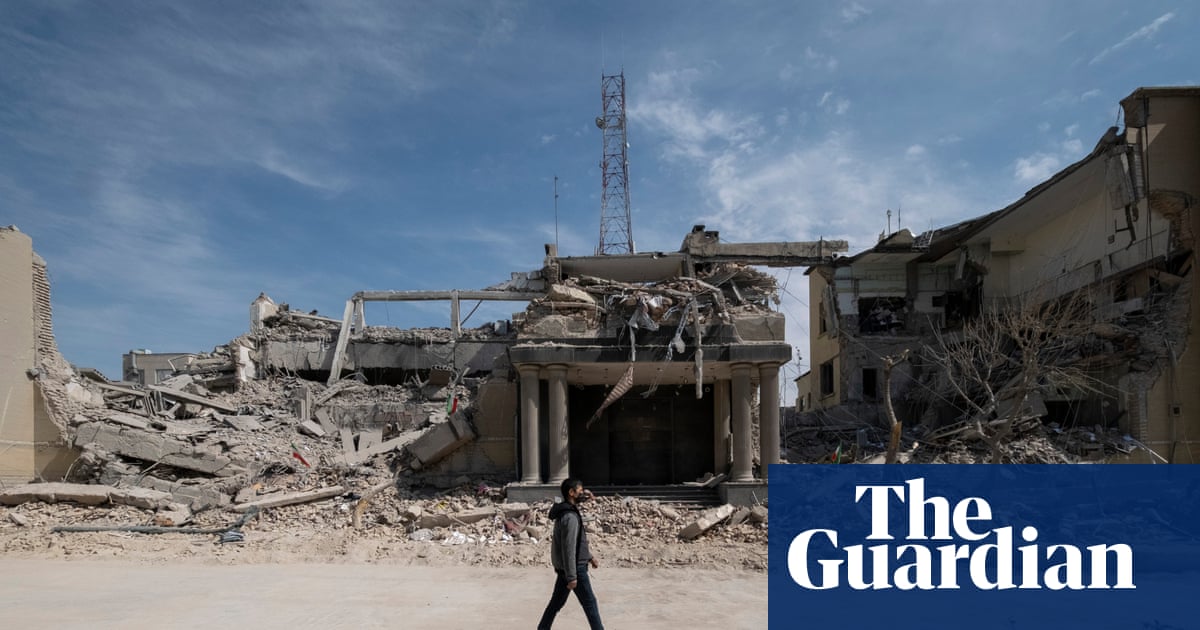
The annual NDAA passed the House 216-212 after Democrats united against the $1.15tn measure, citing Trump's unilateral decision to join Israel in attacking Iran and the inclusion of voting restrictions. A separate $60bn Iran war supplemental is far short of the Pentagon's $350bn ask.
The House of Representatives passed a giant bill to pay for the US military. Most Democrats said no because the president started a war with Iran without asking Congress, and because the bill also changed how Americans vote. Now the Senate gets a turn to decide what to do with it.
Analysis
War Powers and the Pentagon's $1.5tn Wish List
The $1.15tn measure that cleared the House on Wednesday is only a partial answer to the administration's ambitions. According to the article, the Pentagon originally sought an additional $350bn to bring overall defense spending for fiscal 2027 to $1.5tn. House Republicans' parallel $60bn authorization, expected largely to cover Iran war costs, comes nowhere near that figure. The discrepancy reveals how a party-line House majority is willing to fund the current conflict but not the broader buildup hawks in the chamber wanted. The shortfall, if it persists into the Senate and conference negotiations, could leave the military modernization agenda underfunded by hundreds of billions even as Washington finds itself in an active war.
The Iran War as a Defeater of Bipartisanship
For four decades, the NDAA has crossed the aisle with relative ease, an annual ritual of bipartisan national security consensus. This year, Democrats are walking away. The article puts Trump's decision to join Israel in strikes on Iran, taken without seeking authorization from Congress, at the center of the split. Last week, Senate Democrats blocked their own chamber's version after a peace memorandum collapsed. House Armed Services Chair Mike Rogers framed the topline as the first time in 40 years the budget accounts for the true cost of deterrence, but the politics around it have rarely been more polarized. Even members inclined to back a strong defense posture are now weighing whether to fund operations that have no formal congressional mandate.
Voting Rights as the Hidden Driver of Opposition
The NDAA's traditional bipartisan cover was peeled back by the inclusion of the Save America Act, a Trump-backed measure that would ban mail-in ballots and impose new identification requirements on voters. Speaker Mike Johnson acceded to rightwing demands to insert the bill, giving Democrats a second axis of opposition on top of the Iran war. Adam Smith, the top Democrat on House Armed Services, framed his no vote around both fiscal responsibility and the package's broader implications. Alexandria Ocasio-Cortez went further, calling deeper US-Israel defense industry cooperation an existential threat to American sovereignty. What was once a vote about military readiness has become a referendum on the administration's full slate of priorities, and the Senate now faces a bill loaded with landmines on multiple fronts.
Key points
- House passed the $1.15tn NDAA 216-212, with all but six Democrats and seven Republicans in opposition
- Trump's decision to join Israel in attacking Iran without congressional authorization is a central flashpoint
- The Save America Act voting restrictions were inserted into the bill, drawing near-unanimous Democratic opposition
- A separate $60bn Republican supplemental for Iran war costs is far short of the Pentagon's $350bn ask toward $1.5tn
- A Republican amendment to halt all US military aid to Ukraine was defeated 76-350, while an amendment to ban transgender service members failed 212-217
If the Iran war de-escalates and the NDAA clears conference negotiations, the $1.5tn defense topline could fund the generational military investments the Pentagon has argued for, and the bipartisan tradition around the annual defense bill could eventually reassert itself once the immediate political flashpoints fade.
The $60bn Iran supplemental is far short of the $350bn the Pentagon originally requested, meaning modernization shortfalls could compound even as active war costs rise. The near-unanimous Democratic opposition, and the entanglement of war powers with voting rights fights, raises the risk that the final bill stalls in the Senate or emerges so laden with unrelated provisions that it undercuts long-term defense planning.