Houthi attacks reportedly kill at least 30 Yemeni government forces
At least 30 Yemeni government troops have reportedly been killed in Houthi rebel attacks on military camps in central Yemen. The Houthis said the attacks were a response to a Saudi blockade of ports and airports in Yemen.
Intelligence analysis by Llama
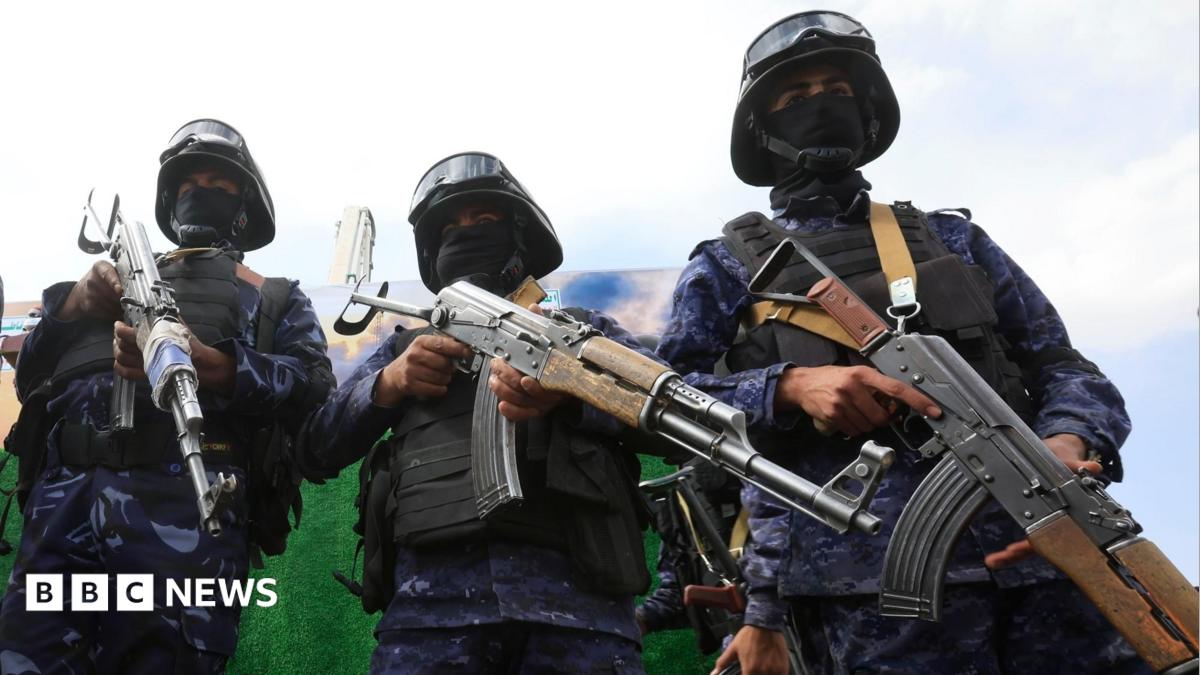
Houthi rebels have attacked military camps in central Yemen, killing at least 30 government troops. The attacks are seen as a response to a Saudi blockade of ports and airports in Yemen. The conflict has escalated in recent weeks, with the Houthis launching missile and drone attacks on Saudi airports, oil facilities, and tankers.
Imagine a big fight between two groups, the government and the Houthis, in a country called Yemen. The Houthis are launching missiles and drones at the government's military camps, and the government is responding with airstrikes. This fight is making it hard for people to get food and other things they need, and it's also affecting the global economy.
Analysis
Yemen's Civil War: A Complex Conflict with Global Implications
The conflict in Yemen has been ongoing since 2014, when the Houthi rebels ousted the government from Sanaa, the capital. The conflict escalated in 2015, after the Saudi-led coalition of Arab states intervened in an attempt to restore the government's rule. The fighting has reportedly left more than 150,000 people dead and triggered one of the world's worst humanitarian crises, with more than 22 million people in need of some form of aid, according to the UN.
The recent escalation of violence has raised concerns about the potential for a wider Middle East conflict. The Houthis have launched missile and drone attacks on Saudi airports, oil facilities, and tankers in the Red Sea. Saudi Arabia has responded with strikes targeting Houthi positions and by forming a new naval coalition to protect shipping in the Red Sea and the Gulf of Aden.
The conflict in Yemen has significant implications for the region and the global economy. The involvement of external powers such as Saudi Arabia and Iran has raised concerns about the potential for a wider conflict and increased global economic damage. The humanitarian crisis in Yemen has also had a significant impact on the global economy, with the UN estimating that the conflict has cost the global economy over $100 billion in lost economic output.
The Role of External Powers in the Conflict
The conflict in Yemen has been fueled by the involvement of external powers such as Saudi Arabia and Iran. Saudi Arabia has been providing military support to the Yemeni government, while Iran has been providing support to the Houthi rebels. The involvement of external powers has raised concerns about the potential for a wider conflict and increased global economic damage.
The Humanitarian Crisis in Yemen
The conflict in Yemen has triggered one of the world's worst humanitarian crises, with more than 22 million people in need of some form of aid, according to the UN. The humanitarian crisis has had a significant impact on the global economy, with the UN estimating that the conflict has cost the global economy over $100 billion in lost economic output.
The Potential for a Wider Middle East Conflict
The recent escalation of violence in Yemen has raised concerns about the potential for a wider Middle East conflict. The involvement of external powers such as Saudi Arabia and Iran has raised concerns about the potential for a wider conflict and increased global economic damage.
Key points
- At least 30 Yemeni government troops have been killed in Houthi rebel attacks on military camps in central Yemen.
- The Houthis said the attacks were a response to a Saudi blockade of ports and airports in Yemen.
- The conflict in Yemen has significant implications for the region and the global economy.
- The involvement of external powers such as Saudi Arabia and Iran has raised concerns about the potential for a wider conflict and increased global economic damage.
- The humanitarian crisis in Yemen has had a significant impact on the global economy, with the UN estimating that the conflict has cost the global economy over $100 billion in lost economic output.
If the conflict in Yemen can be resolved peacefully, it could lead to a significant reduction in the humanitarian crisis and a decrease in the global economic damage. A peaceful resolution could also lead to increased stability in the region and a decrease in the potential for a wider Middle East conflict.
If the conflict in Yemen continues to escalate, it could lead to a wider Middle East conflict and increased global economic damage. The humanitarian crisis in Yemen could also worsen, leading to more deaths and displacement of people.