Houthis capture Yemen's Red Sea port city in push to seize Bab el-Mandeb
Yemen's Houthis have seized the strategic Red Sea port city of Mokha and are advancing towards the Bab el-Mandeb strait, aiming to disrupt a crucial global shipping lane.
Intelligence analysis by Gemini 2.5 Flash
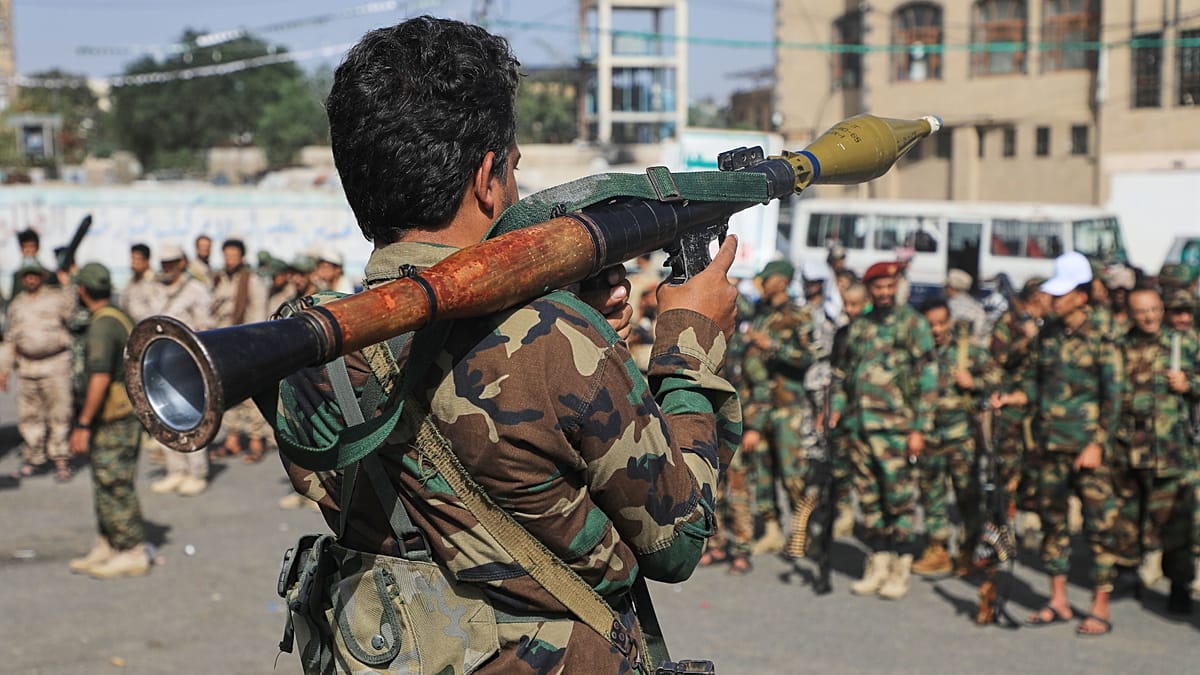
The Houthi offensive, which includes the capture of Mokha and Zuqar Island, seeks to establish control over the Bab el-Mandeb strait, a vital waterway for global trade and oil shipments. This move is seen as an attempt to replicate Iran's influence over the Strait of Hormuz, potentially straining international economies and escalating the ongoing conflict with Saudi-backed forces.
Imagine a very important shortcut for big ships carrying oil and goods between different parts of the world, like a super busy highway for boats. A group called the Houthis in Yemen has just taken over a town right next to this shortcut, called Mokha. They want to control the whole shortcut, named Bab el-Mandeb, which could make it harder for ships to pass and might make things like gas and toys more expensive for everyone, just like if a toll booth suddenly appeared on your favorite highway.
Analysis
The recent Houthi capture of Mokha, a key Red Sea port city, marks a significant escalation in the Yemeni conflict and a direct threat to global maritime trade. This strategic move positions the Houthis closer to their stated objective of controlling the Bab el-Mandeb strait, a narrow choke point that is indispensable for international shipping. The group's actions, including the seizure of Zuqar Island, demonstrate a concerted effort to establish a dominant presence along the Red Sea coast, mirroring Iran's strategic control over the Strait of Hormuz. The Yemeni government, though yet to publicly confirm Mokha's fall, has consistently warned about these Houthi ambitions, highlighting the potential for severe disruption to global commerce.
Mokha
The fall of Mokha, a city previously held by Yemen's internationally recognized government, represents a major tactical victory for the Houthis. The city had been under sustained attack since early August, enduring over 25 missile strikes that forced the cessation of port operations. This capture is not merely about territorial gain; it provides the Houthis with a crucial operational footing along the Red Sea coast, essential for their broader strategy concerning the Bab el-Mandeb. Major-General Sadeq Duwaid, spokesman for the Yemeni government-affiliated National Resistance Forces, had previously identified the siege of Mokha as a key maneuver to build this coastal presence, underscoring its importance as a gateway to the strait.
Bab el-Mandeb Strait
The Bab el-Mandeb strait, whose name translates to "Gate of Tears," is a critical maritime artery connecting the Red Sea to the Gulf of Aden and the Indian Ocean. Together with the Suez Canal, it forms a vital link for cargo traffic between Asia and Europe. The article highlights that this waterway, along with Hormuz, accounts for a quarter of daily petroleum and crude shipments and nearly a third of the world's maritime trade. The Houthis' ambition to control this strait, and their reported consultations with Tehran on imposing a "safe passage toll," signal a clear intent to leverage this strategic position to exert economic pressure and replicate the influence Iran wields over the Strait of Hormuz. Such a move would have profound implications for global energy markets and supply chains.
Saudi Arabia
The Houthi offensive has intensified the broader conflict in Yemen, drawing strong reactions from the Saudi-led coalition that backs the internationally recognized government. The Houthis, formally known as Ansar Allah, launched a large-scale offensive against Saudi-backed forces, including attacks on Saudi territory that resulted in dozens wounded. Riyadh has responded with daily airstrikes on Houthi-held areas, with reports of approximately 40 strikes in recent hours across several Yemeni governorates. This renewed fighting follows a UN-brokered truce in April 2022 that had largely halted active warfare but failed to achieve a lasting political settlement. The Houthis' defiance, including allowing an Iranian plane to land in Yemen despite Saudi control of airspace, further inflamed tensions, leading to the current escalation and a significant increase in casualties, with over 500 dead in the past week.
Key points
- Yemen's Houthis have seized the strategic Red Sea port city of Mokha and Zuqar Island.
- The offensive aims to gain control of the Bab el-Mandeb strait, a vital global shipping lane for oil and trade.
- The Houthis reportedly consulted with Tehran on imposing a 'safe passage toll' through the strait.
- The escalation has led to renewed heavy fighting, with Houthi attacks on Saudi territory and retaliatory Saudi airstrikes.
- Houthi actions have already contributed to a spike in oil prices, surpassing $100 a barrel.
The Houthi seizure of Mokha and their push towards Bab el-Mandeb could lead to sustained disruption of global shipping, significantly increasing transit costs and insurance premiums for vessels. This escalation risks further destabilizing the region, potentially drawing in more international actors and exacerbating the humanitarian crisis in Yemen, while driving up global energy prices.
Market signals
- OIL Houthi attacks on oil infrastructure and Saudi tankers, coupled with supply-route risks in the Red Sea, have already pushed oil prices above $100 a barrel.
AI-generated analysis of potential market relevance. Not financial advice.
