Houthis target Aramco refinery, Saudi capital airport as Mecca defence pact activated: Report
Yemen's Houthi rebels claimed new missile and drone attacks on Saudi Arabia, targeting key airports and an Aramco refinery, escalating the conflict as Saudi-backed forces advance.
Intelligence analysis by Gemini 2.5 Flash
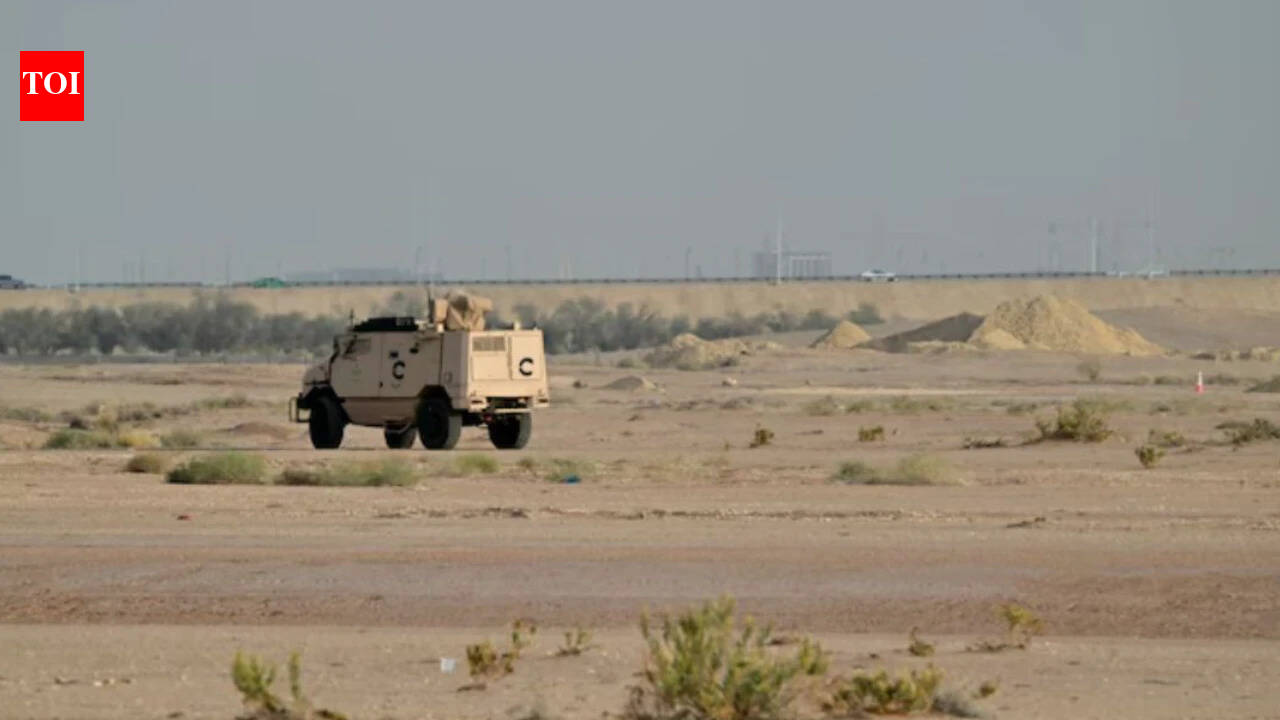
The Iran-aligned Houthi rebels reportedly launched a series of missile and drone strikes against critical Saudi infrastructure, including King Khalid International Airport and an Aramco refinery. This escalation comes amidst a Saudi-backed offensive against the Houthis along Yemen's Red Sea coast, leading to the activation of a collective defense pact involving Saudi Arabia, Pakistan,…
Imagine two groups are having a big argument, and one group, called the Houthis, is throwing rockets and drones at the other group's important places, like their main airport and a big factory that makes oil. This is happening while the other group, Saudi Arabia, is also fighting back. Because of these attacks, Saudi Arabia has asked its friends, Pakistan and Türkiye, to help protect it, like a team of superheroes joining forces. This makes everyone a bit worried because if the fighting gets worse, it could make oil more expensive for everyone around the world, like when your favorite toy costs more money.
Analysis
The recent claims by Yemen's Houthi rebels of targeting significant Saudi Arabian infrastructure, including the King Khalid International Airport in Riyadh and an Aramco refinery in Rabigh, signal a substantial intensification of the ongoing conflict. These alleged strikes, which also reportedly hit Abha International Airport and a military base in Khamis Mushait, underscore the Houthis' capability to project power deep into Saudi territory. The timing of these attacks coincides with renewed offensives by Saudi-backed Yemeni government forces along the Red Sea coast, particularly near the strategically vital Bab el-Mandeb Strait, suggesting a retaliatory pattern from the Houthi side.
Aramco refinery
The targeting of an Aramco refinery, specifically in Rabigh, represents a direct threat to Saudi Arabia's economic lifeline and global oil supplies. Saudi Aramco is one of the world's largest oil producers, and its facilities are critical to the stability of international energy markets. Previous attacks on Aramco infrastructure have demonstrated the potential for significant disruptions and subsequent spikes in oil prices. While the claims of these specific attacks could not be independently verified, the mere threat or successful execution of such strikes introduces considerable uncertainty into the global energy landscape.
Such incidents highlight the vulnerability of critical energy infrastructure in conflict zones and the broader implications for global economic stability. For major oil-importing nations like India, these developments are particularly concerning, as they can directly translate into higher fuel costs and inflationary pressures. The repeated targeting of these facilities indicates a strategic effort by the Houthis to exert pressure on Saudi Arabia by striking at its economic heart.
King Khalid International Airport
The alleged targeting of King Khalid International Airport in Riyadh, the Saudi capital, with missiles signifies a bold and provocative move by the Houthi rebels. Attacks on civilian infrastructure, especially major international airports, carry significant risks of civilian casualties and can severely disrupt air travel and commerce. While the article notes that these claims were unverified, the intent behind such reported actions is to demonstrate the Houthis' reach and their capacity to destabilize the kingdom's core.
Such attacks aim to undermine Saudi Arabia's sense of security and project an image of vulnerability, potentially impacting investor confidence and tourism. The psychological impact of strikes on a capital city's main airport can be substantial, forcing a re-evaluation of defense strategies and potentially leading to further escalation of military responses. This type of targeting broadens the scope of the conflict beyond traditional battlefields, bringing it closer to urban centers.
Mecca defence pact
In response to the escalating Houthi aggression, the Mecca defence pact has reportedly been activated, involving Saudi Arabia, Pakistan, and Türkiye. This pact signifies a collective security arrangement designed to bolster Saudi Arabia's defensive capabilities and deter further attacks. The agreement, reached at an emergency meeting in Riyadh, includes measures for the rapid deployment of military forces and capabilities to Saudi Arabia, as reported by the Saudi Press Agency.
The activation of this pact introduces a new dimension to the conflict, potentially drawing in additional regional powers. For Pakistan, its involvement in a defense agreement with Saudi Arabia underscores its long-standing strategic ties with the kingdom, particularly in security matters. Türkiye's participation also highlights its growing role in regional security dynamics. This collective response aims to present a united front against the Houthi threats, but it also raises questions about the potential for broader regional entanglement and the implications for the balance of power in the Middle East.
Key points
- Yemen's Houthi rebels claimed new missile and drone attacks on Saudi Arabia.
- Targets reportedly included King Khalid International Airport in Riyadh and an Aramco refinery in Rabigh.
- The attacks coincide with a Saudi-backed offensive against Houthis along Yemen's Red Sea coast.
- The Mecca defence pact, involving Saudi Arabia, Pakistan, and Türkiye, has been activated in response.
- The claims of specific attacks could not be independently verified by Reuters.
The continued escalation of Houthi attacks on critical Saudi infrastructure, if uncontained, risks further destabilizing the Middle East, potentially disrupting global oil supplies and driving up energy prices. The activation of the Mecca defence pact, while intended to deter, could also lead to a broader regional conflict involving more international actors, increasing the humanitarian toll and economic uncertainty.
Market signals
- OIL Attacks on an Aramco refinery and threats to regional stability increase supply-side risk, pushing crude oil prices higher.
AI-generated analysis of potential market relevance. Not financial advice.