How Beijing’s hypersonic ‘carrier killers’ could distract US forces in a Taiwan conflict
China's advanced hypersonic anti-ship missiles, like the YJ-20, are bolstering its anti-access/area denial (A2/AD) capabilities, potentially diverting US forces in a Taiwan Strait contingency.
Intelligence analysis by Gemini 2.5 Flash
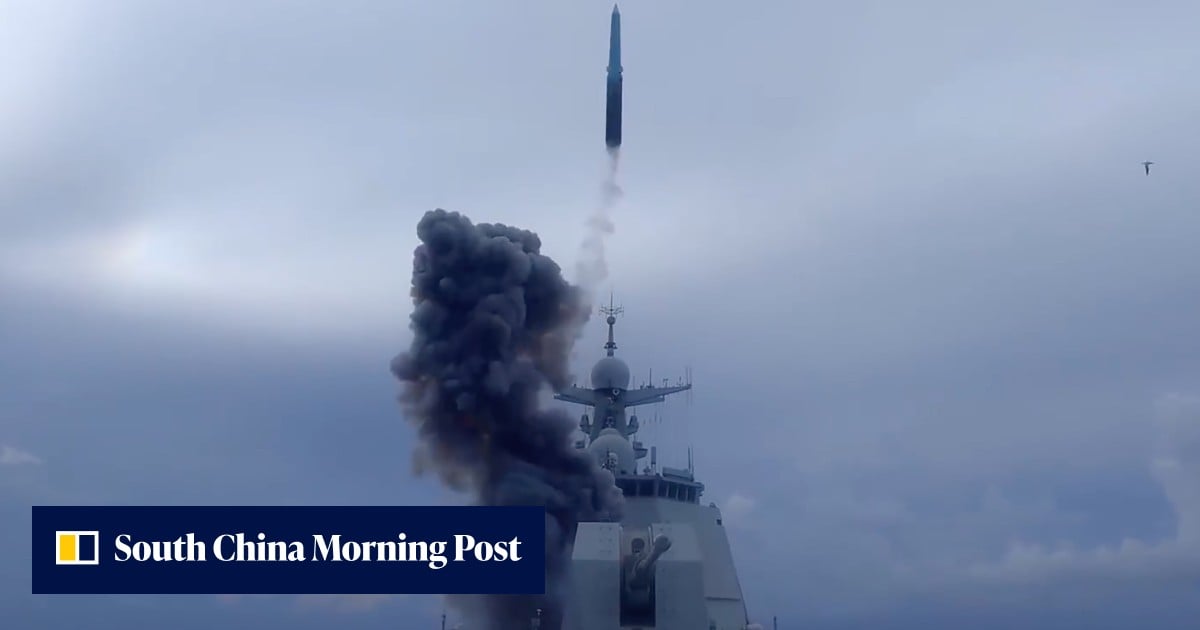
Beijing is mass-producing new anti-ship missiles, including the sea-based YJ-20, to enhance its ability to keep the US Pacific Fleet at a distance. This strategy aims to secure China's coastal waters and the first island chain, particularly in the event of a conflict over Taiwan, by making it harder for adversaries to operate freely.
Imagine a super-fast, hard-to-stop dart that a big Chinese warship can shoot from its deck. This dart, called the YJ-20, is so quick it's tough for other big ships, like giant aircraft carriers, to dodge. China is making lots of these darts to keep other countries' ships, especially America's, far away from its coast, especially if there's a disagreement about Taiwan. It's like having a really long arm to push away anyone who gets too close.
Analysis
The recent showcasing of China's YJ-20 hypersonic anti-ship missile marks a significant milestone in Beijing's military modernization efforts. This weapon, designed to be launched from platforms like the Type 052D destroyer, represents a leap in the People's Liberation Army Navy's (PLAN) ability to project power and enforce its strategic objectives within its coastal waters and the broader first island chain. The mass production of such advanced weaponry underscores China's commitment to narrowing the military gap with the United States and establishing robust anti-access/area denial (A2/AD) capabilities.
YJ-20
The YJ-20 is highlighted as one of China's first sea-based hypersonic anti-ship missiles to enter mass production, signifying a major technological and industrial achievement. Its hypersonic speed makes it exceptionally difficult for existing missile defense systems to intercept, posing a substantial threat to surface combatants, including aircraft carriers. The deployment of such a weapon from naval vessels like destroyers diversifies China's strike options and enhances its ability to engage targets at extended ranges, complicating adversary naval operations.
This missile's introduction is a clear signal of China's strategic intent to deter or counter intervention by foreign navies, particularly the US Pacific Fleet, in potential regional conflicts. By increasing the risk to high-value assets, the YJ-20 contributes to Beijing's A2/AD strategy, aiming to create a defensive perimeter that would make it prohibitively costly for opposing forces to operate within critical areas, such as the Taiwan Strait.
First Island Chain
The first island chain, stretching from Japan to Borneo and encompassing Taiwan, is a strategically vital geographical concept for China's defense and power projection. Beijing views this chain as a critical buffer zone and a key area for asserting its sovereignty claims, especially over Taiwan. The development and deployment of advanced anti-ship missiles are central to China's strategy of controlling access to and through this chain.
By bolstering its A2/AD capabilities within this region, China seeks to establish a credible deterrent against any external intervention in a Taiwan contingency. The ability to hold US and allied navies at a distance or divert their attention through the threat of hypersonic missiles could provide the PLA with a crucial window to achieve its objectives, thereby altering the strategic calculus for any potential conflict in the region.
Type 052D destroyer
The Type 052D destroyer's capability to fire the YJ-20 hypersonic anti-ship missile from its vertical launch system showcases the PLAN's enhanced operational flexibility and combat readiness. This class of destroyer is a modern, multi-role warship, and its integration with advanced hypersonic weapons demonstrates China's commitment to equipping its naval forces with cutting-edge technology. The vertical launch system allows for rapid and versatile deployment of various missile types, including anti-ship, anti-air, and land-attack munitions.
This integration means that China's naval platforms are becoming increasingly formidable, capable of engaging a wide array of threats across different domains. The Type 052D, armed with the YJ-20, becomes a potent component of China's naval defense, capable of contributing significantly to the A2/AD strategy by threatening adversary surface combatants and potentially forcing them to operate further away from China's shores and the first island chain.
Key points
- China's YJ-20 hypersonic anti-ship missile has entered mass production, enhancing its naval capabilities.
- The missile can be fired from platforms like the Type 052D destroyer, showcasing the PLA Navy's modernization.
- These 'carrier killers' bolster China's anti-access/area denial (A2/AD) strategy in the first island chain.
- The goal is to deter or distract US and allied navies in a potential Taiwan Strait conflict.
- The YJ-20's hypersonic speed makes it difficult for existing defense systems to intercept.
The proliferation of advanced anti-ship missiles like the YJ-20 could significantly escalate regional tensions, increasing the risk of miscalculation in potential flashpoints like the Taiwan Strait. This military build-up may lead to a more volatile security environment, making de-escalation harder in a crisis and potentially sparking an arms race.
