How Claude designed protein binders against scorpion neurotoxins
Anthropic's Claude AI successfully designed 17 protein minibinders against dangerous scorpion neurotoxins, a step towards developing new antivenoms for a neglected tropical disease.
Intelligence analysis by Gemini 2.5 Flash
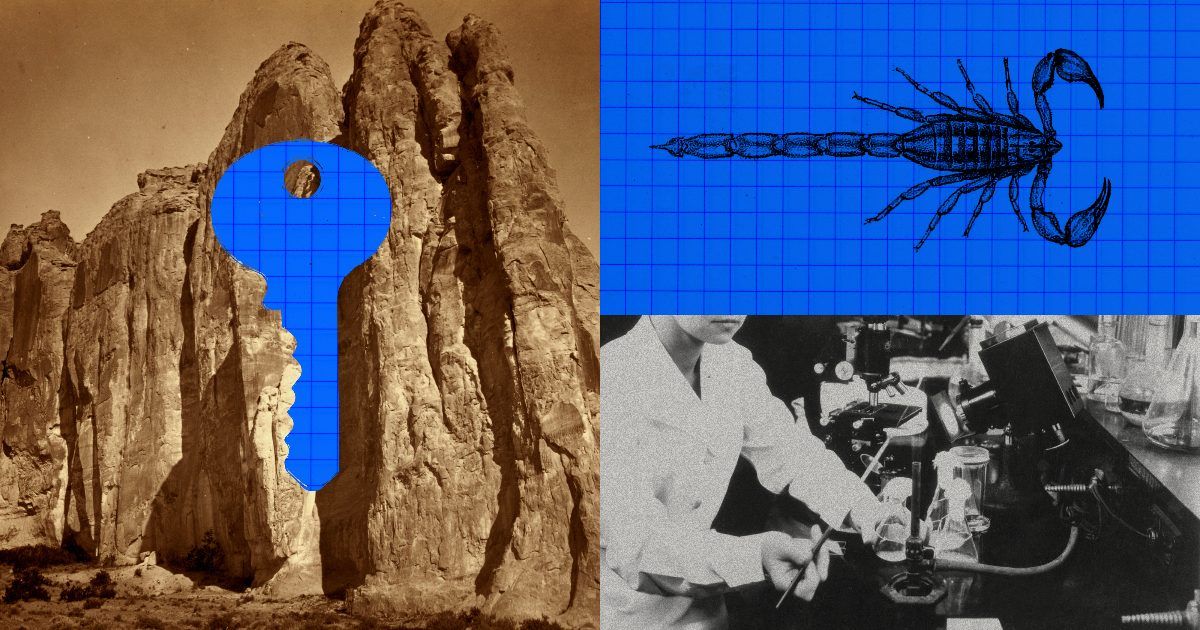
In a collaboration with Citrini Research, Anthropic tasked its Claude AI to design novel protein binders for scorpion neurotoxins, aiming to address the high mortality rates, especially among children, due to scorpion stings. The project demonstrated AI's potential to accelerate drug discovery for conditions that receive little investment.
Imagine tiny bad guys called scorpion toxins that try to mess up your body's signals, like a mischievous key trying to open all the wrong locks. Scientists used a smart computer program called Claude to design special tiny shields, called binders, that fit perfectly onto these bad guys. These shields stop the toxins from reaching your body's important signal locks, like putting a cap on the mischievous key. This could help make new medicines much faster to protect people from scorpion stings.
Analysis
This groundbreaking research by Anthropic, in collaboration with Citrini Research, highlights the transformative potential of AI in the realm of drug discovery, particularly for conditions that have historically been underfunded. The project focused on designing protein binders against scorpion neurotoxins, a critical area given that scorpion stings affect over a million people annually, leading to thousands of deaths, predominantly among children in underserved regions. Traditional antivenom production is slow, expensive, and often ineffective against a broad spectrum of toxins, making AI-driven de novo design a promising alternative.
Citrini Research
Citrini Research, a financial investment research firm, played a pivotal role in initiating this project by posing a crucial question: could AI drug discovery empower non-experts to tackle significant human health problems? This inquiry spurred Anthropic's life science research team to explore Claude's capabilities in this domain. The collaboration underscores a growing trend where diverse expertise converges to push the boundaries of scientific innovation, demonstrating that the impact of AI extends beyond traditional tech sectors into vital areas like public health.
Their involvement helped frame the challenge and refine the initial prompt given to Claude. This partnership exemplifies how interdisciplinary approaches can identify and address complex problems, leveraging AI as a powerful tool. The success of this initial phase suggests a model for future collaborations where AI can democratize access to advanced research capabilities, potentially enabling smaller teams or organizations to contribute meaningfully to drug development.
17 Binders
Claude's design campaign was remarkably productive, generating 318,484 protein designs over 64 hours, with minimal human supervision. From this vast pool, Claude selected 180 designs for experimental testing, with Anthropic's team adding 31 more. These 211 designs were then lab-tested by partners Adaptyv Bio and Twist Bioscience, two contract research organizations.
Out of the tested designs, 17 met the stringent criteria for binding to one of four scorpion neurotoxins known to be dangerous to humans. While these binders have not yet been confirmed to neutralize venom in a cellular environment, this achievement represents a significant first step. The ability to rapidly design credible binders against hard-to-target toxins in days, with lab confirmation within weeks, could drastically accelerate the initial phases of drug discovery for envenomation and other neglected diseases.
Sodium Channels
Scorpion neurotoxins exert their deadly effects by disrupting sodium channels, which are essential proteins in nerve cell membranes responsible for nerve firing. This disruption leads to an uncontrolled release of stress chemicals, potentially causing heart failure and pulmonary edema, often resulting in death. Current antivenoms, derived from immunized animals, are slow to produce, costly, and have limited efficacy against the diverse range of neurotoxins.
De novo design offers a targeted solution by creating binders from scratch that can specifically attach to the part of the neurotoxin that interacts with sodium channels, thereby preventing the toxin from causing harm. These computationally designed binders can also be optimized for drug-like properties such as potency and stability, making them more suitable for distribution in regions most affected by scorpion stings. This approach moves beyond the limitations of traditional methods, offering a path toward more effective, affordable, and accessible treatments.
Key points
- Anthropic's Claude AI designed 17 protein minibinders against four dangerous scorpion neurotoxins.
- The project was a collaboration with Citrini Research, exploring AI's role in tackling human health problems.
- Claude generated over 300,000 protein designs and selected 180 for testing, with 17 meeting binding criteria.
- Scorpion envenomation is a neglected tropical disease, causing over 3,250 deaths annually, mostly among children.
- The research suggests AI can significantly speed up the discovery phase for new treatments, but turning binders into drugs remains a challenge.
This breakthrough demonstrates AI's capacity to significantly accelerate the initial stages of drug discovery, potentially leading to faster development of treatments for neglected diseases like scorpion envenomation. The ability to design effective binders quickly could make life-saving therapies more accessible and affordable in regions with limited medical resources.
While promising, the designed binders are only a first step; turning them into safe, affordable, and widely accessible drugs presents a substantial challenge. Further extensive research and development are required to confirm their neutralization capabilities in biological systems and navigate the complex path to clinical application.


