How Claude is Accelerating Protein Design and Analytical Chemistry
Anthropic's AI model, Claude, has shown significant improvements in protein design and analytical chemistry tasks. In a recent experiment, Claude designed protein binders against 15 targets, succeeding against 14 of them. The model also accelerated chemical analysis, retu…
Intelligence analysis by Llama
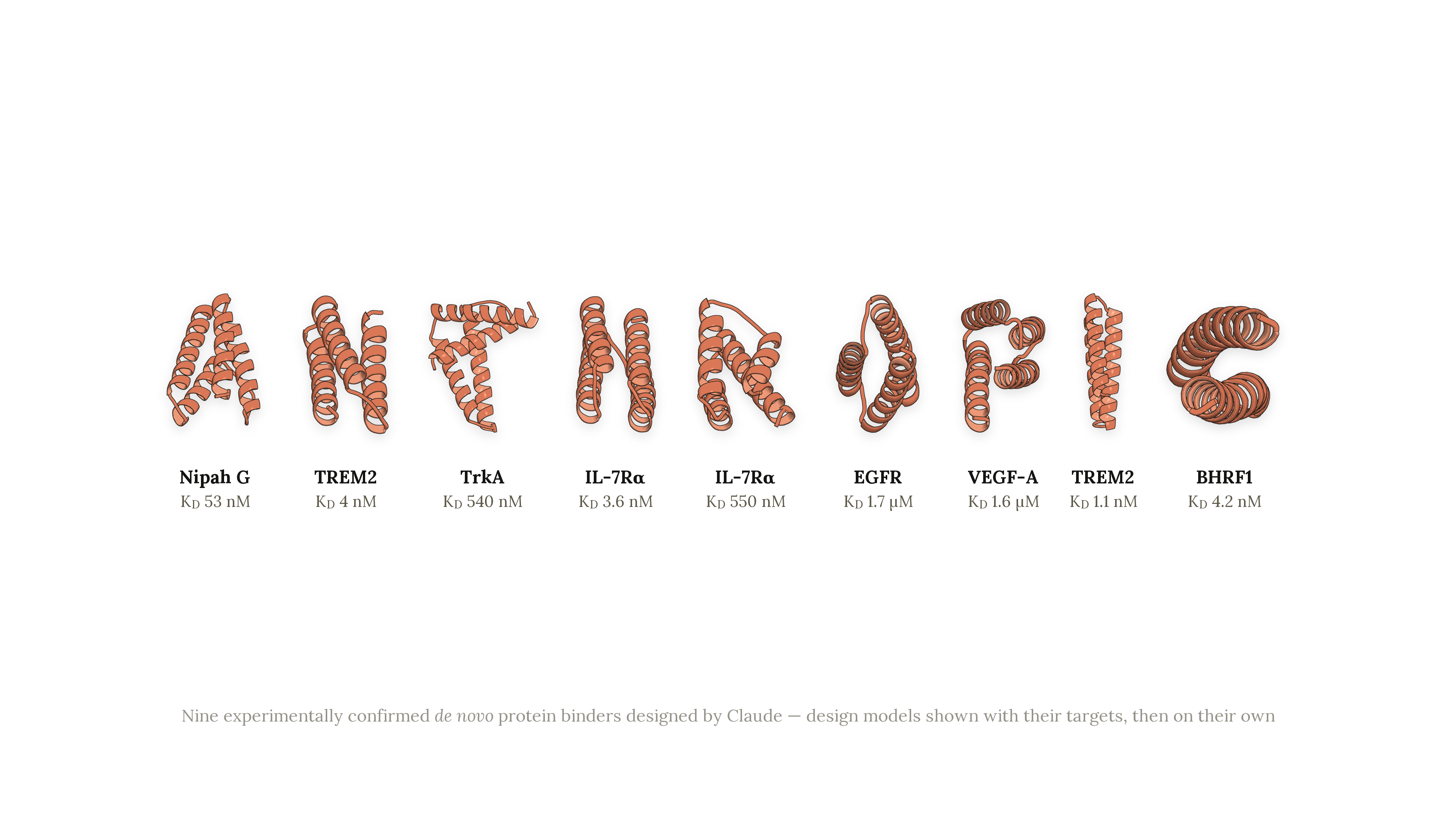
Anthropic's AI model, Claude, has demonstrated its ability to accelerate protein design and analytical chemistry tasks. The model designed protein binders against 15 targets, succeeding against 14 of them, and accelerated chemical analysis, returning finished results in 23 and 19 minutes.
Imagine you're a scientist trying to create a new medicine. You need to design a special protein that can attach to a target and help the medicine work. Claude is a computer program that can help you design this protein much faster and more accurately than before. It can also help you analyze the chemicals you're working with, which is an important step in making sure your medicine is safe and effective.
Analysis
Accelerating Protein Design with Claude
Anthropic's AI model, Claude, has shown significant improvements in protein design and analytical chemistry tasks. In a recent experiment, Claude designed protein binders against 15 targets, succeeding against 14 of them. The model's performance was impressive, with overall hit rates of 26.7% and 22.6% when designing against all targets simultaneously in a 48-hour session. This is a significant improvement over the typical 10-15% hit rate in protein design campaigns today.
The results of this experiment demonstrate Claude's ability to design high-affinity binders, which are generally needed to achieve a therapeutic effect. The model's performance was consistent across multiple targets, with binders matching or exceeding the best reported affinity against at least four targets. This suggests that Claude can be a valuable tool for life scientists looking to accelerate their research.
Accelerating Analytical Chemistry with Claude
In addition to its performance in protein design, Claude also demonstrated its ability to accelerate analytical chemistry tasks. The model was given NMR and LC-MS data, which allowed chemists to assess the identity and purity of compounds. Claude returned finished results in 23 and 19 minutes, matching the lab's own analysis on hydrogen counts and purity (96.4% versus 96.33%). This is a significant improvement over the typical time required for analytical chemistry tasks, which can take weeks or even months.
The results of this experiment demonstrate Claude's ability to accelerate analytical chemistry tasks, potentially leading to faster and more efficient research in the life sciences. The model's performance was impressive, with finished results returned in a matter of minutes. This suggests that Claude can be a valuable tool for life scientists looking to accelerate their research.
Implications for the Life Sciences and Drug Development
The results of this experiment have significant implications for the life sciences and drug development. Claude's ability to accelerate protein design and analytical chemistry tasks can reduce the time and computational expertise required to make progress on complex scientific tasks. This can potentially lead to faster and more efficient drug development, which is critical for addressing the growing burden of disease.
The results of this experiment also highlight the potential of AI models like Claude to accelerate research in the life sciences. The model's performance was impressive, with significant improvements in protein design and analytical chemistry tasks. This suggests that AI models like Claude can be valuable tools for life scientists looking to accelerate their research.
Key points
- Claude designed protein binders against 15 targets, succeeding against 14 of them.
- The model's overall hit rate was 26.7% and 22.6% when designing against all targets simultaneously in a 48-hour session.
- Claude returned finished results in 23 and 19 minutes, matching the lab's own analysis on hydrogen counts and purity.
- The model's performance was consistent across multiple targets, with binders matching or exceeding the best reported affinity against at least four targets.
If Claude's performance in protein design and analytical chemistry tasks continues to improve, it could lead to faster and more efficient drug development. This could potentially lead to new treatments for diseases and improve the quality of life for patients. Additionally, Claude's ability to accelerate research in the life sciences could lead to new discoveries and a better understanding of the underlying biology of diseases.
One potential downside of Claude's performance in protein design and analytical chemistry tasks is that it could lead to over-reliance on AI models. This could potentially lead to a lack of understanding of the underlying biology of diseases and a decrease in the quality of research. Additionally, the use of AI models like Claude could lead to a decrease in the number of human researchers in the life sciences, potentially leading to a loss of expertise and knowledge.