How Cosmos 3 Helps Physical AI Think Before It Acts
NVIDIA says Cosmos 3 combines vision reasoning, generation and action prediction to help robots and AVs handle real-world situations.
Intelligence analysis by GPT-5.4 Mini
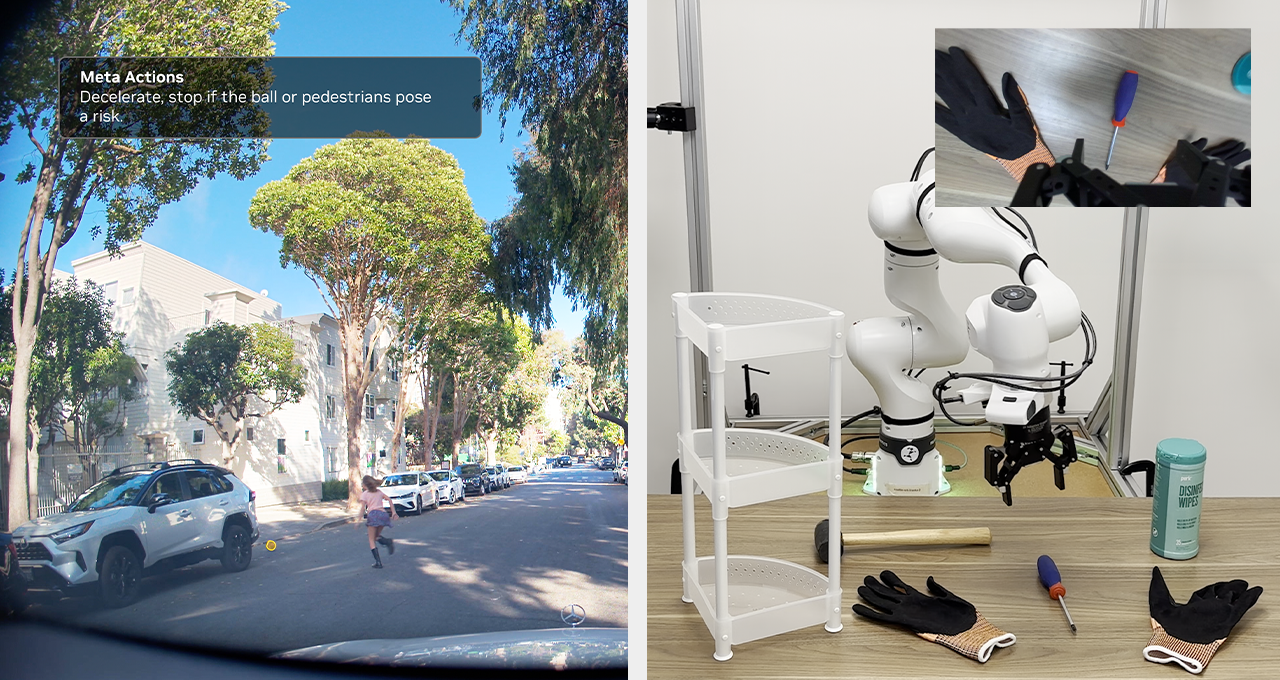
The NVIDIA blog says Cosmos 3 is an open world foundation model for physical AI. It links perception, prediction and action so robots, cars and vision systems can reason about scenes and generate synthetic training data.
Cosmos 3 is like a smart practice field for robots and other machine helpers. NVIDIA says it can look at a scene, guess what might happen next, and help make training examples.
That matters because real life is messy. A robot may see boxes in strange places, or a car may need to react when someone steps into the street. Cosmos 3 is meant to help machines practice those tricky moments before they happen.
It is a bit like a coach that watches a game, draws the next move on a board, and then lets the team rehearse it. NVIDIA says that can make machines better prepared for the real world.
Analysis
What Cosmos 3 is
NVIDIA presents Cosmos 3 as an open world foundation model for physical AI. The company says it combines vision reasoning, multimodal generation and action prediction in one system, with support for text, video, images, ambient sound and action.
What it is meant to do
The blog frames physical AI as a problem of understanding not only what is visible, but what caused it and what is likely to happen next. Cosmos 3 is described as helping developers create world data with physical context, so robots, autonomous vehicles and vision systems can plan more safely and realistically.
NVIDIA says the model uses a mixture-of-transformers design. In its description, one part interprets the scene first, while another generates outputs grounded in that context, including synthetic video and robot-task data.
Robot action and scenario generation
A major use case is robot training. NVIDIA says Cosmos 3 has native action generation, meaning it can produce numerical data such as joint angles, gripper positions and trajectory points. The blog says developers can fine-tune it for a specific robot body, camera setup, workspace or task.
The post also points to industrial and infrastructure uses. It says Cosmos 3 can reason about moving objects, likely path intersections and future scene states, then generate dense captions, predicted scene changes or scenario variations for vision AI agents.
Why NVIDIA says it matters
The article argues that rare edge cases are expensive and difficult to collect in the real world. Cosmos 3 is positioned as a way to generate physically plausible long-tail scenarios over time, supporting synthetic data workflows alongside real driving or robotics data. NVIDIA says developers can access it through build.nvidia.com, Hugging Face, GitHub and NVIDIA NIM microservices.
Key points
- NVIDIA says Cosmos 3 is an open world foundation model for physical AI.
- The model combines vision reasoning, multimodal generation and action prediction.
- It can generate robot action data such as joint angles, gripper positions and trajectories.
- NVIDIA says it can help with rare and hard-to-capture real-world scenarios.
- The company says developers can access it through build.nvidia.com, Hugging Face, GitHub and NVIDIA NIM microservices.