How Hong Kong can chart a cycle-friendly course
Hong Kong can improve its health, reduce road congestion, and contribute to sustainability goals by embracing cycling as a means of transport. Cycling is the most energy-efficient form of human-powered transport and can help countries reduce carbon emissions.
Intelligence analysis by Llama
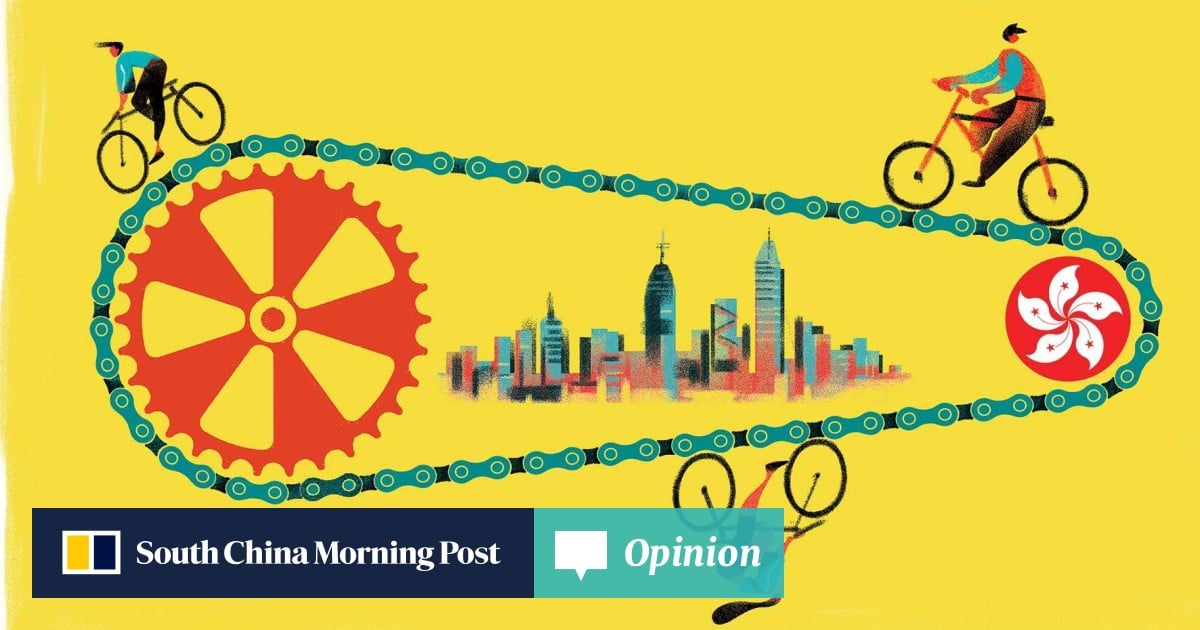
Hong Kong can become a cycle-friendly city by integrating cycling lanes and networks, making it easier for people to commute by bicycle. This can improve health, reduce road congestion, and contribute to sustainability goals.
Cycling is a great way to get around Hong Kong because it's good for your health, reduces traffic, and helps the environment. Hong Kong can become a cycle-friendly city by building more bike lanes and making it easier for people to commute by bicycle.
Analysis
A $60B Vote of Confidence
Hong Kong's Secretary for Culture, Sports and Tourism, Rosanna Law Shuk-pui, challenged Hongkongers to cycle more than 1.2 million km to commemorate Hong Kong's 30th anniversary of returning to China next year. This challenge highlights the potential of cycling as a means of transport in Hong Kong. Cycling is the most energy-efficient form of human-powered transport and can help countries reduce carbon emissions.
Why Cycling Matters
Cycling has three main benefits: it can reduce road congestion, curb fuel consumption, and improve overall health. In urban areas, if more people commuted by bicycle, we could significantly reduce road congestion and improve our overall health. Cycling would also help countries take a giant leap towards the UN's sustainability goal of reducing carbon emissions by 45 per cent by 2030 and reaching net-zero emissions by 2050.
The Road Ahead
Hong Kong has various parks and boardwalks with bike trails and shared lanes, including the Go Park, the East Coast Boardwalk, and the Central Harbourfront. We may gradually see more lane-sharing pathways and trails in the city, but cycling appears to be limited to being a leisure activity. There are some districts with more integrated cycling lanes and networks, including Sha Tin, Tai Po, Tuen Mun, and the developing Kai Tak GreenWay. However, cross-district commuting over longer distances is the key. For crosstown travel, cycling would truly be of benefit when one needs to reach a destination to which it is too far to walk.
Key points
- Cycling is the most energy-efficient form of human-powered transport.
- Cycling can reduce road congestion, curb fuel consumption, and improve overall health.
- Hong Kong has various parks and boardwalks with bike trails and shared lanes.
- There are some districts with more integrated cycling lanes and networks.
- Cross-district commuting over longer distances is the key to making cycling a viable option.
If Hong Kong becomes a cycle-friendly city, it could lead to a significant reduction in road congestion, improved air quality, and a healthier population. This could also contribute to Hong Kong's sustainability goals and make it a more attractive place to live and work.
However, there are also potential downsides to becoming a cycle-friendly city. For example, it could lead to increased traffic congestion in areas with limited bike lanes, or it could be difficult to implement and maintain a comprehensive bike lane network.