How Samsung’s immersive displays help businesses captivate audiences
Samsung's immersive displays, such as its Spatial Signage, can capture 400% more views than static displays and achieve recall rates of up to 83%. These displays are being used in various sectors, including retail, travel, and hospitality, to showcase products, promote ev…
Intelligence analysis by Llama
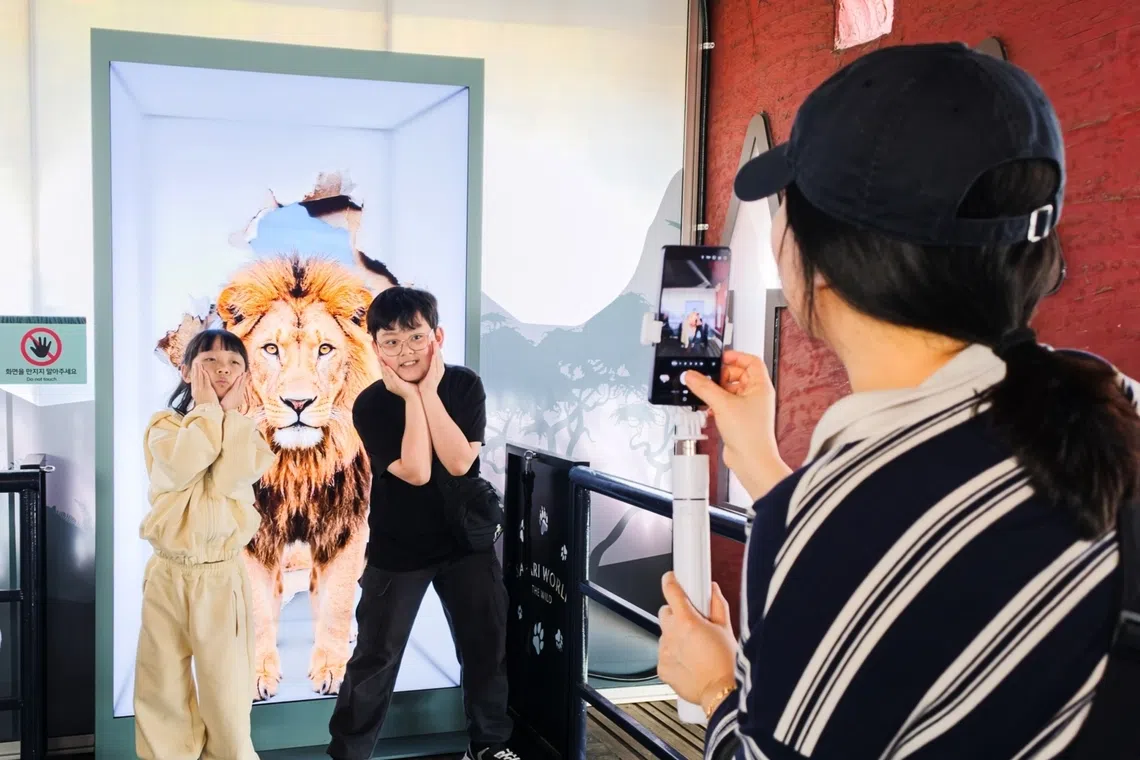
Samsung's immersive displays, such as its Spatial Signage, can capture 400% more views than static displays and achieve recall rates of up to 83%. These displays are being used in various sectors to showcase products, promote events, and communicate important information.
Imagine walking into a store and seeing a 3D tiger or bear leap towards you. That's what Samsung's immersive displays can do. They use special technology to make flat images look like they're moving, and it's really cool. Businesses are using these displays to capture customers' attention and make their stores more fun and engaging.
Analysis
Captivating Audiences with Immersive Displays
Samsung's immersive displays, such as its Spatial Signage, have been making waves in the business world. These displays can capture 400% more views than static displays and achieve recall rates of up to 83%. This is because immersive displays can create a more engaging and interactive experience for customers, drawing them in and holding their attention.
But how do these displays work? Samsung's Spatial Signage uses a special optical layer that directs light differently to each eye, helping the brain read flat images as having depth. This means that viewers can experience the 3D effect without special glasses or headsets. The result is a more immersive and engaging experience that can capture the attention of even the most distracted customers.
The Benefits of Immersive Displays
So why are immersive displays becoming so popular in the business world? The answer lies in their ability to capture audiences and create a more engaging experience. By using immersive displays, businesses can:
- Increase customer engagement and recall rates
- Create a more immersive and interactive experience for customers
- Showcase products and promotions in a more engaging and dynamic way
- Communicate important information in a more effective and timely manner
The Future of Immersive Displays
As the use of immersive displays continues to grow, it's clear that they will play a major role in the future of business. With their ability to capture audiences and create a more engaging experience, immersive displays are the perfect tool for businesses looking to stay ahead of the curve. Whether it's in retail, travel, or hospitality, immersive displays are sure to make a lasting impact on the way businesses interact with their customers.
Samsung's Commitment to Innovation
Samsung's commitment to innovation is clear in its continued push to develop new and exciting display technologies. With its Spatial Signage and other immersive displays, Samsung is helping businesses to create a more engaging and interactive experience for their customers. By combining cutting-edge display technology with secure, end-to-end solutions, Samsung is helping businesses to stay ahead of the curve and capture the attention of their customers.
Key points
- Samsung's immersive displays can capture 400% more views than static displays and achieve recall rates of up to 83%
- These displays are being used in various sectors, including retail, travel, and hospitality
- Immersive displays can create a more engaging and interactive experience for customers
- Samsung's Spatial Signage uses a special optical layer to create a 3D effect without special glasses or headsets
If Samsung's immersive displays continue to gain popularity, it's likely that we'll see even more businesses adopting this technology. This could lead to a more engaging and interactive shopping experience for customers, and potentially even increase sales for businesses that use these displays.
However, there are also potential downsides to the use of immersive displays. For example, some customers may find the 3D effect to be overwhelming or disorienting. Additionally, the cost of implementing and maintaining these displays may be prohibitively expensive for some businesses.