How Saudi Arabia's spending spree reached the end of the line
Saudi Arabia is scaling back parts of its Vision 2030 megaproject push as oil income, uncertainty and weak foreign investment tighten the budget.
Intelligence analysis by GPT-5.4 Mini
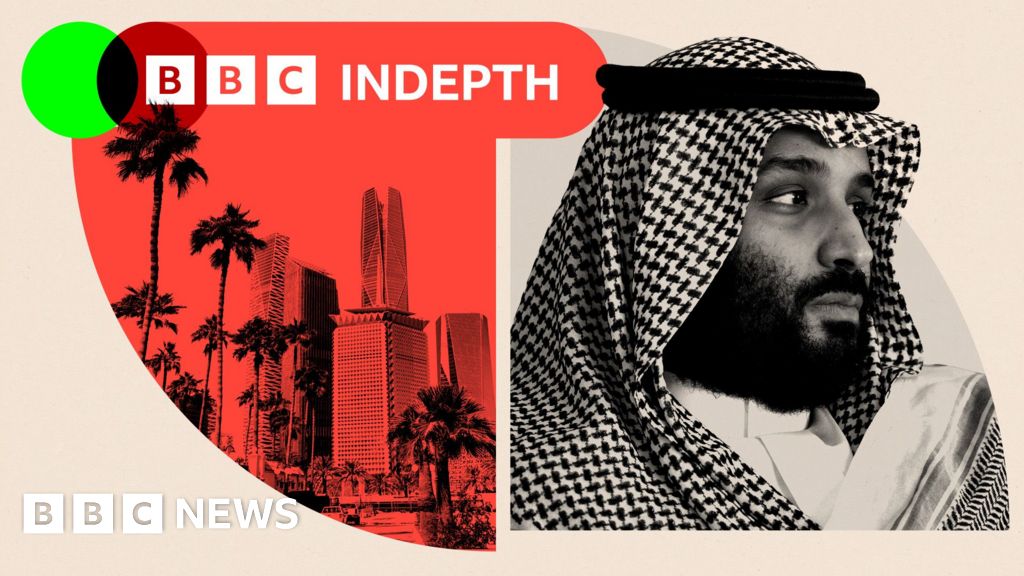
A BBC analysis says Saudi Arabia is moving from lavish megaproject promises to a more cautious approach. The retrenchment affects flagship plans under Neom, along with the kingdom's expensive push into sport and tourism.
Saudi Arabia once planned giant new places, like a super-long city and a mountain resort, to help the country make money in new ways. It was like drawing a huge castle on paper and then trying to build it for real.
Now the country is saying some of those ideas are too costly or too hard to finish. Some plans are getting smaller, and some are being dropped completely.
That matters because Saudi Arabia is very rich and powerful, especially because of oil. When it spends less, it can change jobs, building work, and big plans across the region.
Analysis
From vision to retrenchment
The article says Saudi Arabia's decade-old Vision 2030 push, driven by Crown Prince Mohammed bin Salman and backed by the Public Investment Fund, was built around a future that would be less dependent on oil. That ambition produced eye-catching plans and huge spending, but the piece says the kingdom is now recalibrating under financial pressure.
Projects being cut back
According to the article, several headline projects under the $500bn Neom umbrella are being watered down, delayed, or dropped. The Line, once pitched as a city stretching more than 100 miles across northwest Saudi Arabia, is being turned into something more modest. Trojena, the planned mountain resort, has been reined in, and the Asian Winter Games it was meant to host in 2029 have been moved to Kazakhstan. The Cube, a vast office-and-apartment structure, has been abandoned entirely.
Why the shift now
The BBC says the pressure comes from weaker finances, including a big fall in oil prices before the current Middle East war, and from uncertainty created by the conflict. Even with oil prices higher now, the article says the war is still constraining Saudi revenue and spending. The expected wave of foreign investment into these ultra-expensive projects has also not arrived at the scale the kingdom expected.
A familiar pattern
The piece also places this in a longer Saudi pattern. A commentator cited in the article says the country has repeatedly announced splashy projects that later shrink or disappear. It points back to King Abdullah's Economic Cities programme in the 2000s, which also aimed to diversify the economy but produced mixed results after billions were spent.
The article ends by suggesting that Saudi Arabia's latest vision is no longer simply about building bigger. It is about deciding which ambitions can still survive arithmetic.
Key points
- Saudi Arabia's Vision 2030 megaproject push is being scaled back.
- Neom projects including The Line and Trojena are being reduced or delayed.
- The Cube has been abandoned, and LIV Golf is described as a costly dud.
- The article links the retrenchment to oil-price pressure, war uncertainty and weak foreign investment.
- It echoes earlier failed Saudi diversification efforts, including the Economic Cities programme.