How the Northern Metropolis university town can deliver on innovation
The Northern Metropolis university town in Hong Kong can deliver innovation by breaking down silos and aligning academia with industrial goals. The project's success depends on creating a new type of university governed through a consortium model.
Intelligence analysis by Llama 3.3 70B
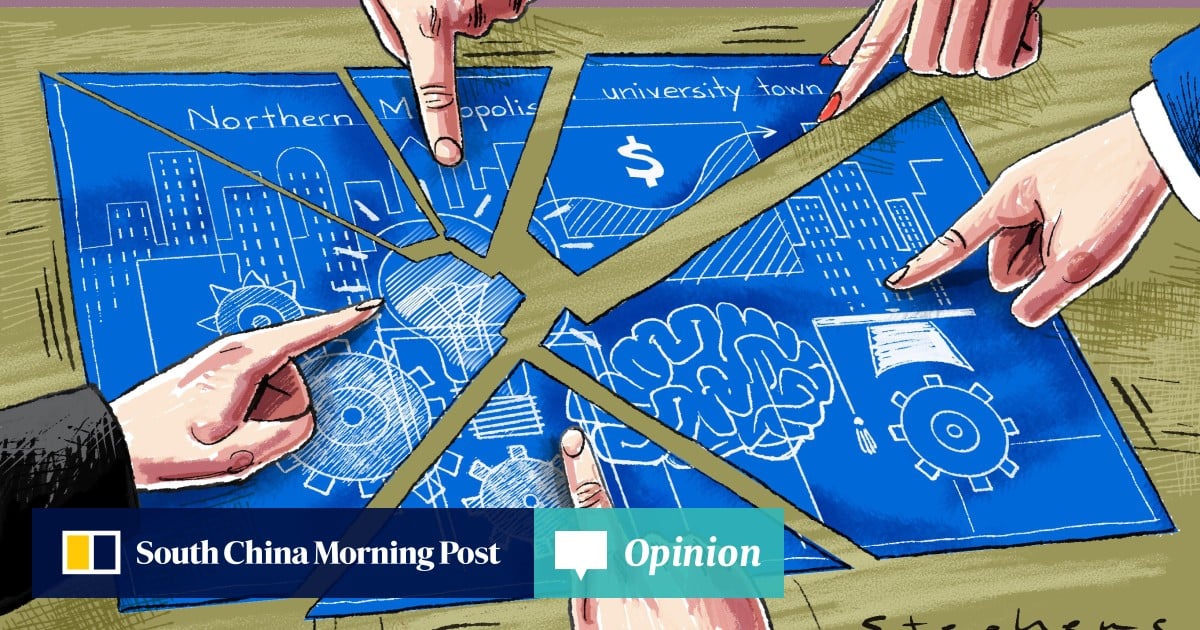
The Northern Metropolis university town has a dual mission to become a growth engine for Hong Kong and a global centre for science and technology, talent and frontier research. Its success depends on creating a new type of university governed through a consortium model.
Imagine a place where scientists, engineers, and businesses work together to create new technologies and products. The Northern Metropolis university town in Hong Kong is trying to become that place, where people can share ideas and turn them into real things that can help society.
Analysis
Introduction to the Northern Metropolis University Town
The Northern Metropolis university town is a strategic test of whether Hong Kong can reinvent its role in the nation's innovation landscape. The project has a dual mission: to become a growth engine for Hong Kong and a global centre for science and technology, talent and frontier research.
The university town's success depends on creating a new type of university governed through a consortium model. This model is neither a campus relocation nor a conventional expansion zone, but a once-in-a-generation opportunity to reshape Hong Kong's economic foundation and strengthen China's innovation autonomy.
Challenges Facing the Northern Metropolis University Town
Despite its strategic mission, early signs of concern have surfaced. In June, the Education Bureau announced that 19 local institutions had submitted proposals for the Northern Metropolis. The response was enthusiastic, but the common requests were clear: relieve campus pressure and improve facilities.
Two contradictions define the challenge. First, a mission mismatch: conceived as a science and innovation hub, the Northern Metropolis is being treated as an expansion site, with land intended for research – or a platform where frontier research meets industrial incubation – diverted to classrooms and dormitories.
Second, a mechanism gap: while Hong Kong's universities excel in basic research, they lack pathways to translate discoveries into industry or feedback loops that connect market demand to research priorities.
The Path Forward for the Northern Metropolis University Town
To overcome these challenges, the Northern Metropolis university town must be designed with a clear direction and a focus on innovation. The consortium model can help to break down silos and align academia with industrial goals. The project must also prioritize the development of pathways to translate discoveries into industry and create feedback loops that connect market demand to research priorities.
By doing so, the Northern Metropolis university town can deliver on its promise of innovation and become a growth engine for Hong Kong and a global centre for science and technology, talent and frontier research.
Key points
- The Northern Metropolis university town has a dual mission to become a growth engine for Hong Kong and a global centre for science and technology, talent and frontier research.
- The project's success depends on creating a new type of university governed through a consortium model.
- The university town faces challenges such as mission mismatch and mechanism gap.
If the Northern Metropolis university town is successful, it could lead to the development of new technologies and products that can drive economic growth and improve people's lives. It could also become a model for other cities to follow, showing how to create a hub for innovation and entrepreneurship.
However, if the project fails to address its challenges, it may not be able to deliver on its promise of innovation. The mission mismatch and mechanism gap could lead to a lack of focus and direction, causing the project to drift into a patchwork of expanded campuses rather than rising as a world-class innovation hub.