How this 550-year-old banyan tree in Andhra Pradesh came to look like a forest
Thimmamma Marrimanu, a 550-year-old banyan tree in Andhra Pradesh, is recognized by the Guinness World Records as the world's largest banyan tree by canopy coverage. It has over 1,000 trunks and shelters countless species, making it a powerful ally against climate change.
Intelligence analysis by Llama
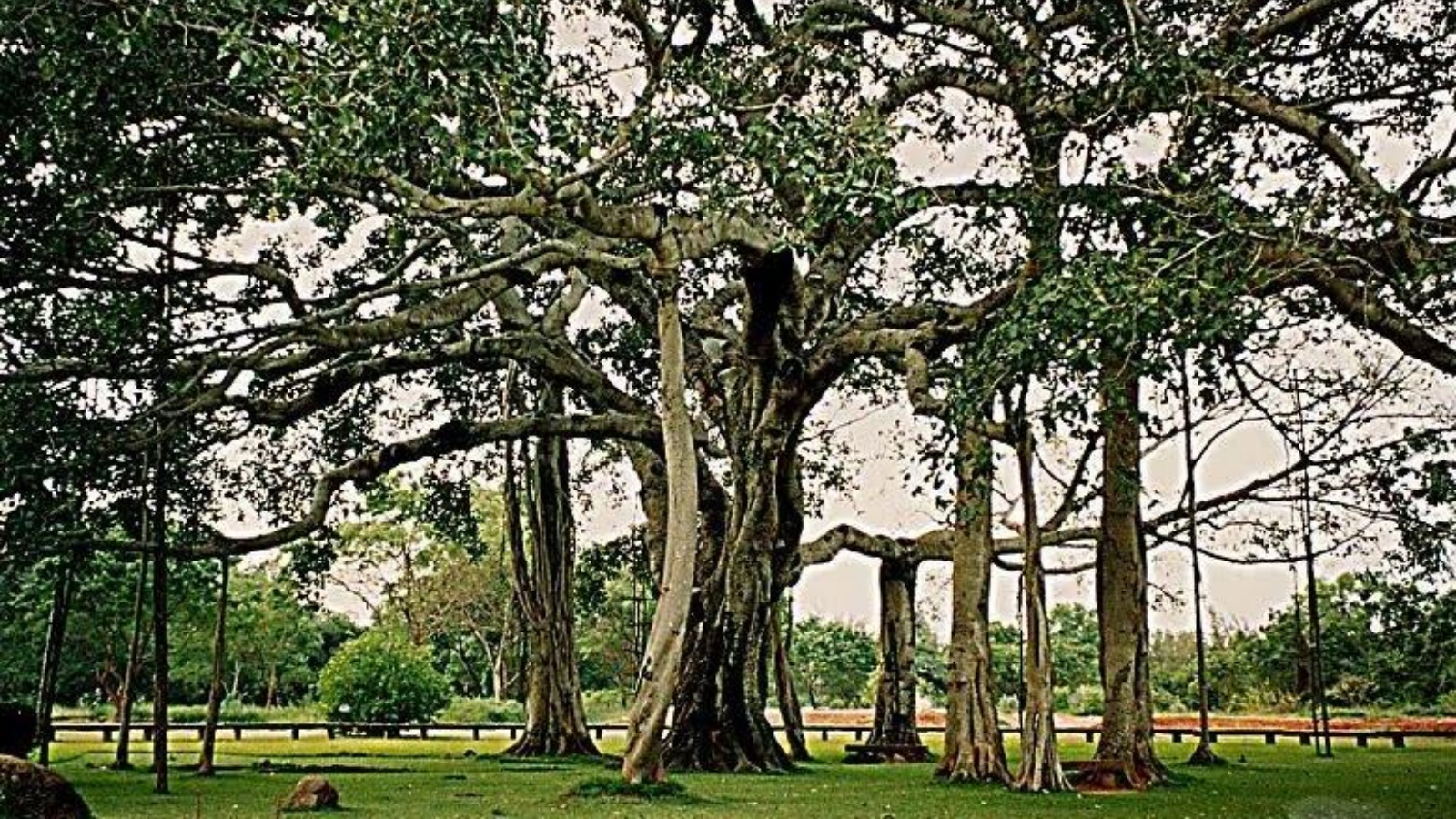
Thimmamma Marrimanu, a 550-year-old banyan tree in Andhra Pradesh, is the world's largest banyan tree by canopy coverage. It has over 1,000 trunks and shelters countless species, making it a powerful ally against climate change. Environmentalist Jasmit Singh Arora explains what makes this living giant so extraordinary.
Imagine a giant tree that's so big it looks like a whole forest. This is Thimmamma Marrimanu, a 550-year-old banyan tree in Andhra Pradesh. It has over 1,000 trunks and shelters countless species, making it a powerful ally against climate change. Just like how a big tree provides shade and shelter for animals, Thimmamma Marrimanu does the same, but on a much bigger scale.
Analysis
A 550-Year-Old Natural Wonder
Thimmamma Marrimanu, a banyan tree in Andhra Pradesh, is recognized by the Guinness World Records as the world's largest banyan tree by canopy coverage. This 550-year-old natural wonder is so vast that first-time visitors often mistake it for an entire forest. What appears to be hundreds of trees is, in reality, a single living organism. Its sprawling canopy is supported by more than 1,000 trunks, all connected to the same parent tree.
Keystone Species
Mature banyan trees like Thimmamma Marrimanu play a far bigger ecological role than many people realize. They are keystone species, meaning their presence supports an entire web of life. Their thick branches and many trunks provide safe homes and nesting spots for birds, bats, and insects. Another reason is their unique fruiting cycle. Banyan trees produce figs throughout the year, offering a dependable food source even when many other plants are not fruiting.
Climate Resilience
Protecting heritage banyan trees like Thimmamma Marrimanu significantly strengthens climate resilience in surrounding landscapes. Their enormous canopies act like natural cooling systems. Their widespread shade lowers ground temperatures and helps retain soil moisture, allowing nearby landscapes to better withstand heatwaves and drought. Their extensive root systems perform another crucial function. The vast network of roots holds soil firmly in place, reducing erosion during heavy rains while helping rainwater infiltrate the ground and recharge local water tables.
Key points
- Thimmamma Marrimanu is a 550-year-old banyan tree in Andhra Pradesh.
- It is recognized by the Guinness World Records as the world's largest banyan tree by canopy coverage.
- It has over 1,000 trunks and shelters countless species.
- Mature banyan trees like Thimmamma Marrimanu are keystone species, supporting an entire web of life.
- Protecting heritage banyan trees like Thimmamma Marrimanu strengthens climate resilience in surrounding landscapes.
If this development plays out positively, the preservation of heritage banyan trees like Thimmamma Marrimanu could lead to increased biodiversity and climate resilience in surrounding landscapes. This, in turn, could help mitigate the effects of climate change and support the local ecosystem.
If this development fails, the loss of heritage banyan trees like Thimmamma Marrimanu could lead to a decline in biodiversity and climate resilience in surrounding landscapes. This, in turn, could exacerbate the effects of climate change and harm the local ecosystem.