How Zcash Plans to Hide Your Keys From AI and Quantum Attacks
Zcash developers at Zakura are implementing post-quantum signature opcodes and address rotation with private information retrieval to protect transparent transactions from future AI and quantum attacks.
Intelligence analysis by Gemini 2.5 Flash
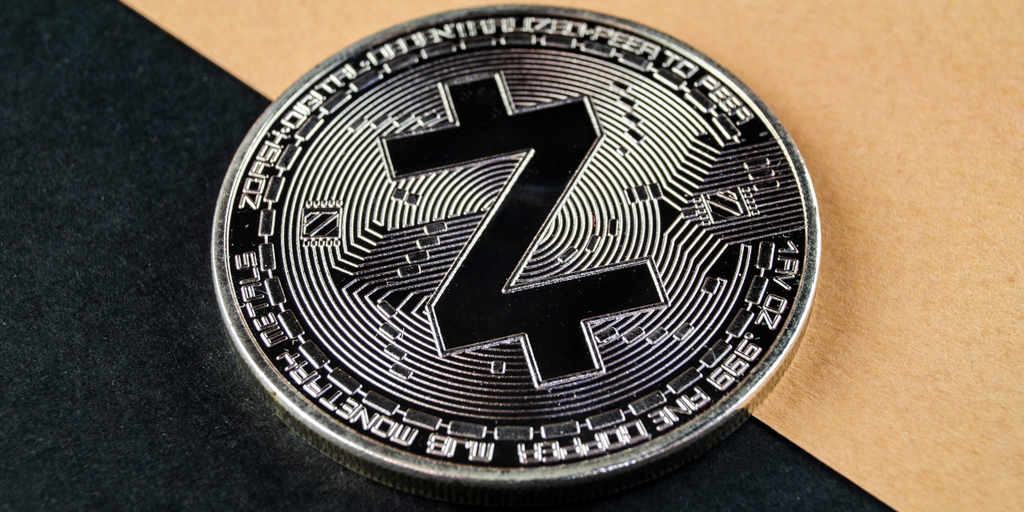
Amid warnings from Ethereum researchers about the potential for AI and quantum computers to break current cryptographic signatures, Zcash's Zakura team is rolling out a proactive defense. Their plan focuses on securing transparent transactions by rotating addresses and using hash-based signatures, coupled with a privacy-enhancing retrieval method.
Imagine your secret key is like a special password for your digital money. Smart computers, like super-smart AI or future quantum computers, might one day become so good at guessing that they could figure out your password. Zcash is trying to stop this by changing your password often, like getting a new secret code for every transaction. They're also using a new kind of super-strong lock that these future computers won't be able to pick, and they're doing it in a way that even the bank can't tell which of your many new passwords belongs to you.
Analysis
Zcash, a privacy-focused cryptocurrency, is taking proactive steps to safeguard its transparent transactions against the emerging threats posed by artificial intelligence and quantum computing. The core of this initiative, spearheaded by the Zakura development team, involves a multi-pronged approach designed to render user keys and transaction data resilient to future cryptographic attacks. This move comes as prominent figures in the crypto space, such as Ethereum researcher Justin Drake and co-founder Vitalik Buterin, have voiced concerns about the vulnerability of existing cryptographic schemes to rapid advancements in AI-driven mathematics.
Zakura
Zakura, a team building a Zcash full node, is at the forefront of implementing these security enhancements. Their strategy centers on introducing post-quantum signature opcodes into the Zcash network, which are expected to land in January. These opcodes are low-level instructions that will enable the network to verify a new type of signature, specifically hash-based signatures. Unlike the elliptic-curve cryptography currently used by many blockchains, hash-based schemes are believed to be resistant to the computational power of future AI and quantum computers, which could potentially crack existing encryption methods.
Furthermore, Zakura's approach combines these hash-based signatures with address rotation. This means that after every transaction, a user's wallet would generate and switch to a fresh address, thereby keeping public keys out of constant view and making it harder to link transactions to a single user over time. This rotation mechanism is a critical component in enhancing user privacy and security, especially for transparent transactions which are otherwise publicly visible on the blockchain, similar to Bitcoin.
Justin Drake
The urgency for these security upgrades has been amplified by recent warnings from influential figures like Ethereum Foundation researcher Justin Drake. Drake's "bunker mode" warning highlighted the potential for AI-driven mathematical breakthroughs to compromise ECDSA signatures, which secure major cryptocurrencies like Bitcoin and Ethereum, possibly within months rather than years. This stark assessment has prompted a broader discussion within the crypto community about the need for immediate action to future-proof blockchain security.
Vitalik Buterin, Ethereum's co-founder, has also acknowledged the plausibility of AI-driven advancements breaking encryption within the next two years, underscoring the gravity of the threat. While the debate around "bunker mode" continues across the crypto landscape, Zakura's plan for Zcash represents a concrete, actionable response to these concerns. Their focus on transparent payments, while not covering shielded transactions, addresses a significant portion of Zcash's network activity that would otherwise remain vulnerable to these advanced attack vectors.
Vizor
One of the key innovations in Zakura's plan to maintain privacy amidst address rotation is the integration of Private Information Retrieval (PIR). Address rotation, while beneficial for privacy, traditionally creates a challenge: when a wallet queries a server for balances across multiple rotating addresses, the server could potentially infer that these addresses belong to the same user. PIR is a cryptographic technique that solves this by allowing a wallet to fetch specific records from a server without revealing which records it is requesting.
This PIR feature is being rolled out in the Vizor wallet, where users can already test it by enabling "private queries" in the settings. The implementation of PIR ensures that the privacy benefits of address rotation are not undermined by the need for wallets to interact with servers. By combining hash-based signatures, address rotation, and PIR, Zcash aims to offer a robust defense against the sophisticated threats posed by future AI and quantum computing capabilities, particularly for its transparent transaction pool.
Key points
- Zcash's Zakura team plans to implement post-quantum signature opcodes in January for transparent payments.
- The strategy combines address rotation with hash-based signatures to protect against AI and quantum attacks.
- Private Information Retrieval (PIR) is being rolled out in the Vizor wallet to prevent servers from linking rotating addresses.
- The initiative responds to warnings from Ethereum researchers like Justin Drake about AI's potential to break current encryption.
- The plan currently covers only Zcash's transparent transactions, not shielded ones.
If Zcash successfully implements these post-quantum security measures, it could significantly enhance the long-term viability and trustworthiness of its transparent transactions, potentially attracting more users and institutional interest by demonstrating a commitment to future-proof security. This proactive stance could also inspire other blockchain projects to accelerate their own quantum-resistant upgrades.
The successful implementation and widespread adoption of these new opcodes and features are not guaranteed, and any delays or technical challenges could leave Zcash vulnerable for longer. Furthermore, if the network activation date for these changes is not confirmed soon, it could create uncertainty among users and potentially expose transparent transactions to the very threats they aim to mitigate.