Huawei Mate XT 2 debuts Kirin 9050 Pro built on Tau scaling technology
Huawei has launched the Mate XT 2, a trifold smartphone featuring the new Kirin 9050 Pro processor, which utilizes the innovative Tau scaling law and LogicFolding architecture to enhance performance and energy efficiency.
Intelligence analysis by Gemini 2.5 Flash
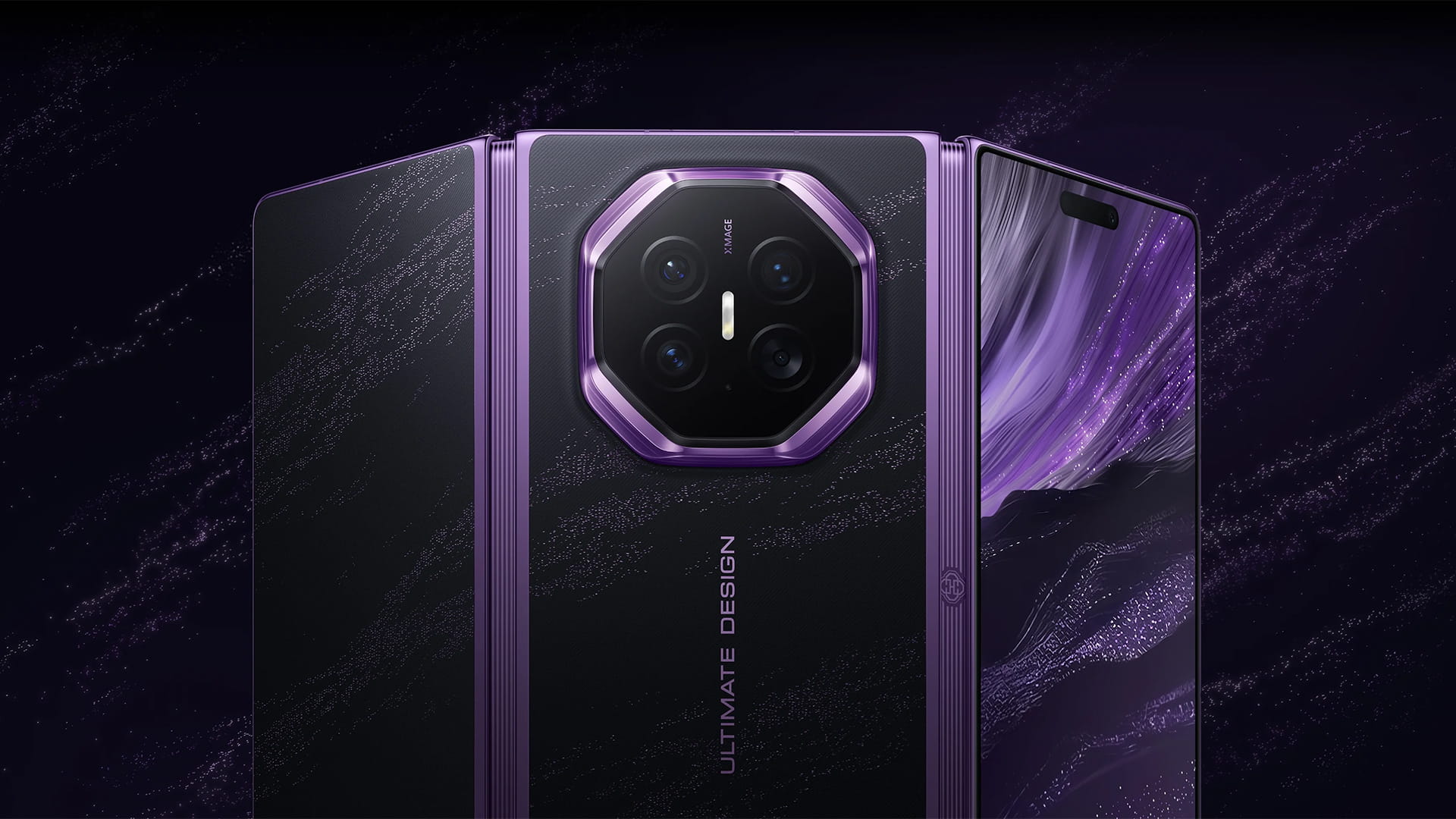
Huawei's new Mate XT 2 trifold smartphone introduces the Kirin 9050 Pro chip, leveraging the company's Tau scaling law and LogicFolding architecture to boost performance without relying on advanced lithography, a strategic move amid US export controls. This launch reinforces Huawei's leadership in China's growing foldable phone segment.
Imagine a super-smart phone that folds three ways, like a fancy letter! It has a special new brain, called a Kirin 9050 Pro, that makes it super fast by stacking its tiny thinking parts like pancakes instead of just spreading them out. This helps Huawei make powerful phones even when it's tricky to get the smallest parts, and it's making them very popular in China.
Analysis
Tau scaling law
Huawei's introduction of the Kirin 9050 Pro processor in the Mate XT 2 marks a pivotal moment for its chip development strategy. This new chip is the first commercial application of Huawei's Tau scaling law, a novel approach to semiconductor advancement. Unlike the traditional Moore's law, which focuses on shrinking transistors, Tau scaling prioritizes reducing the time signals need to travel across various components, from devices to entire systems.
The practical implementation of Tau scaling is achieved through LogicFolding, an innovative chip architecture. LogicFolding works by splitting computing functions across two active layers that operate cohesively as a single unit. This multi-layer design is intended to shorten critical wiring paths and simultaneously increase transistor density, thereby enhancing overall chip performance and energy efficiency.
Mate XT 2
Beyond its groundbreaking processor, the Mate XT 2 introduces several advanced features that position it as a premium trifold smartphone. It is the first Huawei device to run HarmonyOS 7, the company's latest self-developed operating system, which is optimized for the trifold display. A "Live-Multitask" feature allows users to run and independently manage three applications side-by-side, catering to diverse use cases from office work to entertainment.
The hardware design of the Mate XT 2 also showcases significant innovation, featuring what Huawei calls Xuanwu, a trifold architecture. This design incorporates an updated five-arm hinge and a multilayer main display constructed from ultrathin glass, high-strength steel, and carbon fiber, contributing to its durability. The device has achieved IP58 and IP59 ratings for dust and water resistance under Chinese standards, a first for a trifold smartphone, and includes a "Smart Shield Privacy Screen" for enhanced user privacy.
Huawei's market position
The launch of the Mate XT 2 underscores Huawei's resurgence in the Chinese smartphone market, particularly within the high-growth foldable segment. After returning to the top of China's overall smartphone market in 2025, Huawei continued its momentum into 2026, capturing 22.6% of shipments in Q2, even as the broader market contracted. This growth highlights the company's resilience despite ongoing US export controls.
Huawei has established a dominant position in China's foldable smartphone market, holding over 70% share in 2025, a segment that saw shipments rise by 9.2% to approximately 10 million units. The original Mate XT, launched in 2024, was the world's first commercially available trifold smartphone, demonstrating Huawei's pioneering role. The second-generation model arrives amidst intensifying competition, exemplified by Xiaomi's simultaneous unveiling of its 18 Fold, indicating a dynamic and competitive landscape for premium foldable devices.
Key points
- Huawei launched the Mate XT 2, its first trifold smartphone with the Kirin 9050 Pro processor.
- The Kirin 9050 Pro uses LogicFolding architecture, based on Huawei's Tau scaling law, to improve performance by 42% and energy efficiency.
- Tau scaling aims to advance chip performance by reducing signal travel time, offering an alternative to traditional Moore's law.
- The Mate XT 2 features HarmonyOS 7, a Xuanwu trifold architecture, IP58/IP59 ratings, and advanced camera systems.
- Huawei leads China's foldable smartphone market, holding over 70% share in 2025, and is regaining overall smartphone market share.
Huawei's innovation in chip architecture could allow it to circumvent US sanctions, maintain competitiveness, and further grow its market share in premium smartphone segments, especially foldables. The new device's advanced features and robust design could appeal to a broader consumer base, driving continued sales momentum.
Multilayer chip architectures, while promising, introduce significant manufacturing challenges related to precise bonding and connection of active silicon layers, which could impact production scalability and cost. Intense competition in the premium foldable market, as evidenced by Xiaomi's simultaneous launch, could also pressure Huawei's market dominance.