Huawei unveils new trifold smartphone powered by Tau Scaling Law-based Kirin chip
Huawei has launched its Mate XT 2, a new trifold smartphone featuring the Kirin 9050 Pro chip, based on its proprietary Tau Scaling Law, and running HarmonyOS 7.
Intelligence analysis by Gemini 2.5 Flash
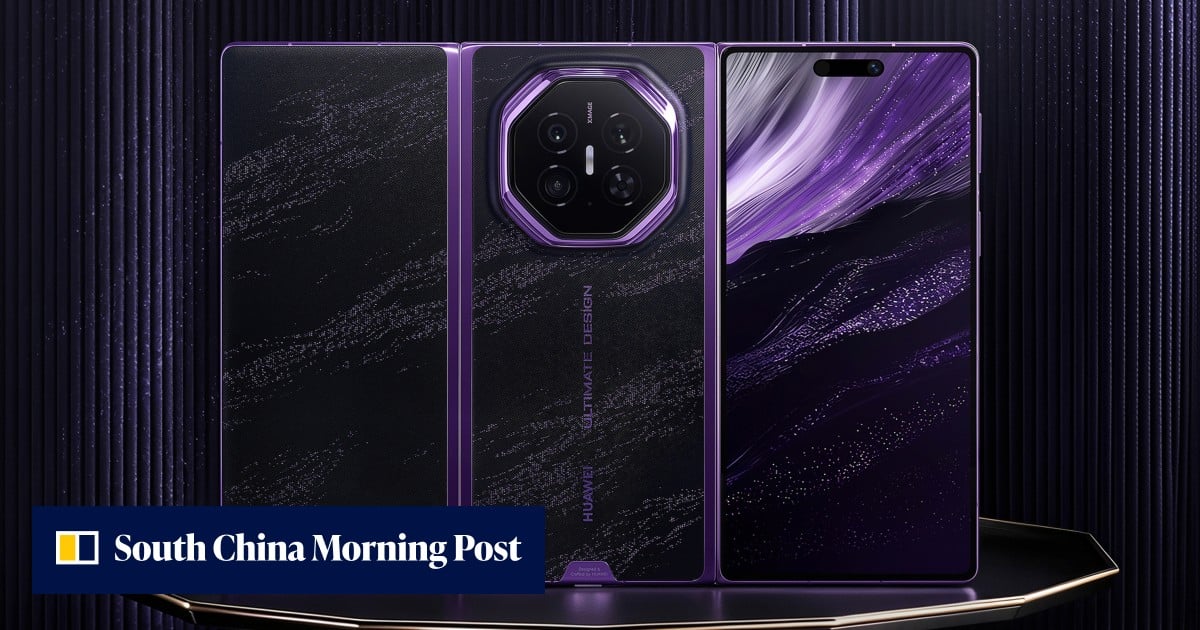
Huawei continues its push for chip independence and innovation with the release of its first trifold smartphone, the Mate XT 2. This device is powered by the new Kirin 9050 Pro chip, which leverages Huawei's Tau Scaling Law for enhanced performance, and introduces the updated HarmonyOS 7, featuring AI coding agents, amidst intensifying competition in the foldable phone market.
Imagine your phone is like a super-smart robot, and its brain is a tiny computer chip. Huawei just made a brand-new, super-fast brain called the Kirin 9050 Pro for its new phone that folds three times, like a magic map! This new brain uses a special trick called the Tau Scaling Law to make all the tiny electrical signals inside move even faster, making the phone much quicker. Plus, the phone's operating system, HarmonyOS 7, now has little AI helpers that can even write computer code, making the phone even smarter at doing things.
Analysis
Huawei's latest product launch, featuring the Mate XT 2 trifold smartphone, underscores the company's persistent efforts to innovate within the mobile technology sector, particularly in chip design and operating systems, despite ongoing geopolitical challenges. The introduction of the Kirin 9050 Pro chip, based on the proprietary Tau Scaling Law, represents a strategic move to enhance performance while reducing reliance on external semiconductor technologies. This initiative is crucial for Huawei as it navigates a competitive landscape and aims to solidify its position in the high-end smartphone market.
Kirin 9050 Pro
The Kirin 9050 Pro is positioned by Huawei as its "most powerful Kirin chip ever," a testament to the company's engineering prowess. This new processor is central to the Mate XT 2's capabilities, promising a significant performance uplift. According to Richard Yu Chengdong, chairman of Huawei’s consumer business group, the chip improves overall performance by 42 per cent compared to its predecessor, the Mate XTs model.
This substantial performance gain is critical for handling demanding applications, including advanced AI tasks, and positions the Mate XT 2 as a formidable contender in the premium smartphone segment. The chip's development highlights Huawei's commitment to internal innovation as a means to overcome restrictions on accessing advanced foreign semiconductor equipment, thereby bolstering its self-sufficiency in critical technology areas.
Tau Scaling Law
The foundation of the Kirin 9050 Pro's enhanced performance lies in Huawei's newly established Tau Scaling Law. This proprietary approach is designed to improve semiconductor efficiency by specifically targeting and reducing signal delays within the chip architecture. By optimizing these fundamental aspects of chip operation, Huawei aims to unlock new levels of processing power and energy efficiency.
One key technology developed under this law is LogicFolding, which focuses on shortening signal paths. This innovation allows for a greater density of transistors within a smaller physical footprint, directly contributing to the chip's improved performance and potentially enabling more complex AI computations on-device. The Tau Scaling Law represents a significant intellectual property asset for Huawei, differentiating its chip design methodology in a highly competitive global market.
HarmonyOS 7
Alongside the new hardware, the Mate XT 2 is also the first device to run on the updated HarmonyOS 7, Huawei's self-developed operating system. This latest iteration of HarmonyOS was initially released to developers in June as a beta version, notably featuring integrated AI coding agents. The rollout of HarmonyOS 7 to existing Huawei phones commenced concurrently with the Mate XT 2 launch, indicating a broader ecosystem update.
The inclusion of AI coding agents within HarmonyOS 7 signifies Huawei's strategic integration of artificial intelligence at the operating system level. This could empower developers with more sophisticated tools and enhance the overall user experience through intelligent automation and personalized functionalities. The continuous evolution of HarmonyOS is vital for Huawei to build a robust software ecosystem that complements its hardware innovations and provides a distinct alternative to dominant mobile operating systems.
Key points
- Huawei unveiled its Mate XT 2, a new trifold smartphone, featuring the Kirin 9050 Pro chip.
- The Kirin 9050 Pro is based on Huawei's proprietary Tau Scaling Law, designed to improve semiconductor performance by reducing signal delays.
- The new chip reportedly boosts overall performance by 42% compared to the previous generation.
- The Mate XT 2 is the first device to run HarmonyOS 7, which includes AI coding agents and is rolling out to existing Huawei phones.
- The launch intensifies competition in the foldable phone market, with new models expected from Xiaomi and Apple soon.
Huawei's continued innovation in chip design and operating systems, particularly with the Tau Scaling Law and AI coding agents in HarmonyOS 7, could drive significant advancements in mobile AI capabilities and performance. This push also intensifies competition in the foldable phone market, potentially leading to more innovative and feature-rich devices for consumers globally.
Despite Huawei's advancements, the intense competition from rivals like Apple and Xiaomi in the high-end foldable market, coupled with ongoing challenges in accessing advanced foreign semiconductor equipment, could limit its global market penetration. Sustaining proprietary chip development without full access to the latest manufacturing technologies remains a significant hurdle.