Hungary’s president agrees to stand down after law change ends his term
Hungary's president, Tamás Sulyok, has agreed to step down after signing a constitutional amendment passed by the ruling Tisza party. The amendment will end Sulyok's term immediately, citing society's 'serious loss of confidence' in a leader elected in early 2024.
Intelligence analysis by Llama
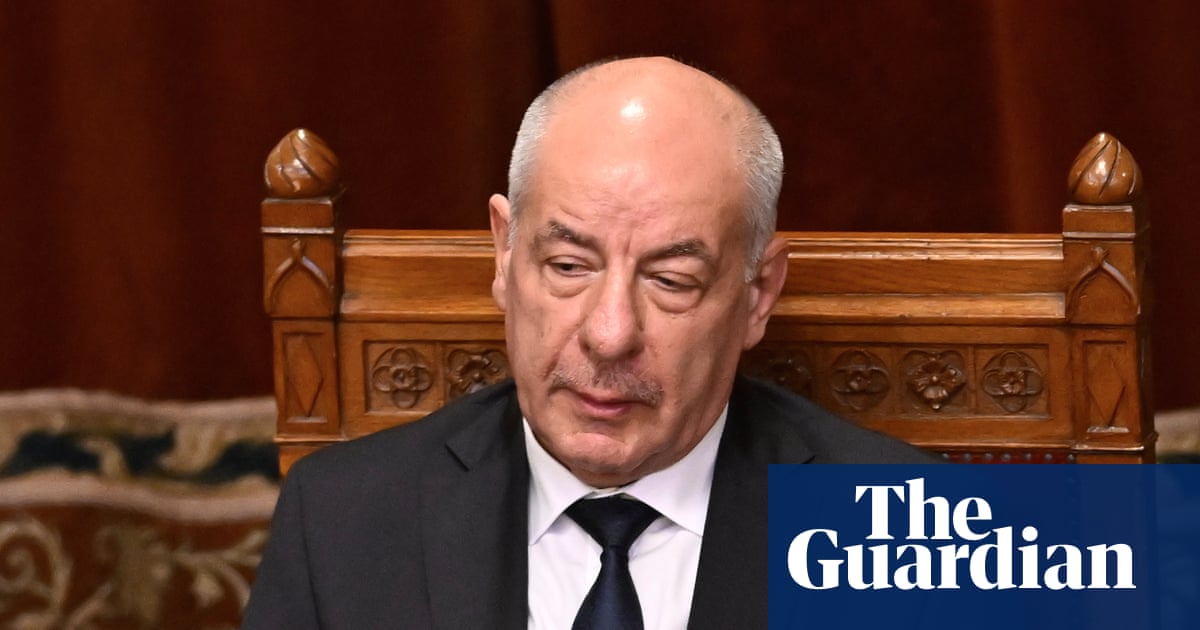
Hungary's president, Tamás Sulyok, has agreed to step down after signing a constitutional amendment passed by the ruling Tisza party. The amendment will end Sulyok's term immediately, citing society's 'serious loss of confidence' in a leader elected in early 2024. Sulyok's decision comes after the Tisza party, led by Prime Minister Péter Magyar, passed the amendment in a bid to disman…
Hungary's president, Tamás Sulyok, has agreed to step down after signing a constitutional amendment passed by the ruling Tisza party. This means that Sulyok's term will end immediately, and a new president will be elected. The amendment also imposes a 12-year term limit on lawmakers and sets a retirement age of 70 for constitutional court judges.
Analysis
A Watershed Moment in Hungarian Politics
The decision by Hungary's president, Tamás Sulyok, to step down after signing a constitutional amendment passed by the ruling Tisza party marks a significant moment in the country's politics. The amendment, which will end Sulyok's term immediately, citing society's 'serious loss of confidence' in a leader elected in early 2024, is seen as a major blow to the power of former Prime Minister Viktor Orbán.
Orbán, who has been accused of weakening democratic institutions during his 16 years in power, has been a dominant figure in Hungarian politics for decades. His departure from power has been seen as a major opportunity for the country to move towards a more democratic and European-oriented path.
The Tisza party, led by Prime Minister Péter Magyar, has been instrumental in passing the amendment, which is seen as a key step in dismantling Orbán's power. Magyar has repeatedly called on Sulyok to step down, accusing him of failing to represent national unity on major issues and of serving the interests of Orbán and his government.
The amendment also imposes a 12-year term limit on lawmakers and sets a retirement age of 70 for constitutional court judges, which will force the court's current president, Orbán's ally Péter Polt, to retire. This move is seen as a significant step towards restoring the rule of law in Hungary and ensuring that power is constrained.
The decision by Hungary's president to step down has significant implications for the country's politics and its relationship with the European Union. The move is seen as a major blow to the power of former Prime Minister Viktor Orbán, who has been accused of weakening democratic institutions during his 16 years in power. It also marks a significant step towards restoring the rule of law in Hungary and ensuring that power is constrained.
The Road Ahead
The road ahead for Hungary is uncertain, but one thing is clear: the country needs to move towards a more democratic and European-oriented path. The decision by Hungary's president to step down has created a power vacuum that needs to be filled, and the Tisza party is well-positioned to take advantage of this opportunity.
The Tisza party has a two-thirds majority in parliament, which allows it to change any laws. This means that it has the power to implement significant reforms and ensure that power is constrained. The party has already shown its commitment to this goal by passing the amendment that ended Sulyok's term.
The future of Hungary's politics is uncertain, but one thing is clear: the country needs to move towards a more democratic and European-oriented path. The decision by Hungary's president to step down has created a power vacuum that needs to be filled, and the Tisza party is well-positioned to take advantage of this opportunity.
The Impact on European Politics
The decision by Hungary's president to step down has significant implications for European politics. The move is seen as a major blow to the power of former Prime Minister Viktor Orbán, who has been accused of weakening democratic institutions during his 16 years in power.
The European Union has been critical of Orbán's government, which has been accused of undermining democratic institutions and the rule of law. The EU has also been critical of Hungary's treatment of migrants and its stance on LGBTQ+ rights.
The decision by Hungary's president to step down has created a power vacuum that needs to be filled, and the Tisza party is well-positioned to take advantage of this opportunity. The party has already shown its commitment to this goal by passing the amendment that ended Sulyok's term.
The future of Hungary's politics is uncertain, but one thing is clear: the country needs to move towards a more democratic and European-oriented path. The decision by Hungary's president to step down has created a power vacuum that needs to be filled, and the Tisza party is well-positioned to take advantage of this opportunity.
Key points
- Hungary's president, Tamás Sulyok, has agreed to step down after signing a constitutional amendment passed by the ruling Tisza party.
- The amendment will end Sulyok's term immediately, citing society's 'serious loss of confidence' in a leader elected in early 2024.
- The Tisza party has a two-thirds majority in parliament, which allows it to change any laws.
- The party has already shown its commitment to this goal by passing the amendment that ended Sulyok's term.
- The future of Hungary's politics is uncertain, but one thing is clear: the country needs to move towards a more democratic and European-oriented path.
The decision by Hungary's president to step down has created a power vacuum that needs to be filled. The Tisza party is well-positioned to take advantage of this opportunity and implement significant reforms. This could lead to a more democratic and European-oriented path for Hungary, which would be a positive development for the country and the European Union.
The decision by Hungary's president to step down has also created uncertainty and potential instability in the country. The Tisza party's commitment to dismantling Orbán's power and implementing significant reforms is a positive step, but it also risks creating a power vacuum that could be exploited by other groups. This could lead to a more authoritarian and nationalist path for Hungary, which would be a negative development for the country and the European Union.