‘I hate Americans, all of them’: Malaysian politician’s anti-US rant draws backlash
Malaysian politician Mukhriz Mahathir sparked controversy by declaring his hatred for all Americans over Washington's support for Israel, echoing his father's anti-US rhetoric.
Intelligence analysis by Gemini 2.5 Flash
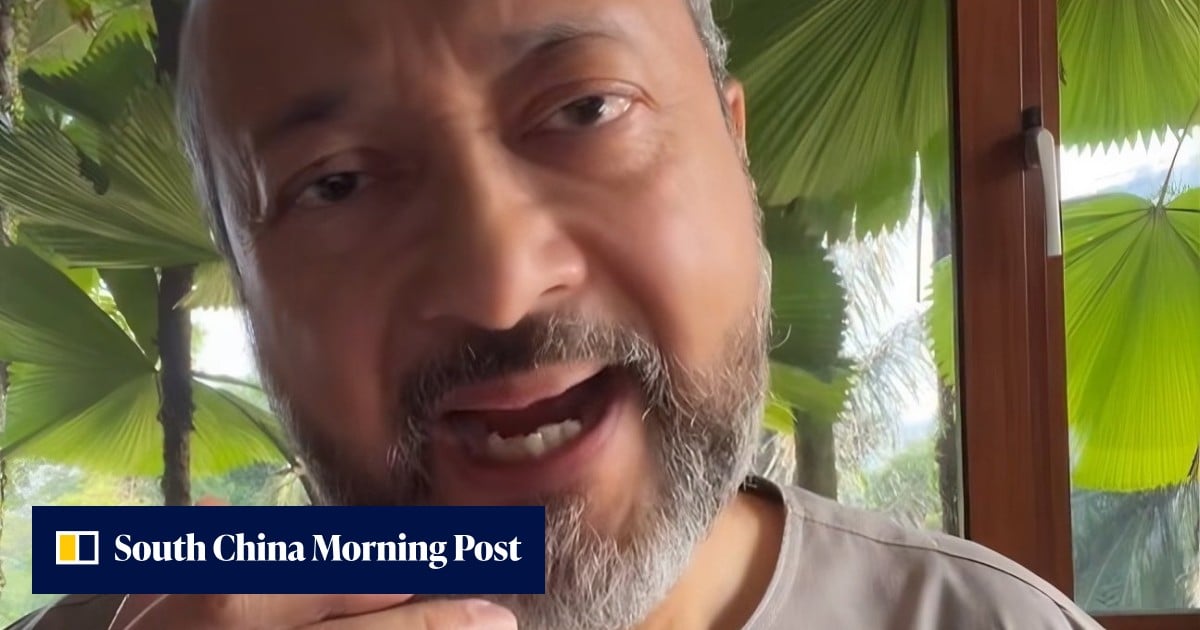
Mukhriz Mahathir, son of former Malaysian Prime Minister Mahathir Mohamad, ignited a social media backlash after a video surfaced where he expressed profound hatred for all Americans, irrespective of their political affiliation or stance on Israel. He justified his sentiment by stating that ordinary citizens bear responsibility for their elected leaders' foreign policy, particularly W…
Imagine a politician in Malaysia got really mad at America because he thinks America helps a country he doesn't like. He said he hates all Americans, even the regular people, because he believes they should also be blamed for what their leaders do. It's like if your friend's big brother did something mean, and your friend said it's also your fault because you're from the same family.
Analysis
Mukhriz Mahathir
Mukhriz Mahathir, the son of former Malaysian Prime Minister Mahathir Mohamad, has ignited a significant social media controversy with his recent anti-US remarks. His declaration of hatred for all Americans, regardless of their political leanings or views on the Israeli-Palestinian conflict, reflects a deeply ingrained sentiment that has historical roots within Malaysian politics. This public outburst is not an isolated incident but rather a continuation of the fierce anti-US rhetoric long associated with his influential father, who was known for his outspoken criticism of Western foreign policy during his tenure.
The younger Mahathir's argument that ordinary American citizens should share responsibility for the actions of their elected leaders, particularly concerning Washington's foreign policy, underscores a specific perspective on democratic accountability. This view suggests that the electorate's choice of leadership inherently implicates them in the subsequent governmental decisions, even those pertaining to international affairs. The backlash he has received indicates that while such sentiments may resonate with some segments of the population, they are far from universally accepted, even within a nation known for its strong pro-Palestinian stance.
Washington's Foreign Policy
Washington's unwavering support for Israel is a central point of contention that fuels anti-US sentiment in many Muslim-majority nations, including Malaysia. This policy has consistently put the United States at odds with countries that advocate strongly for the Palestinian cause, creating diplomatic friction and sometimes leading to strained bilateral relations. Mukhriz Mahathir's rant directly targets this aspect of US foreign policy, framing it as a primary reason for his animosity towards Americans.
The ongoing conflict in Gaza and Israel's conduct there have further exacerbated these tensions, drawing widespread condemnation from the Malaysian government under Prime Minister Anwar Ibrahim. This condemnation has translated into concrete policy decisions, such as Malaysia's refusal to admit Israeli citizens, which directly challenges US diplomatic norms and expectations. The incident underscores the significant impact that the Israeli-Palestinian conflict has on global perceptions of the United States, particularly in regions with strong religious and political ties to the Palestinian cause.
Malaysia's Stance
Malaysia, as a Muslim-majority nation, has historically been one of Southeast Asia's most vocal and steadfast supporters of the Palestinian cause. This commitment is deeply embedded in its foreign policy, evidenced by its non-recognition of Israel as a state and its consistent advocacy for Palestinian rights on international platforms. The current government, led by Prime Minister Anwar Ibrahim, has maintained and even intensified this stance, particularly in response to recent events in Gaza.
This strong pro-Palestinian position has increasingly created diplomatic challenges for Kuala Lumpur, particularly in its relationship with Washington. The refusal to admit Israeli citizens, for instance, is a direct manifestation of this policy and a point of friction with the United States. Mukhriz Mahathir's comments, while controversial, reflect a deep-seated national sentiment that views the Palestinian issue through a lens of solidarity and moral obligation, making it a potent factor in Malaysia's international relations and domestic political discourse.
Key points
- Malaysian politician Mukhriz Mahathir declared his hatred for all Americans in a video, citing Washington's support for Israel.
- He argued that ordinary Americans share responsibility for their elected leaders' foreign policy actions.
- This rhetoric echoes the long-standing anti-US sentiments of his father, former Prime Minister Mahathir Mohamad.
- Malaysia, a Muslim-majority nation, is a staunch backer of the Palestinian cause and does not recognize Israel.
- Prime Minister Anwar Ibrahim's government has condemned Israel's conduct in Gaza, leading to friction with Washington over Malaysia's refusal to admit Israeli citizens.
Mukhriz Mahathir's inflammatory remarks risk further straining Malaysia's diplomatic relations with the United States, potentially leading to economic or political repercussions. Such strong anti-American rhetoric could also embolden extremist views within Malaysia and complicate efforts for regional stability and cooperation.