IDAC Oversight Judge will not comment on ongoing commissions of inquiry
Retired Judge Takalani Joseph Raulinga, overseeing South Africa's Independent Directorate Against Corruption (IDAC), announced the office will not comment on ongoing commissions or court proceedings to preserve judicial credibility.
Intelligence analysis by Gemini 2.5 Flash
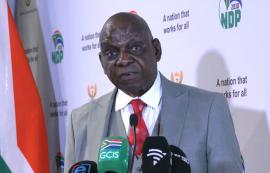
Judge Raulinga emphasized that the IDAC Oversight Office respects the mandates of other legal institutions, viewing commissions and courts as the appropriate forums for assessing evidence. He assured the public that the Office possesses the statutory mandate and independence to objectively investigate complaints falling within its purview.
Imagine a new referee has been hired to make sure everyone plays fair in a big game, especially when it comes to cheating. This referee, Judge Raulinga, says his job isn't to shout comments about the game while it's still happening or when other referees are making their calls. Instead, he'll wait for official complaints and then investigate them very carefully and fairly, like a super-detective, to make sure everyone follows the rules and trusts the game.
Analysis
Upholding Judicial Integrity
Retired Judge Takalani Joseph Raulinga, leading the newly established Office of the Independent Directorate Against Corruption (IDAC) Oversight Judge, has clearly articulated a policy of non-interference with ongoing legal processes. His statement underscores a fundamental principle of judicial conduct: respecting the distinct mandates of various institutions within the justice system. Raulinga emphasized that commissions of inquiry and the courts are the designated forums for the rigorous assessment of evidence and the formulation of legally sound findings. This stance is particularly pertinent given the current "heightened time of public interest matters that are before commissions of inquiry and the courts" in South Africa, as noted in the article. By refraining from parallel commentary or pre-judgment, the IDAC Oversight Office aims to prevent any perception of undue influence or undermining of these critical proceedings, thereby safeguarding the overall credibility and integrity of the nation's legal framework.
The Mutingati Philosophy of Collaboration
Central to the operational ethos of the IDAC Oversight Office is the adoption of "Mutingati," a Tshivenda concept that embodies collective effort, mutual support, and shared responsibility in pursuit of the common good. This philosophy is not merely symbolic; it underpins the Office's strategic commitment to fostering robust collaboration with various stakeholders. Raulinga highlighted that this includes working closely with law enforcement agencies, other public institutions, and communities. The Mutingati approach signifies a recognition that combating corruption and strengthening accountability is not a solitary endeavor but requires a concerted, coordinated effort across different sectors of society. This collaborative framework is intended to enhance the effectiveness of anti-corruption initiatives by leveraging diverse expertise and resources, ensuring a more comprehensive and impactful response to graft.
Building Public Trust and Accountability
Judge Raulinga provided assurances regarding the IDAC Oversight Office's capacity and commitment to its constitutional mandate. He affirmed the Office's statutory authority and institutional independence, guaranteeing that any legitimate complaint received will be handled "objectively, thoroughly and in accordance with the law." This commitment is vital for building and maintaining public trust, especially in a climate where public confidence in state institutions may be wavering. The Office plans to roll out a stakeholder engagement programme in the coming months, aiming to forge strong working relationships with key institutions and to issue public reports where legally permissible. Raulinga explicitly stated that the Office will operate "without fear, favour or prejudice," emphasizing that public trust will be earned through unwavering integrity, impartiality, and strict adherence to the Constitution, ensuring that those who come forward in good faith are protected.
Key points
- Retired Judge Takalani Joseph Raulinga will head the Independent Directorate Against Corruption (IDAC) Oversight Office.
- The Office will not comment on ongoing commissions of inquiry or court proceedings to uphold judicial credibility.
- IDAC is mandated to independently and objectively investigate complaints within its statutory purview.
- The Office's guiding philosophy is 'Mutingati,' a Tshivenda concept emphasizing collective effort and shared responsibility.
- A stakeholder engagement program is planned to foster collaboration with law enforcement and public institutions.
The establishment of the IDAC Oversight Office, guided by principles of independence and non-interference, could significantly bolster South Africa's fight against corruption. Its commitment to objective investigations and collaboration with other institutions has the potential to restore public confidence in the justice system and strengthen accountability across the government.
Despite the stated commitment to independence, the effectiveness of the IDAC Oversight Office could be challenged by political pressures or resource limitations. If the Office fails to deliver tangible results or its investigations are perceived as biased, it risks further eroding public trust in anti-corruption efforts and the broader legal system.