IEA 'concerned' over Hormuz crisis, rules out second strategic reserve release for now
IEA chief Fatih Birol says the agency is not currently discussing a second drawdown of strategic oil reserves, while warning of harder days ahead if the Strait of Hormuz stays closed.
Intelligence analysis by Llama
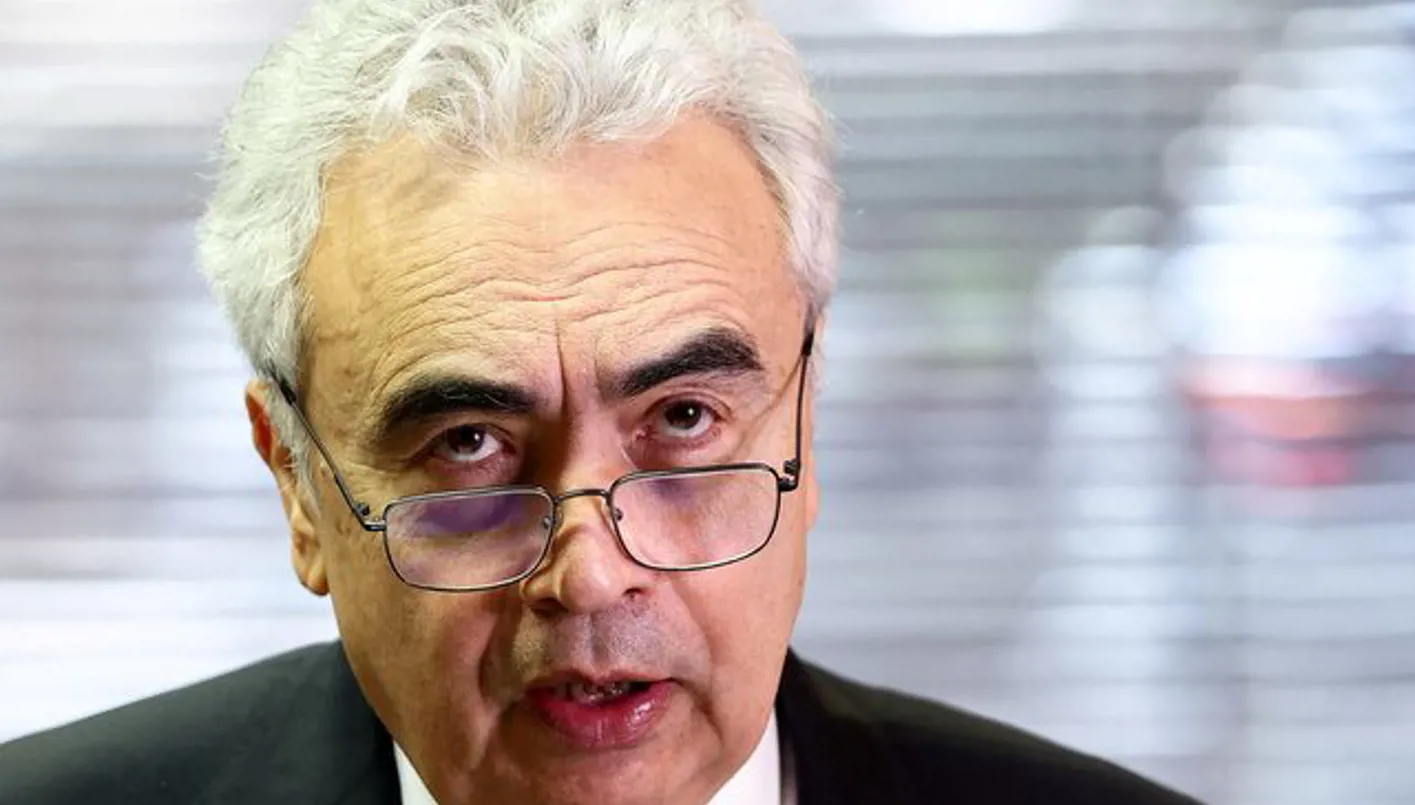
IEA Director Fatih Birol told Reuters the agency is not discussing a second strategic reserve release, even as it warned that global oil stockpiles are nearing depletion while the Strait of Hormuz remains shut. Eighty percent of strategic reserves remain after a 400-million-barrel draw in March, but 115 countries have already moved to ration energy use.
Imagine the world's oil is stored in a giant bathtub. The IEA pulled out a big bucket of water in March, but now the drain is still open because the Strait of Hormuz is shut. There's still water left, but the IEA says no more buckets for now, so countries are being told to take shorter showers until the drain is fixed.
Analysis
Fatih Birol's Reserve Calculus
IEA Executive Director Fatih Birol, speaking to Reuters on Monday, drew a clear line: the agency is not currently discussing a second coordinated release of strategic petroleum reserves. That posture is significant because it effectively places the burden of bridging the Hormuz shortfall back on governments and on private-sector rationing, rather than on the emergency stockpile mechanism that absorbed much of the March shock. Birol stressed that 80 percent of strategic reserves remain after the 400-million-barrel draw in March, but framing the cushion as a buffer rather than a tool reframes how policymakers will read the next data point.
The subtext is that Birol wants the reserves preserved for a deeper crisis, not spent incrementally. By publicly ruling out a second drawdown while the Strait remains choked, the IEA is signaling that the current disruption, painful as it is, has not yet crossed the line that would justify another intervention. That leaves the IEA's verbal interventions, surveillance of markets, and coordination with the 115 countries that have already moved on conservation as its primary tools for now.
The 400 Million Barrel Withdrawal
The March draw of 400 million barrels was already an unusually large coordinated action, and the fact that 80 percent of the original cushion survives tells the markets two things. First, the global reserve architecture is not exhausted, but it is no longer thick enough to absorb another shock of similar magnitude without serious political cost in the consuming countries. Second, Birol's reluctance to commit to a second release suggests the IEA views the current period as a long-duration squeeze, not a one-week spike that a single intervention could fix.
That distinction matters because strategic reserves were designed for short, sharp disruptions. If the Strait of Hormuz stays closed for weeks or months, the math changes: each month of closure drains far more barrels from the market than any emergency release can plausibly replace, which is exactly the dynamic that pushed the agency to warn that world reserves are on the verge of depletion if the waterway does not reopen soon.
115 Countries and the New Energy Era
The IEA's parallel warning that the energy world will not return to its previous era even if Hormuz reopens is arguably the most consequential line in Birol's remarks. More than 115 countries have already adopted adaptation measures in response to the Iran war and the closure of the strait, according to the agency. Fifty-eight governments have activated conservation policies, including remote work and study, reduced government travel, and lower building electricity use. Ninety-four governments have rolled out direct price support through caps, fuel subsidies, and tax relief, while 30 countries have moved to lock in long-term policies aimed at reducing dependence on fossil fuels, from efficiency programs to electric vehicle expansion and renewable incentives.
The composition of that list, with 94 governments providing subsidies against 30 legislating structural change, suggests the global response so far has been tilted toward cushioning consumers rather than reshaping supply. Birol's framing of a "new era of energy security" implies that the post-Hormuz world will be defined less by reserve releases and more by permanent demand-side restructuring, a shift with multi-year consequences for Gulf producers, European gas buyers, and the renewable buildout alike.
Key points
- IEA chief Fatih Birol said the agency is not discussing a second release of strategic oil reserves despite the Hormuz crisis.
- Eighty percent of strategic reserves remain after a 400-million-barrel draw in March, according to Birol.
- The IEA warned that the world faces harder days and near-depletion of reserves if the Strait of Hormuz does not reopen soon.
- More than 115 countries have adopted measures to adapt, including 58 with conservation policies and 94 with direct price support.
- Birol framed the current crisis as the start of a 'new era of energy security' from which the world will not return to its previous state, even if Hormuz reopens.
If the Strait of Hormuz reopens promptly, the IEA's existing 80-percent reserve cushion could stabilize markets without a second intervention, and the conservation measures already adopted by 115 countries would provide a softer landing. The 30 long-term decarbonization policies already in motion could also accelerate the structural transition to a less shock-prone energy system.
If the strait remains closed, the IEA's own warning that world reserves are on the verge of depletion suggests a supply crunch severe enough to force a second reserve drawdown at far higher political cost. Sustained disruption would also deepen the fiscal burden on the 94 governments already subsidizing energy, and a prolonged European gas shortage in the coming winter could compound the shock on top of the oil squeeze.
Market signals
- OIL The IEA warns reserves are near depletion while the Strait of Hormuz stays shut, directly tightening the supply outlook cited in the article.
- XAU Persistent energy supply risk and a new era of energy security historically drive safe-haven demand for gold, per the article's framing.
AI-generated analysis of potential market relevance. Not financial advice.