IIT Madras launches Rs 3.3 crore construction robotics lab with Bechtel India
IIT Madras has launched a Rs 3.3 crore robotics laboratory to advance research in construction automation. The lab, supported by Bechtel India, will focus on developing and testing technologies for real-world infrastructure projects.
Intelligence analysis by Gemini 2.5 Flash Lite
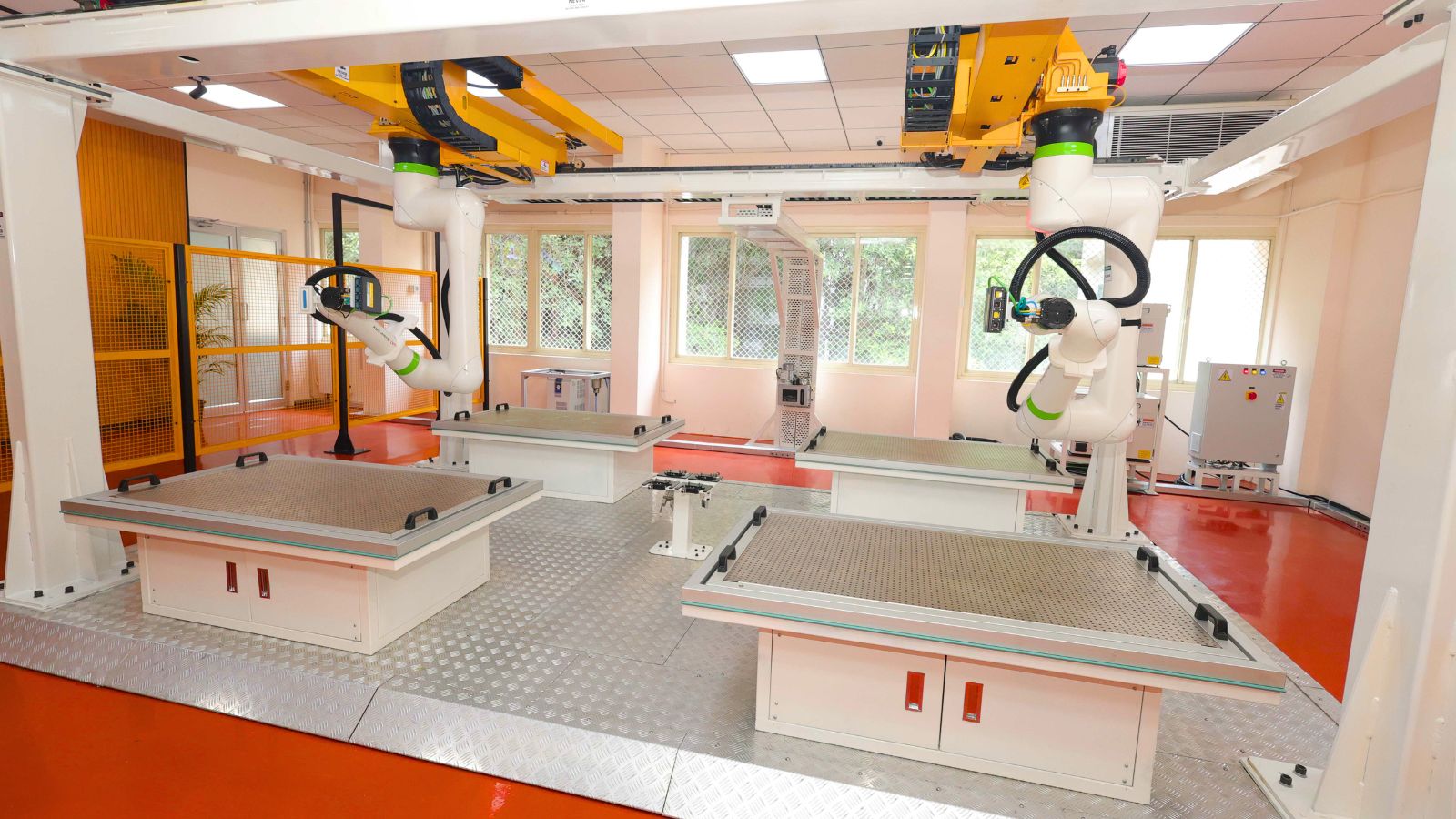
IIT Madras, in collaboration with Bechtel India, has inaugurated a state-of-the-art robotics laboratory costing Rs 3.30 crore. This facility aims to bridge the gap between academic research and industry needs in construction and infrastructure by focusing on robotics and automation, offering students practical exposure and potential internship opportunities.
Imagine building with LEGOs, but instead of people, robots do the work! IIT Madras and a company called Bechtel India opened a special lab with robots that can learn to build things like houses and bridges. It's like a robot school to make construction faster and safer.
Analysis
IIT Madras
The establishment of a dedicated robotics laboratory at IIT Madras marks a significant investment in the future of construction technology within India. This facility is designed to foster innovation by providing students and researchers with a platform to develop and test cutting-edge robotics and automation solutions specifically tailored for the construction industry. The institute's faculty, including Prof T. Asokan and Prof Koshy Varghese, will lead the research efforts, ensuring that academic pursuits are aligned with practical, real-world applications. The lab's focus extends beyond mere theoretical exploration, aiming to produce tangible outcomes such as prototypes, research papers, and patents that can directly benefit the sector.
The curriculum development and research at the lab will be informed by industry inputs, ensuring that the skills and technologies being developed are relevant to current and future industry demands. This collaborative approach is expected to enhance the employability of graduates by equipping them with specialized knowledge in construction robotics and automation. Furthermore, the lab serves as a crucial bridge, translating academic discoveries into practical solutions that can address the unique challenges faced in India's rapidly expanding infrastructure landscape. The long-term vision of this collaboration suggests a sustained effort to drive technological advancement in construction.
Bechtel India
Bechtel India's involvement in this Rs 3.30-crore robotics laboratory underscores a strategic commitment to advancing construction methodologies through technological integration. By contributing industry insights, Bechtel India plays a pivotal role in shaping the research agenda and curriculum, ensuring that the lab's output directly addresses the practical needs and requirements of the construction sector. This partnership offers selected students valuable opportunities for internships, providing them with hands-on experience within a global engineering and construction leader. Such exposure is invaluable for bridging the gap between academic learning and professional practice.
The collaboration is structured as a long-term endeavor, with plans extending over five to ten years, indicating a sustained effort to foster innovation and develop practical applications. Bechtel India's mentorship and access to industry resources will be instrumental in guiding research projects and facilitating the transition of developed technologies from the lab to real-world construction sites. This symbiotic relationship is poised to accelerate the adoption of advanced automation and robotics, thereby enhancing efficiency, safety, and sustainability in infrastructure development across India.
Construction Robotics
The inauguration of this specialized laboratory signifies a proactive approach to integrating robotics and automation into the construction industry, a sector historically slower to adopt new technologies. The lab's primary objective is to explore and develop robotic solutions for various construction tasks, aiming to improve productivity, precision, and safety on project sites. By focusing on real-world construction requirements, the research conducted here is expected to yield practical technologies that can be directly implemented, addressing challenges such as labor shortages, complex project demands, and the need for enhanced quality control.
This initiative is particularly relevant for India, given its ambitious infrastructure development goals. The application of robotics in construction can lead to faster project completion times, reduced material wastage, and improved working conditions for laborers. The lab will serve as a hub for innovation, fostering a new generation of engineers and technicians skilled in operating and maintaining advanced construction machinery. The potential for developing specialized robots for tasks like bricklaying, welding, or site surveying highlights the transformative impact this facility could have on the future of building and infrastructure projects in the country.
Key points
- IIT Madras has launched a Rs 3.3 crore robotics laboratory focused on construction and infrastructure.
- The lab is a collaboration between IIT Madras and Bechtel India, aiming to bridge academic research with industry needs.
- It will be used for developing, testing, and demonstrating robotics and automation technologies for real-world construction tasks.
- Bechtel India will provide industry inputs, mentorship, and potential internship opportunities for students.
- The partnership is planned as a long-term collaboration to drive innovation in construction technology.
This collaboration could significantly accelerate the adoption of automation in India's construction sector, leading to faster project completion, improved safety standards, and the development of more sophisticated infrastructure. It also promises to equip students with highly sought-after skills, fostering a new generation of tech-savvy construction professionals.
The successful integration of robotics in construction faces challenges such as high initial investment costs, the need for specialized training for a large workforce, and potential resistance to adopting new technologies. Without adequate industry-wide adoption and skilled personnel, the lab's innovations might not translate into widespread practical application.