IMF never demanded tax on solar panels, clarifies Aurangzeb
Aurangzeb denied reports that the IMF asked Pakistan to tax solar panels and said no such proposal was discussed. He said energy reforms and DISCO privatisation are moving ahead.
Intelligence analysis by GPT-5.4 Mini
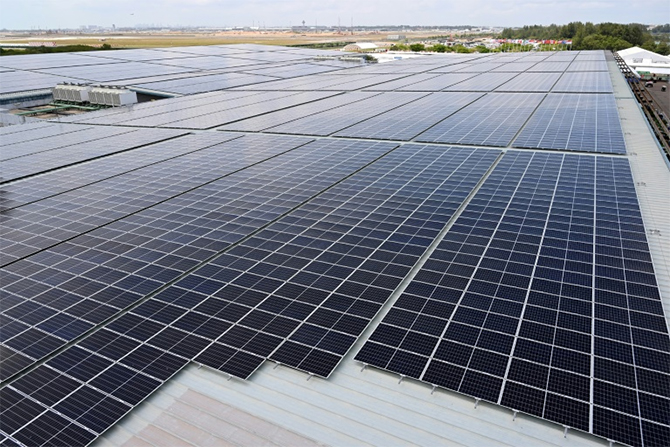
Finance Minister Muhammad Aurangzeb said the IMF never asked Pakistan to raise sales tax on solar panels, calling the reports inaccurate. He paired that denial with a broader pitch for energy-sector reforms, including cuts to cross-subsidies, DISCO privatisation, and a shift toward a more competitive power market.
Aurangzeb said a rumor was wrong: the IMF did not ask Pakistan to tax solar panels. He also said the government wants to fix the power system, like changing a crowded one-lane road into a road with more lanes so electricity can move more smoothly.
Analysis
What Aurangzeb denied
Finance Minister Muhammad Aurangzeb said the International Monetary Fund never demanded higher sales tax on solar panels. He dismissed reports that the government had considered taxing solar equipment before the budget and said the issue was never under discussion.
Bigger energy overhaul
Aurangzeb used the interview to outline a wider reform agenda in Pakistan’s power sector. He said the government is working to reduce electricity costs, improve the business climate, and make key industries more competitive. He added that expensive electricity remains a major problem for manufacturing, IT, mining, and other energy-intensive sectors.
Steps already underway
According to the minister, the government and Energy Minister Awais Leghari have already removed cross-subsidies for industry and are pushing ahead with wheeling policy and other efficiency measures. He said the administration is moving away from short-term relief and toward structural changes that are meant to show results over time rather than immediately.
Privatisation and market reform
A central part of the plan is privatising electricity distribution companies. Aurangzeb said expressions of interest have already been issued for three DISCOs, with two more expected soon. He said the first batch could be transferred to private-sector management by the end of the year, with the rest following later.
He also said the government wants to move away from the current single-buyer model run through the CPPA and toward a competitive multi-buyer market. In his framing, that would weaken monopolistic structures and improve efficiency, but it would also require stronger regulation to keep the system working properly.
Key points
- Aurangzeb said the IMF never demanded a tax increase on solar panels.
- He said reports about taxing solar panels before the budget were inaccurate.
- The government is pursuing structural reforms to cut electricity costs and improve competitiveness.
- Cross-subsidies for industry have already been removed, according to the minister.
- The government plans to privatise DISCOs and shift from a single-buyer to a multi-buyer power market.
If the reforms work, electricity could become cheaper and more reliable for factories and other power-hungry businesses. The planned privatisation of distribution companies and a more competitive market could also improve efficiency and reduce waste in the power system.
The minister himself said the reforms are long-term and not expected to help right away, so households and businesses may not see quick relief. Privatisation and market restructuring could also face implementation problems if regulation is weak or the transition is poorly managed.