IMF upgrades UK growth forecast as fears over impact of Iran war diminish
IMF raises UK GDP growth forecast to 1% for 2026, down from April's projection. Global oil prices have fallen since the US-Iran ceasefire announcement.
Intelligence analysis by Qwen 2.5 (3B)
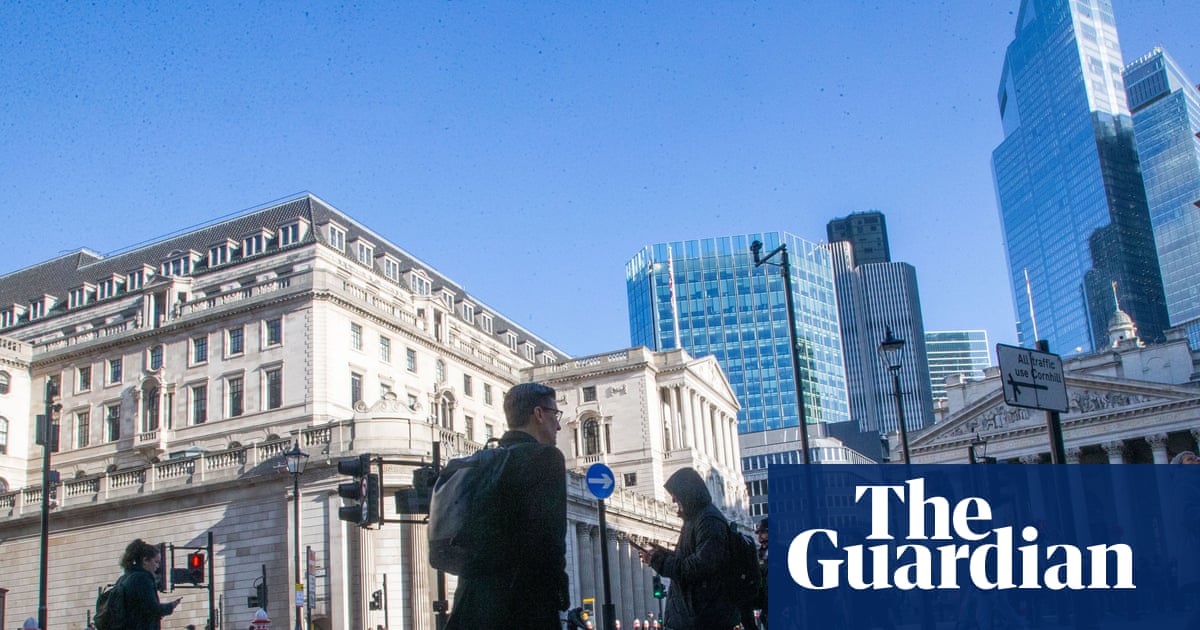
The International Monetary Fund has revised up its UK GDP growth forecast to 1% in 2026, citing a less severe impact of the Iran conflict than initially feared.
The International Monetary Fund (IMF) thinks the UK will grow its money-making machine by about 1% this year instead of last month's prediction. This is good news because it means the country might not need to raise interest rates as much, which would make borrowing cheaper for people and businesses.
Analysis
{"# A $1 Billion Shift in Expectations":"> The IMF's modest upgrade reflects a shift in expectations, with UK growth now projected at 1% compared to earlier forecasts. This change underscores how economic predictions can be influenced by new information and geopolitical developments.\n>
Global Oil Prices: A Mixed Picture\n> > While global oil prices have generally fallen since the US-Iran ceasefire announcement, they remain volatile due to ongoing uncertainty about peace prospects in the Middle East. The IMF notes that retail gasoline prices vary significantly across different regions, highlighting the complex economic impacts of such conflicts.\n>
AI and Technology Cycle: A Supportive Factor\n> > Despite initial fears over energy costs, the adoption of artificial intelligence has helped mitigate some of these effects. The IMF highlights how advancements in technology have played a crucial role in stabilizing global growth despite geopolitical tensions.","# Challenges Ahead":"> Although the IMF's forecast is cautiously optimistic, it also acknowledges potential risks and uncertainties. Renewed conflict or a correction in technology-driven expectations could pose significant challenges to the UK economy.\n>
Energy Importers: Vulnerable to Price Fluctuations\n> > Countries that rely heavily on energy imports are particularly vulnerable to price fluctuations. The IMF warns that such volatility can lead to supply shortages, exchange rate pressures, and broader economic instability.\n>
EU Trade Relations: A Key Factor\n> > Strengthening trade relations with the European Union remains a critical aspect of the UK's economic strategy. The IMF emphasizes this as a key factor in ensuring long-term growth and stability.","# Policy Implications":"> As the incoming government prepares to take office, it will need to navigate these complex economic landscapes. Andy Burnham, who is expected to become the new prime minister, faces early questions about his plans for tax and spending policies.\n> > The IMF's report underscores the importance of focusing on key areas such as AI development, regional growth, and strengthening trade ties with Europe. These strategies are seen as essential in building a resilient economy that can withstand future economic shocks."}
Key points
- IMF raises UK GDP growth forecast to 1% for 2026
- Global oil prices have fallen since the US-Iran ceasefire announcement
- AI adoption has helped mitigate some effects of energy cost increases
- Renewed conflict or a correction in technology expectations pose risks to economic stability
The new forecast suggests that the UK economy will continue to grow at a steady pace, providing a solid foundation for future investments and job creation. This could lead to more economic stability and potentially lower unemployment rates.
However, there are still risks such as renewed conflict in the Middle East or a correction in technology expectations that could negatively impact the economy. The IMF warns of potential supply shortages and exchange rate pressures if these scenarios materialize.