Imran Khan's Eye Condition Almost Normal, Jail Authorities Tell Pakistan Supreme Court
Pakistan's Adiala Jail authorities told the Supreme Court that jailed former PM Imran Khan's eye condition has improved to 'almost normal.' The report comes ahead of an August 18 hearing on his petition seeking treatment at Shifa International Hospital in Islamabad, while…
Intelligence analysis by Llama
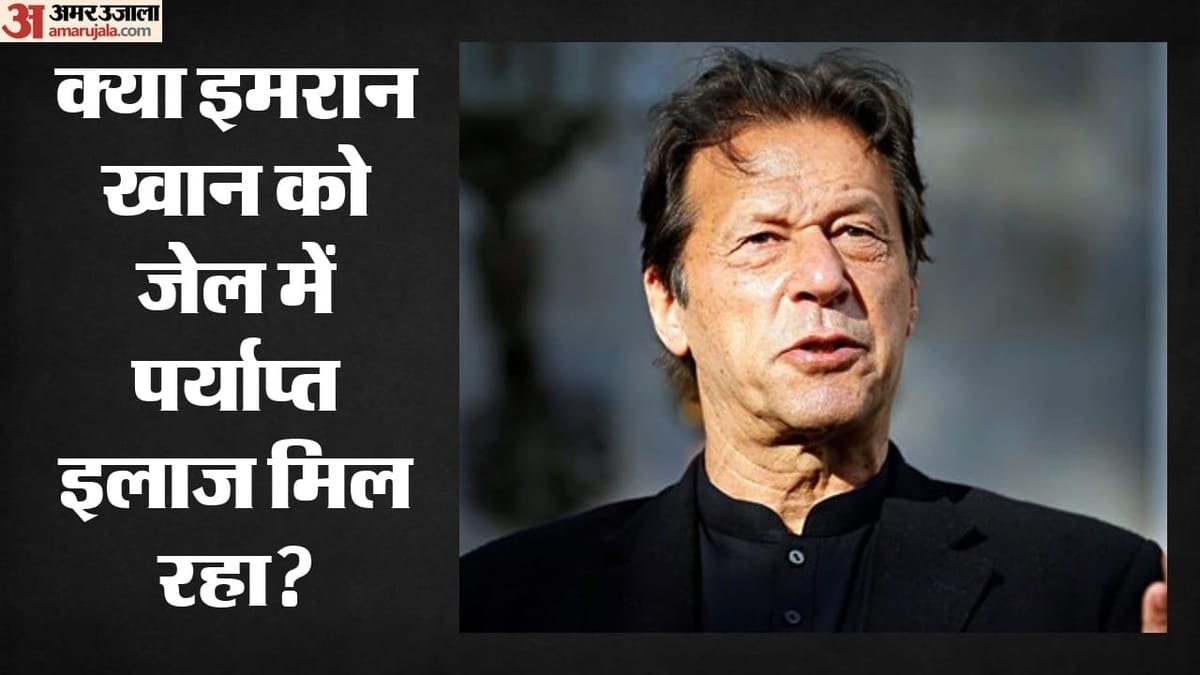
Pakistan jail authorities told the Supreme Court that Imran Khan's eye condition is 'almost normal' after treatment for central retinal vein occlusion. The report is timed to a Supreme Court hearing on his petition for treatment at a private hospital, while PTI alleges denial of access to his family and doctors since December 2025.
A former prime minister of Pakistan has been in jail for a while and had a problem with one of his eyes. The people running the jail told the country's highest court that his eyesight is now almost back to normal after doctors treated him. But his political party says the jail is not letting his family or his own doctors visit him, so they are worried he is not really getting the care he needs.
Analysis
Central Retinal Vein Occlusion
The specific diagnosis at the centre of this dispute is central retinal vein occlusion (CRVO) in Khan's right eye, first detected in late January. CRVO is a blockage of the main vein draining the retina and can cause sudden, sometimes irreversible, vision loss if not treated promptly. The fact that jail authorities now describe his vision as "almost normal" is therefore a clinically significant claim — not just a political talking point. Yet the diagnosis itself raises a follow-up question that the Adiala Jail report does not fully address: CRVO often requires ongoing monitoring and, in many patients, long-term management of underlying conditions such as hypertension or diabetes. The article notes that jail medical officers check Khan's blood pressure, heart rate and oxygen levels three times a day, but the public filing offers no comparable baseline for the conditions that may have triggered the eye problem in the first place.
PIMS and Alshifa Trust Eye Hospital
The treatment pathway documented in the court filing runs through two named institutions: the Pakistan Institute of Medical Sciences (PIMS) in Islamabad, whose head of ophthalmology, Dr. Muhammad Arif Khan, treated the former prime minister, and the Alshifa Trust Eye Hospital in Rawalpindi, where vitreoretinal specialist Dr. Nadeem Qureshi was also involved. Laying out a roster of named specialists is a deliberate legal move by the jail administration — it converts what could be dismissed as a bureaucratic assurance into a paper trail of credentialed care. The choice of public-sector PIMS rather than the private Shifa International Hospital, which Khan himself petitioned for, is the heart of the judicial contest. If the three-member bench led by Justice Shahid Waheed accepts the PIMS-based care as adequate, it both rejects Khan's petition and implicitly endorses the state's medical-judicial framework for high-profile prisoners.
Sohail Afridi's December 2025 Claim
The most politically loaded counter-narrative comes from Khyber Pakhtunkhwa Chief Minister Sohail Afridi, who used a press conference to push back against the jail's optimistic report. Afridi cited a medical report showing elevated blood pressure in Khan and contrasted it with earlier readings from Khan's private doctors. He further alleged that Khan's family, legal team and personal physicians have been barred from meeting him since 2 December 2025. Whether or not those claims survive scrutiny, they sharpen the framing the Supreme Court will have to weigh: a state-supplied recovery story on one side, and an opposition-supplied denial-of-access narrative on the other. The bench's decision on 18 August will therefore be read not just as a ruling on a medical petition, but as a signal about how Pakistan's top court balances the rights of high-profile prisoners against the executive's insistence on institutional care.
Key points
- Jail authorities told the Pakistan Supreme Court that Imran Khan's eye condition is 'almost normal' after treatment for central retinal vein occlusion in his right eye
- Khan, 73, has been held at Adiala Jail in Rawalpindi since August 2023
- He was treated at PIMS in Islamabad by Dr. Muhammad Arif Khan and at Alshifa Trust Eye Hospital by vitreoretinal specialist Dr. Nadeem Qureshi
- A three-member Supreme Court bench led by Justice Shahid Waheed is hearing his petition seeking treatment at Shifa International Hospital on August 18
- PTI and KP Chief Minister Sohail Afridi allege Khan's family, legal team and private doctors have been barred from meeting him since December 2, 2025
If the Adiala Jail report is taken at face value, Khan can continue receiving treatment within the existing PIMS-based framework and his recovery from CRVO will be sustained under daily monitoring. A dismissal of his petition would also allow the judicial process to move on without further politicising his medical care.
PTI's allegations of denied access since December 2025 and conflicting blood pressure readings raise the possibility that the jail's positive assessment understates ongoing health risks. A Supreme Court ruling against Khan's petition could deepen the political standoff and fuel further protests, particularly if his condition later deteriorates.