In Bishkek, US envoys shadow the SCO summit in challenge on Beijing and Moscow’s turf
US envoys met with Central Asian presidents in Bishkek, coinciding with the SCO summit, signaling continued American outreach to counter Chinese influence in the region.
Intelligence analysis by Gemini 2.5 Flash Lite
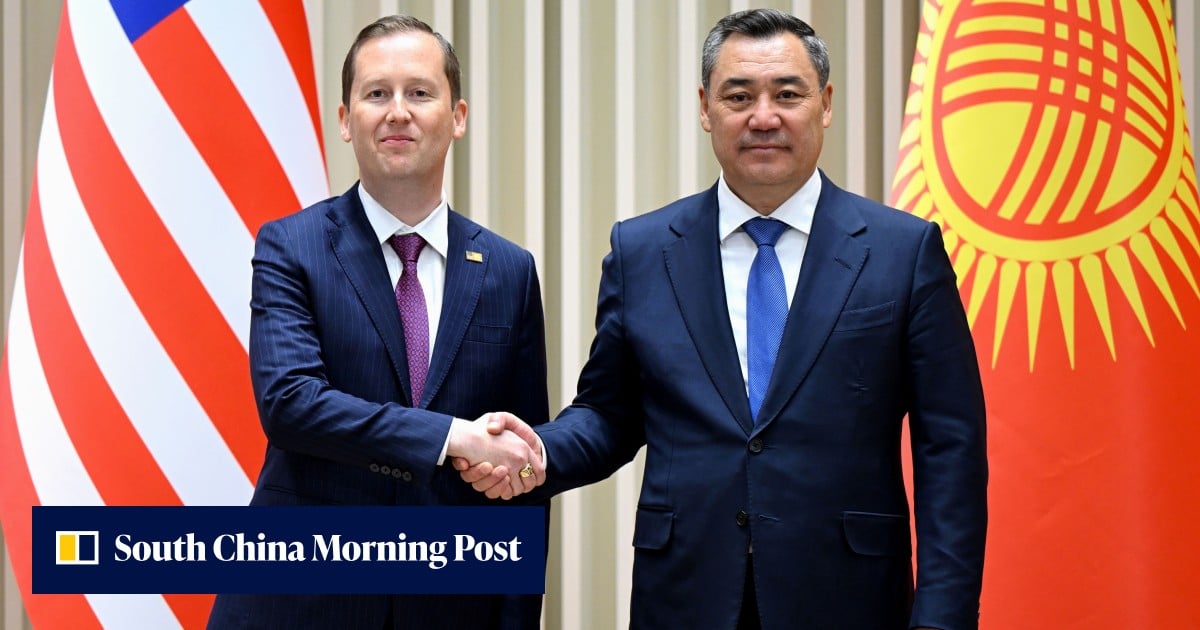
While China and Russia convened the Shanghai Cooperation Organisation summit in Bishkek to promote a multipolar world, US diplomats engaged in separate meetings with leaders of Kyrgyzstan, Tajikistan, and Uzbekistan. This strategic move by Washington aims to bolster its presence and potentially diminish Beijing's influence in Central Asia, though analysts suggest forcing regional nati…
Imagine two big kids, China and Russia, having a club meeting in a city. At the same time, another kid, the US, is talking to some of the kids going to the club meeting, trying to be friends too. It's like a friendly competition to see who can make the best connections in that city.
Analysis
SCO Summit
The Shanghai Cooperation Organisation (SCO) summit in Bishkek served as a focal point for China and Russia's efforts to consolidate their influence and promote a multipolar world order. The gathering, attended by leaders from member states and observers, including Chinese President Xi Jinping and Russian President Vladimir Putin, aimed to foster cooperation among nations seeking alternatives to Western-dominated global structures. The presence of leaders like Indian Prime Minister Narendra Modi and Iranian President Masoud Pezeshkian underscored the SCO's broad reach and its role as a platform for discussing regional security, economic integration, and geopolitical strategies distinct from Western agendas.
US Envoys
Concurrently, US envoys, including Senator Steve Daines and Special Envoy for South and Central Asia Sergio Gor, conducted a parallel diplomatic offensive in Bishkek. Their meetings with the presidents of Kyrgyzstan, Tajikistan, and Uzbekistan highlighted Washington's commitment to engaging with Central Asian nations. This diplomatic maneuver is interpreted as a strategic effort to counterbalance China's growing economic and political sway in the region. By engaging directly with these leaders, the US seeks to strengthen bilateral ties, explore areas of mutual interest, and offer an alternative partnership model, thereby attempting to dilute the impact of the SCO summit's agenda on regional allegiances.
Geopolitical Competition
The simultaneous presence of the SCO summit and US diplomatic engagements in Bishkek exemplifies the intensifying geopolitical competition in Central Asia. Analysts suggest that while the US aims to counter Beijing's influence, it is unlikely to compel these nations to definitively choose sides. Central Asian countries typically pursue a multi-vector foreign policy, balancing relationships with major powers to maximize their own strategic and economic benefits. Therefore, Washington's strategy may focus more on deepening partnerships and offering tangible benefits rather than demanding exclusive alignment, recognizing the region's inherent desire for autonomy and diversified international relations.
Key points
- US envoys met with leaders of Kyrgyzstan, Tajikistan, and Uzbekistan in Bishkek during the SCO summit.
- The US diplomatic activity is seen as an effort to counter Chinese influence in Central Asia.
- China and Russia hosted the SCO summit to promote a multipolar world order.
- Analysts believe it is unrealistic to expect Central Asian countries to choose sides between major powers.
- The region's strategic importance is highlighted by the competing diplomatic efforts.
The US diplomatic engagement could lead to strengthened partnerships with Central Asian nations, fostering greater regional stability and economic cooperation. Increased dialogue may also provide these countries with more options for development and security, reducing over-reliance on any single power.
The intensified geopolitical competition could create pressure on Central Asian countries to navigate complex allegiances, potentially leading to instability or hindering their independent foreign policy objectives. A failure to offer compelling alternatives could see China's influence continue to grow unchecked.