In Côte d'Ivoire, the RHDP or the Epic of a Political Machine
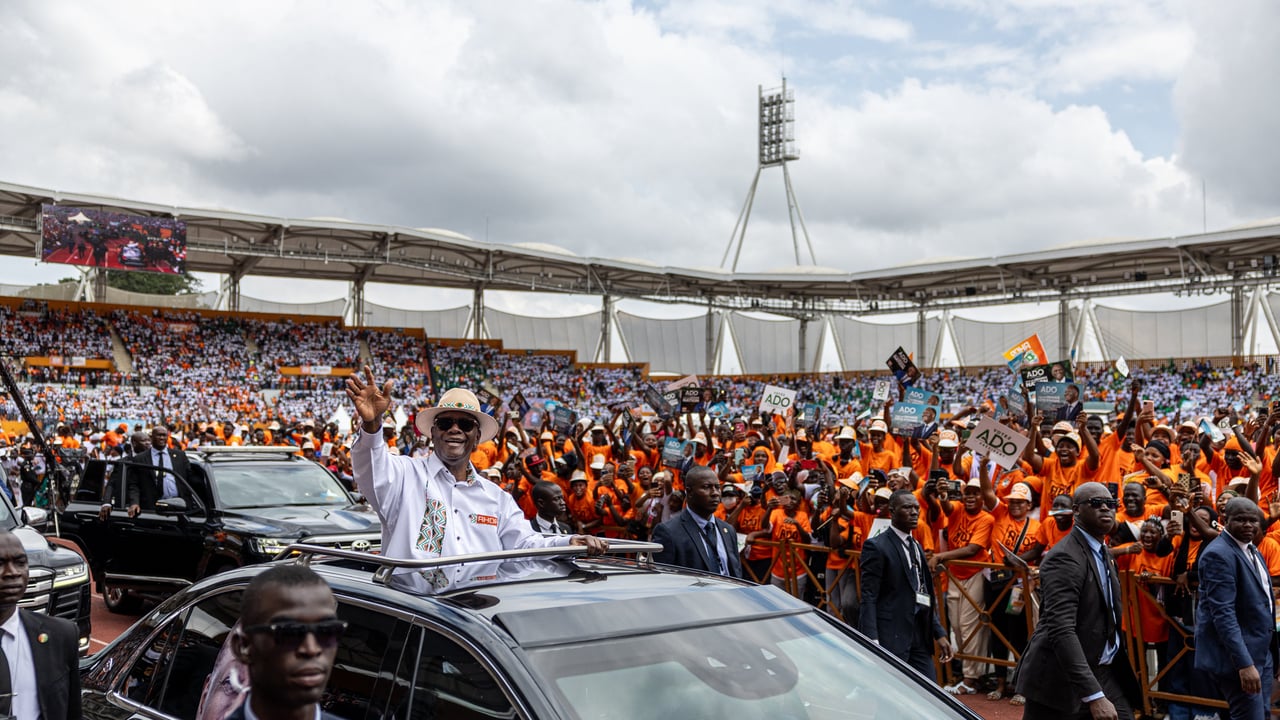
The RHDP, initially a coalition formed in 2005 by rivals Alassane Ouattara and Henri Konan Bédié against Laurent Gbagbo, has transformed into a dominant political force in Côte d'Ivoire. After about fifteen years in power, it boasts a powerful machine with strong local pr…
Intelligence analysis by Gemini 2.5 Flash
The article traces the evolution of Côte d'Ivoire's Rally of Houphouëtists for Democracy and Peace (RHDP) from its origins as an opposition coalition in 2005 to its current status as a powerful, hegemonic political party. It highlights the initial improbable alliance between Alassane Ouattara and Henri Konan Bédié, its eventual fracturing, and the RHDP's subsequent consolidation of po…
Imagine a big club of friends who used to argue a lot but then teamed up to beat another big club. Once they won, their leader made their club super strong, like a giant tree with roots everywhere, so everyone wants to join them because that's where all the good stuff happens.
Analysis
The Genesis of an Unlikely Alliance
The Rally of Houphouëtists for Democracy and Peace (RHDP) was born in 2005 in Paris, amidst a profound crisis in Côte d'Ivoire. It emerged not as a unified party, but as a coalition of opposition forces, primarily united by their shared opposition to then-President Laurent Gbagbo. The alliance brought together two political heavyweights and former rivals, Alassane Ouattara and Henri Konan Bédié, whose rapprochement was widely considered improbable given their historical animosities and differing political trajectories. This strategic alignment, however, proved to be a pivotal moment, fundamentally reshaping the Ivorian political scene and setting the stage for future power shifts. The initial objective of the RHDP was to consolidate the political heirs of Félix Houphouët-Boigny, who had long been fragmented by disputes over his legacy. This common heritage provided a fragile, yet effective, basis for their collaboration against Gbagbo. This period of unity, though ultimately temporary, was instrumental in the RHDP's eventual ascent.
From Coalition to Hegemonic Power
The alliance, despite its initial fragility and eventual fracturing, successfully propelled Alassane Ouattara to the presidency in 2010. Following this victory, the RHDP underwent a significant transformation, evolving from a broad coalition into a unified, dominant political party. Over approximately fifteen years in power, the party has meticulously built a formidable political machine characterized by a robust local presence and an enduring capacity to attract new members and defectors from other parties. This strategic consolidation has allowed the RHDP to establish a near-hegemonic position within Ivorian politics, effectively marginalizing opposition forces. The article highlights an Ivorian adage, "Political personnel dry their clothes where the sun shines," which aptly describes the RHDP's magnetic appeal. This refers to the tendency of political figures to align themselves with the party in power, seeking influence and opportunities. The continuous influx of new supporters and the party's deep roots across the country underscore its strategic success in maintaining and expanding its influence, making it a central force in Côte d'Ivoire's governance and future trajectory.
The Enduring Legacy and Future Challenges
The RHDP's journey from an opposition front to a ruling behemoth is a testament to its adaptability and strategic acumen, particularly under the leadership of Alassane Ouattara. However, the article also subtly hints at the inherent tensions and "misunderstandings" that led to the eventual fissure between Ouattara and Bédié, suggesting that even powerful alliances can be undone by internal disagreements over succession or strategic direction. This historical context is crucial for understanding the current political dynamics, where the RHDP's dominance is now a given, but the mechanisms of its internal cohesion and external challenges remain pertinent. The party's continued strength and ability to attract members, even from the main opposition PDCI, as mentioned in the related articles, indicates its ongoing influence. Yet, this dominance also raises questions about the health of multi-party democracy in Côte d'Ivoire and the space available for genuine opposition. The RHDP's "epic" is far from over, as it navigates the complexities of maintaining power, managing internal ambitions, and responding to the evolving needs of the Ivorian populace, all while shaping the nation's political future.
Key points
- The RHDP began in 2005 as an opposition coalition in Paris, uniting rivals Alassane Ouattara and Henri Konan Bédié against Laurent Gbagbo.
- This improbable alliance aimed to gather the heirs of Félix Houphouët-Boigny, who were previously divided.
- The coalition successfully brought Alassane Ouattara to power in 2010, but the alliance later fractured around 2018 due to disagreements.
- Over about fifteen years in power, the RHDP transformed into a powerful, hegemonic political machine with strong local presence.
- The party continues to attract numerous political figures, reflecting its dominant position in Ivorian politics.
The RHDP's strong political machine and stable leadership under Alassane Ouattara could provide continued political stability and a clear direction for governance in Côte d'Ivoire. This consolidation of power might enable more efficient policy implementation and long-term development projects, fostering economic growth and national unity.
The RHDP's overwhelming dominance could lead to a weakening of democratic checks and balances, potentially stifling opposition voices and limiting political pluralism. This concentration of power might also exacerbate internal party tensions over succession or lead to a lack of accountability, posing risks to the country's democratic health in the long run.