In Guinea, the opposition calls on "patriots" to "end Mamadi Doumbouya's dictatorship"
Guinea's opposition collective, Forces Vives de Guinée (FVG), has rejected the country's current institutions and called on "patriots" to end what they describe as Mamadi Doumbouya's dictatorship, citing governance by terror and fraudulent elections.
Intelligence analysis by Gemini 2.5 Flash
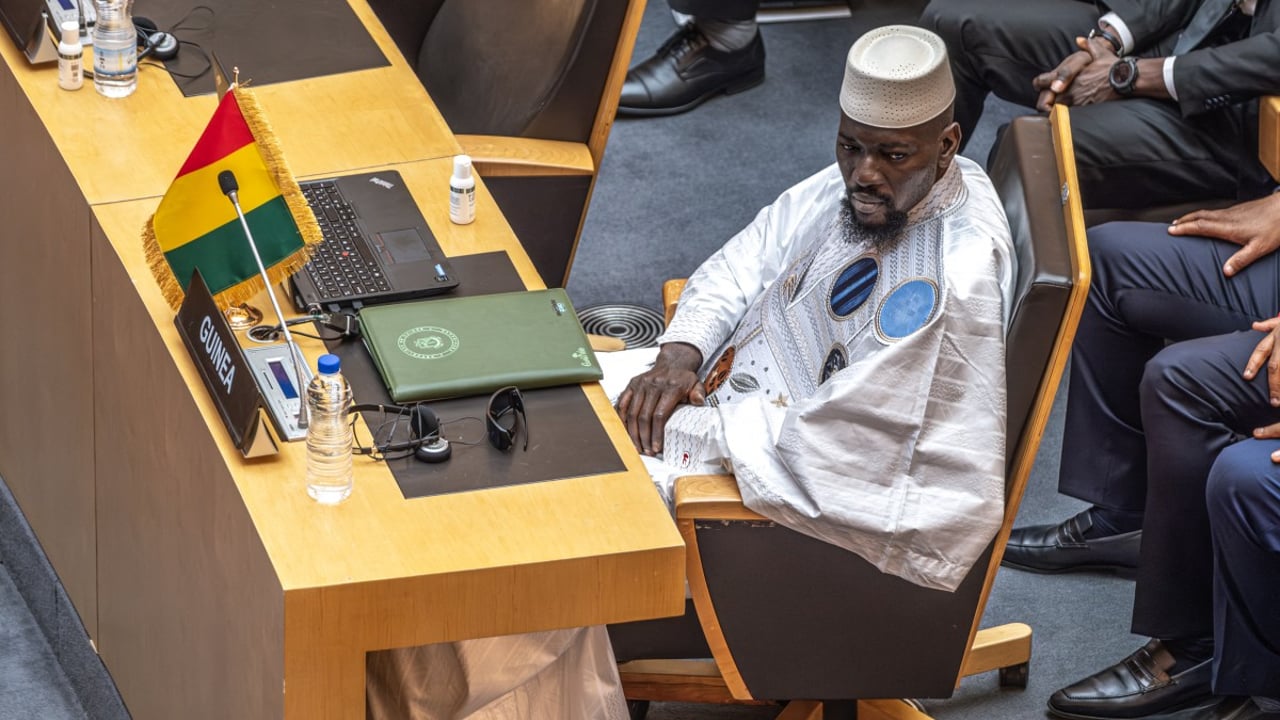
The Forces Vives de Guinée (FVG), a coalition of major opposition parties and civil society organizations, issued a strong statement denouncing President Mamadi Doumbouya's regime as a dictatorship marked by repression, violence, and the suppression of freedoms. They reject the legitimacy of recent elections and institutions, urging citizens to unite for a return to constitutional ord…
Imagine a school where a new principal, Mamadi, took over and promised to make things fair, but then he started making all the rules himself, shutting down clubs he didn't like, and even letting some bullies off the hook for past bad behavior. Now, all the other students and teachers are saying his rules aren't fair and are asking everyone to work together to bring back the old, fair rules and make sure everyone has a say.
Analysis
Escalating Opposition to Doumbouya's Rule
The Forces Vives de Guinée (FVG), a powerful collective comprising Guinea's main opposition parties and civil society organizations, has issued a stark condemnation of President Mamadi Doumbouya's regime. The FVG explicitly declared its rejection of all existing institutions, asserting that Doumbouya and his inner circle govern through "terror, repression, violence, and corruption." This collective accuses the regime of systematically confiscating power and maintaining a facade of legitimacy through what they term "fraudulent" elections.
The opposition's grievances are extensive, detailing targeted assassinations, deaths of civilian and military figures in detention, forced disappearances, kidnappings, and torture aimed at opinion leaders. They also decry the muzzling of the press and the arbitrary dissolution of dozens of political parties, including the most representative opposition groups. These accusations paint a grim picture of a regime that has, according to the FVG, progressively transformed into a full-blown dictatorship, betraying Doumbouya's initial promise to return power to civilians after a transitional period.
The Shadow of the 2009 Massacre
Adding to the political turmoil is the recent controversy surrounding the justice process for the September 28, 2009 massacre. The FVG's declaration coincides with widespread dismay among human rights organizations over recent judicial decisions. Specifically, the acquittal of Colonel Bienvenu Lamah, a key figure against whom prosecutors had sought a ten-year sentence, and the release of other defendants, have been met with strong criticism. This follows President Doumbouya's pardon of former dictator Dadis Camara, who had been sentenced to twenty years for his role in the same massacre.
Three prominent NGOs—the International Federation for Human Rights (FIDH), the Guinean Organization for Human Rights (OGDH), and the Victims' Association (Avipa)—have collectively denounced these decisions as a "severe blow to justice." They argue that the integrity of the judicial process has been severely undermined, with the FIDH president, Alexis Deswaef, speaking of a "true disintegration of the trial's achievements." These developments not only deepen public distrust in the justice system but also fuel the opposition's narrative of a regime that disregards accountability and human rights.
A Call for Constitutional Restoration
Against this backdrop of political repression and judicial setbacks, the FVG has issued a fervent appeal to "all Guinean patriots" to unite and "put an end to the dictatorship." Their ultimate goal is the restoration of fundamental freedoms and an effective return to constitutional order. This call to action is particularly significant given its timing, released on the very day President Doumbouya departed the country for a "few days of rest" in Greece.
The opposition views the recent "pretended constitutional referendum" and the subsequent presidential and legislative elections as mere "simulacra" designed to legitimize a military coup. By rejecting these processes and the institutions they created, the FVG is attempting to delegitimize Doumbouya's rule entirely and mobilize popular support for a fundamental political change. The success of this call will depend on the opposition's ability to maintain unity and galvanize a broad-based movement capable of challenging a regime accused of governing by terror.
Key points
- The Forces Vives de Guinée (FVG) collective has rejected Guinea's current institutions and called for an end to Mamadi Doumbouya's "dictatorship."
- FVG accuses Doumbouya's regime of governing by terror, repression, violence, corruption, and suppressing fundamental freedoms.
- They denounce recent elections as fraudulent and a "confiscation of power," despite Doumbouya's initial promise of a civilian transition.
- The opposition's statement coincides with President Doumbouya's departure for a vacation in Greece.
- Recent acquittals and pardons in the 2009 massacre trial, including Colonel Bienvenu Lamah's release, are criticized by NGOs as a severe blow to justice.
The unified stance of the Forces Vives de Guinée, encompassing diverse opposition and civil society groups, could potentially galvanize widespread support for a peaceful return to constitutional order. This collective pressure might compel the government to engage in genuine dialogue and implement reforms, fostering a more democratic and just society in Guinea.
The government's continued repression, coupled with the opposition's strong call for an end to the "dictatorship," risks further destabilizing Guinea and could lead to increased civil unrest and violence. The perceived undermining of justice in the 2009 massacre trial could erode public trust and exacerbate grievances, making a peaceful resolution more challenging.

