In Niger, a major oil spill puts the management of the Agadem field to the test
A major crude oil and gas eruption in Niger's Agadem oil block, operated by CNPC Niger Petroleum S.A., has caused an environmental incident of "exceptional gravity" since September 25, with two employees hospitalized.
Intelligence analysis by Gemini 2.5 Flash
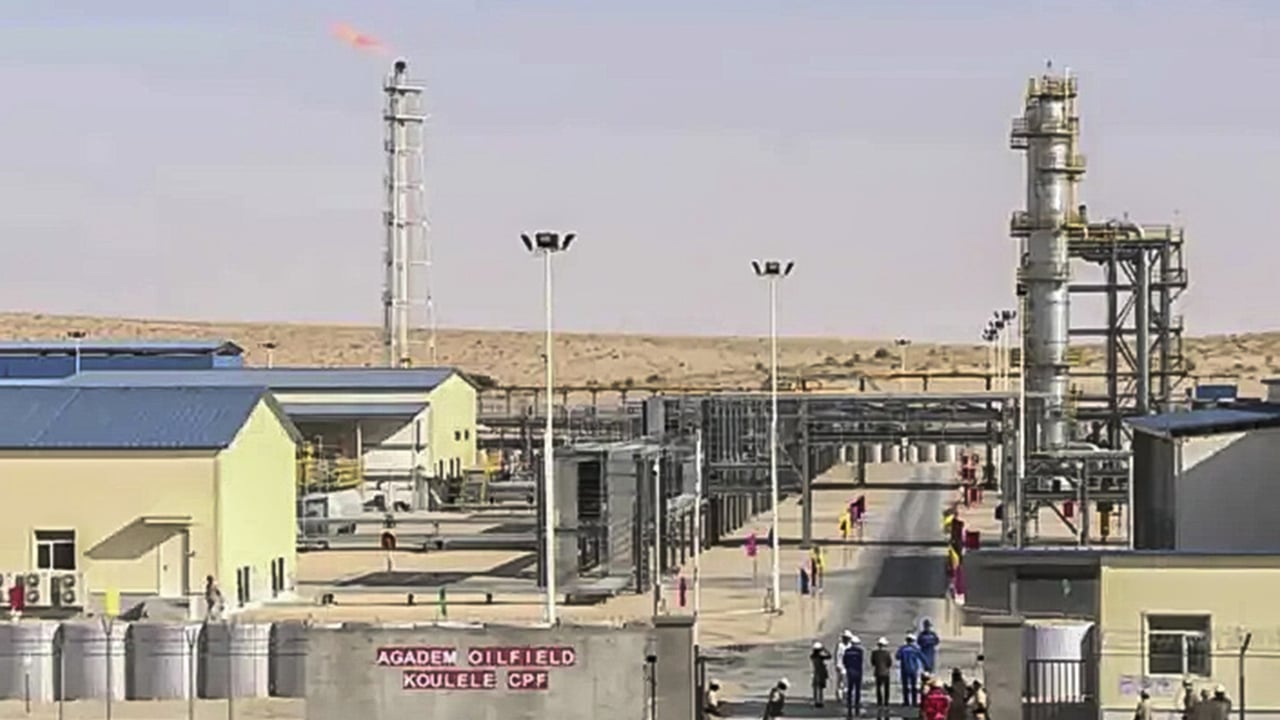
A significant crude oil and gas leak at the Goumeri W8 well in Niger's Agadem oil field has led to a severe environmental crisis, prompting an official investigation and raising concerns about long-term ecological damage and the stability of oil operations in the region.
Imagine a giant underground straw sucking up oil, but it broke and oil is gushing out like a geyser in the desert. It's making a big mess, hurting the land and maybe animals, and grown-ups are trying to fix it and figure out why it happened.
Analysis
Goumeri W8
The incident at the Goumeri W8 well, part of the Agadem oil block, represents a significant operational failure with severe environmental consequences. Originating on September 25, the eruption involved crude oil and gas spewing more than ten meters high, creating an extensive oil slick across hundreds of meters of desert terrain. This event, described by the Nigerien Ministry of Petroleum as an "environmental incident of exceptional gravity," underscores the inherent risks associated with hydrocarbon extraction, particularly in remote and sensitive ecosystems. While initial reports confirmed no fatalities, two employees required hospitalization, highlighting the immediate dangers posed to personnel working on such sites.
The ongoing nature of the spill, which was only partially contained by October 12, suggests complex challenges in emergency response and containment. Authorities have noted the severe degradation of the platform at Goumeri W8 and expressed concern over the compromised integrity of two adjacent wells, Goumeri W3 and Goumeri W4. This raises the specter of further operational instability and potential for additional leaks or structural failures, complicating efforts to fully stabilize the site and mitigate long-term damage. The incident's causes remain under investigation, though criminal or terrorist acts have been explicitly ruled out by the ministry, focusing the inquiry on technical or operational factors.
CNPC Niger Petroleum S.A.
The Agadem oil block is operated by CNPC Niger Petroleum S.A., a local subsidiary of the Chinese multinational China National Petroleum Corporation (CNPC). This incident places the company's operational safety standards and environmental management practices under intense scrutiny. As a major international player in Niger's nascent oil industry, CNPC's response to this crisis will be critical in shaping perceptions of foreign investment and corporate responsibility in the country. The involvement of Algerian expertise in the independent investigation suggests a collaborative effort to ensure transparency and thoroughness, but the ultimate responsibility for the incident's prevention and resolution lies with the operating company.
The scale of the leak and its environmental impact could lead to significant financial penalties and reputational damage for CNPC. Beyond the immediate cleanup costs, there will be long-term remediation efforts required to restore the affected desert environment, which could be substantial. This incident serves as a stark reminder for all extractive industries operating in Africa about the necessity of robust safety protocols, continuous infrastructure monitoring, and effective emergency response plans to prevent such catastrophic events and protect both human life and natural resources.
Agadem
The Agadem oil field is central to Niger's identity as an oil-producing nation, a status it has held since 2011. The field currently accounts for the extraction of 90,000 barrels per day of crude oil, in addition to 20,000 barrels per day of refined oil. This production is vital for the country's economy, which is currently under the governance of a junta following a 2023 coup. The incident at Agadem not only poses an horrific environmental threat but also adds another layer of complexity to the already challenging security landscape in Niger. The region has seen sporadic attacks by armed groups hostile to the military regime, targeting the 2,000 km pipeline that transports Nigerien crude to Benin.
While the Ministry of Petroleum has ruled out terrorism as the cause of this specific leak, the broader context of instability in the Agadem region cannot be ignored. Any disruption to oil production or infrastructure, whether accidental or deliberate, has significant implications for Niger's revenue streams and its ability to maintain economic stability. The Group for Reflection and Action on Extractive Industries in Niger (GREN) has rightly voiced concerns about the "potential risks" of these "giant leaks" to local ecosystems, including livestock, pastures, soil, and water resources, highlighting the profound socio-economic and environmental vulnerabilities inherent in large-scale extractive operations in such a fragile environment.
Key points
- A major crude oil and gas eruption occurred at the Goumeri W8 well in Niger's Agadem oil block on September 25.
- The incident, described as an "environmental incident of exceptional gravity," has projected oil and gas over 10 meters high, creating a large oil slick.
- Two employees were hospitalized, but no deaths were reported; the situation is partially contained but not fully controlled.
- The site is operated by CNPC Niger Petroleum S.A., a subsidiary of China National Petroleum Corporation (CNPC).
- An independent investigation, supported by Algerian expertise, has been launched, ruling out criminal or terrorist causes.
- Concerns have been raised by GREN regarding potential risks to livestock, pastures, soil, and water resources.
The government's swift announcement of an independent investigation with Algerian expertise suggests a commitment to understanding and addressing the incident's causes, potentially leading to improved safety protocols and environmental protection measures in Niger's oil sector.
The ongoing nature of the spill, the severe degradation of the platform, and the compromised integrity of neighboring wells indicate a high risk of prolonged environmental damage and potential disruptions to Niger's oil production, further exacerbating economic challenges in a politically unstable nation.
Market signals
- OIL The major oil leak and compromised well integrity in the Agadem field raise concerns about potential disruptions to Niger's crude oil production.
AI-generated analysis of potential market relevance. Not financial advice.


