India 'cockroach' activist Sonam Wangchuk ends hunger strike as protests spread
Indian climate and education activist Sonam Wangchuk ended a 26-day hunger strike after Modi's ministers gave him assurances on exam-leak accountability and compensation. The youth-led Cockroach Janta Party movement, demanding the education minister's resignation, has cal…
Intelligence analysis by Llama
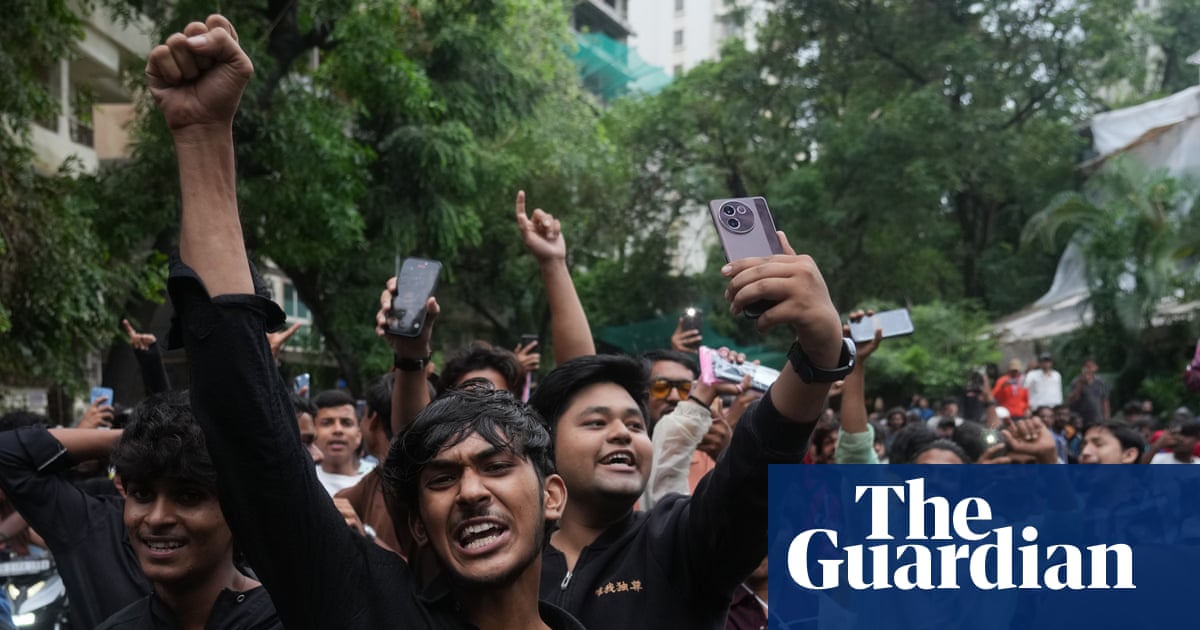
Sonam Wangchuk ended a 26-day hunger strike after Modi's top ministers promised parliamentary debate on exam-leak accountability and compensation for families of students who died by suicide. The Cockroach Janta Party movement, now demanding Education Minister Dharmendra Pradhan's resignation, plans nationwide protests on Friday, marking the biggest youth challenge to Modi since 2014.
A man in India named Sonam Wangchuk didn't eat for 26 days to ask the government to fix a huge problem: bad people leaked exam papers and two million students couldn't take their tests fairly. Some students were so sad about it that they hurt themselves. The government finally promised to talk about it, so he started eating again. But lots of young people across India are still angry and planning big protests on Friday because they want the education minister to quit, like students asking the principal to step in.
Analysis
A Hunger Strike Ends, A Movement Persists
Sonam Wangchuk's decision to end his 26-day fast on Friday was not a surrender but a tactical pivot. The activist, who had not eaten since late June, broke his strike in the presence of two of Modi's top ministers after receiving written assurances on three core demands: a parliamentary debate on accountability in the failed examination system, compensation for families of students who took their own lives after the leaks, and no criminal cases against young people who marched on parliament on Monday. Wangchuk emerged from his hospital bed weak but, according to the Guardian, in lively spirits. The length of his fast itself carried symbolic weight: India's most famous practitioner of hunger-strike protest, Mahatma Gandhi, never exceeded 21 days.
The government clearly wanted Wangchuk off the fast, but his concessions were narrow. The CJP movement's central demand, the resignation of Education Minister Dharmendra Pradhan over exam paper leaks that affected two million students in May, remains unmet. CJP founder Abhijeet Dipke said the movement would continue until Pradhan stepped down, framing Wangchuk's sacrifice as a foundation rather than a finish line. Modi's subsequent appeal for Wangchuk to regain weight was politically protective, distancing the prime minister personally from any deterioration in the activist's health.
Repression and the Reach of the Protests
The state response in Delhi revealed how seriously the government views the unrest. Authorities shut down 16 metro stations around the Jantar Mantar protest site and, according to Reuters sources, ordered telecom firms to block mobile internet in the area, a measure that inconvenienced thousands of commuters and disabled digital payments for nearby businesses. Human rights groups described the crackdown as an attempt to prevent fresh violence. The CJP and its supporters nonetheless expanded the geography of dissent: this week protests emerged in Bengaluru, Ranchi, Pune, Thiruvananthapuram, Kolkata, and Mumbai, where police detained hundreds of students.
Modi's substantive counter-offer, special fast-track courts to prosecute those behind paper leaks, was dismissed by CJP spokesperson Ashutosh Ranka as addressing only one dimension of the problem. Ranka's pointed question, why paper leaks are happening in the first place, suggests the movement is pushing toward structural reform of an examination system widely seen as corrupt and politically compromised. Modi later promised "more strict actions" to be announced at a cabinet meeting Friday, a sign that the government is still calibrating its response rather than settling the dispute.
A Political Crisis Modi Cannot Easily Contain
The protests have crossed into electoral politics. Opposition parties have echoed the youth movement's demands and disrupted the monsoon session of parliament that opened this week, a procedural headache for a government that depends on parliamentary cooperation to pass legislation. The cultural elite, normally cautious, has also moved: Bollywood stars including Salman Khan, Alia Bhatt, and Kareena Kapoor released a joint statement supporting the students after criticism of their silence. The shift suggests the movement has achieved a kind of mainstream legitimacy that government repression alone cannot reverse.
For Modi, who came to power in 2014 on a promise of jobs and development for young Indians, the exam-leak scandal cuts at a vulnerable point. Two million students had their careers disrupted, and several suicides have been linked to the leaks, a human cost that narrative management cannot easily absorb. The CJP's branding as a "cockroach" movement, derived from Wangchuk's earlier use of the insect as a metaphor for resilience, is a deliberate signal of underdog defiance. If Friday's nationwide protests match CJP organizers' expectations of a "huge turnout," Modi will face a choice between substantive concession and sustained confrontation with a generation of voters who have not known a prime minister other than him.
Key points
- Sonam Wangchuk ended a 26-day hunger strike after receiving assurances from two of Modi's top ministers on parliamentary debate, family compensation, and no prosecution of student protesters.
- The Cockroach Janta Party movement is calling for nationwide protests on Friday and demanding the resignation of Education Minister Dharmendra Pradhan over exam paper leaks that affected two million students.
- Protests have already spread to Bengaluru, Ranchi, Pune, Thiruvananthapuram, Kolkata, and Mumbai, where police detained hundreds of students.
- Delhi authorities shut down 16 metro stations and blocked mobile internet around the Jantar Mantar protest site, measures human rights groups called an attempt to curb the demonstrations.
- Modi proposed special fast-track courts to prosecute exam-leak culprits, a measure the CJP rejected as addressing only one facet of the systemic problem.
- Opposition parties have disrupted the monsoon session of parliament in solidarity with the youth movement, marking the biggest youth-led challenge to Modi since 2014.
If the government follows through on its parliamentary accountability pledge and provides compensation to affected families, the immediate pressure on Modi's administration could ease and the protests could lose momentum. A credible reform of the examination system, potentially announced at Friday's cabinet meeting, would address the structural grievance and allow the government to reclaim the narrative on youth welfare.
If Modi's cabinet announces only incremental measures and Education Minister Pradhan remains in place, Friday's nationwide protests could swell into a sustained movement that opposition parties exploit to disrupt parliament. Further use of internet shutdowns and metro closures risks radicalizing moderate protesters and drawing sharper international criticism of India's democratic credentials.