India-EU FTA: India Can Export 2.5 Lakh Cars Annually to Europe with Low Tax
Under the draft India-EU Free Trade Agreement, India can export 2.5 lakh passenger vehicles annually to the EU, with an initial 8% tax reducing to zero over five years for cars up to 50,000 Euros. Concurrently, European car manufacturers can import 1 lakh cars into India …
Intelligence analysis by Gemini 2.5 Flash
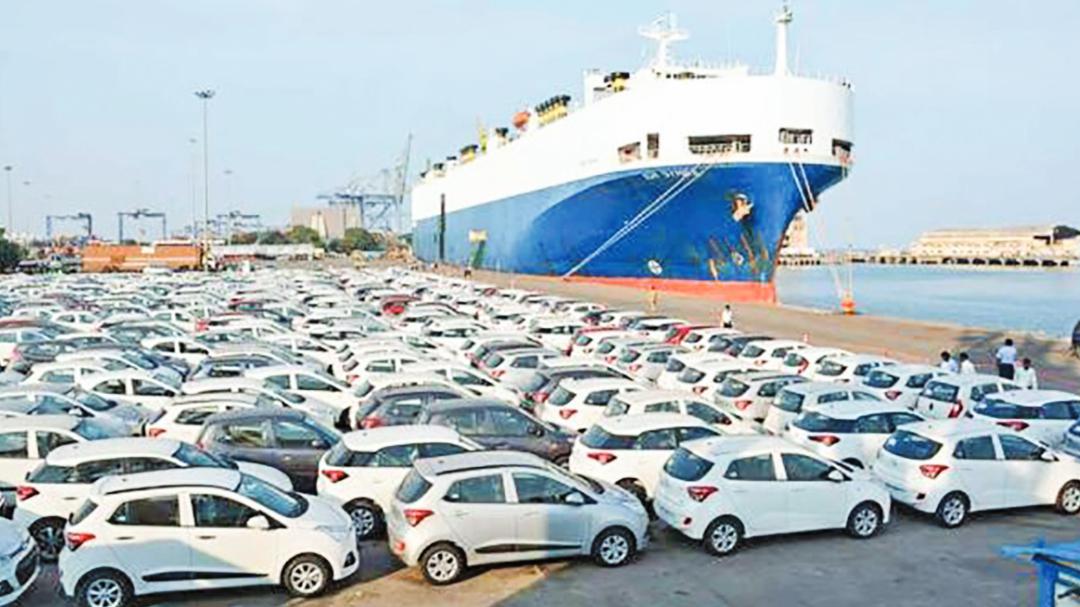
The proposed India-EU FTA outlines significant tariff reductions for automotive trade, allowing India to boost car exports to Europe and enabling European manufacturers to increase imports into India. This reciprocal agreement aims to facilitate a substantial increase in bilateral automotive trade, with specific quotas and phased duty reductions for various vehicle categories and pric…
Imagine India and Europe are making a special deal, like trading cards. India can send 250,000 cars to Europe each year, and the tax on them will get super small, eventually disappearing after five years, making them cheaper for Europeans. In return, Europe can send 100,000 cars to India with lower taxes too. It's like a big swap to help both sides sell more cars!
Analysis
The draft Free Trade Agreement (FTA) between India and the European Union marks a pivotal moment for the automotive industries of both regions, outlining a structured approach to liberalize trade in passenger vehicles. A key provision allows India to export an initial 2.5 lakh passenger cars annually to the EU market. This quota is set to expand significantly, reaching 4 lakh units over a ten-year period, indicating a long-term vision for enhanced trade relations. The phased reduction of import duties, starting at eight percent and progressively decreasing to zero over five years, is designed to make Indian-manufactured vehicles more competitive in European markets. This gradual approach provides a predictable framework for manufacturers to adapt their supply chains and production strategies, fostering greater integration into the global automotive value chain. The focus on internal combustion engine (ICE) and hybrid vehicles, particularly those priced up to 50,000 Euros, suggests an emphasis on mainstream market segments, which could drive substantial volume growth for Indian exporters.
2.5 Lakh Cars
The initial allowance for India to export 2.5 lakh passenger cars to the European Union annually under the FTA draft represents a substantial opening for the Indian automotive sector. This quota is specifically designed for vehicles manufactured in India, providing a direct pathway for domestic production to access one of the world's largest and most affluent consumer markets. The phased reduction of import duties, from an initial eight percent down to zero over five years, is a critical incentive. This progressive decrease in tariffs will significantly lower the cost of Indian cars for European consumers, enhancing their price competitiveness against locally produced or imported vehicles from other regions. The agreement's structure, which anticipates an increase to 4 lakh units within ten years, signals a long-term commitment to fostering a robust export corridor for Indian automobiles. This could lead to increased investment in manufacturing capabilities within India, job creation, and the development of more sophisticated vehicle models tailored for international standards.
50,000 Euros
A crucial aspect of the tariff concessions outlined in the FTA draft is the price ceiling of 50,000 Euros for vehicles eligible for reduced duties. This threshold applies to both internal combustion engine (ICE) and hybrid vehicles exported from India to the EU. By focusing on this price segment, the agreement targets a broad range of mid-to-high segment vehicles, which typically represent a significant portion of passenger car sales. The exclusion of quota-based concessions for vehicles priced above 50,000 Euros suggests a strategic decision to protect the premium and luxury segments of the European market, or perhaps to encourage higher value-added production within the EU itself. For Indian manufacturers, this means optimizing their product portfolios to meet the specifications and quality standards required for the European market within this price bracket. The gradual reduction of duties to zero percent over five years for these vehicles will make them increasingly attractive to European buyers, potentially fostering brand recognition and market penetration for Indian automotive brands.
1.6 Lakh Cars
The reciprocal nature of the India-EU FTA is evident in the provisions for European car manufacturers to import vehicles into India. The agreement allows for an initial import of 1 lakh cars into India at reduced tariff rates, a figure that is projected to rise to 1.6 lakh units annually over a ten-year period. This concession primarily covers ICE and non-plug-in hybrid cars, with varying tariff slabs based on price. For instance, cars priced between 15,000 and 35,000 Euros will face a 35 percent import duty in the first year, while those between 35,000 and 50,000 Euros, and above 50,000 Euros, will incur a 30 percent duty. This structured approach to import duties aims to balance market access for European manufacturers with the protection of India's domestic automotive industry. The phased increase in import quotas and the differentiated tariff structure reflect a careful negotiation to ensure mutual benefits, allowing European brands to expand their presence in the rapidly growing Indian market while managing the impact on local production.
Key points
- India can export 2.5 lakh passenger cars annually to the EU under the FTA draft.
- Export duties for Indian cars to the EU will start at 8% and reduce to 0% over five years.
- These concessions apply to ICE and hybrid vehicles priced up to 50,000 Euros.
- European car manufacturers can import 1 lakh cars into India with reduced tariffs in the first year.
- EU car imports into India will increase to 1.6 lakh units annually over ten years.
- The FTA is expected to come into force from next year.
This FTA could significantly boost India's automotive exports, driving growth in manufacturing, creating jobs, and enhancing India's position as a global production hub. The reduced tariffs will make Indian cars more competitive in the lucrative European market, potentially leading to increased foreign investment in India's auto sector and greater technological exchange.
While beneficial, the agreement's impact on India's domestic market could see increased competition from European imports, potentially challenging local manufacturers, especially in the higher price segments. The phased tariff reductions might also be slower than some industry players desire, delaying the full realization of benefits.
Market signals
- TATAMOTORS As a major Indian automotive manufacturer, Tata Motors stands to benefit from increased export opportunities to the EU under reduced tariffs.
- MARUTI Maruti Suzuki, a leading passenger vehicle maker in India, could leverage the FTA to expand its presence in the European market.
- VOW3 European carmakers like Volkswagen will gain increased access to the growing Indian market with reduced import duties.
AI-generated analysis of potential market relevance. Not financial advice.