Indian actor's video with endangered gibbon sparks investigation
A video of popular Tamil actor Vikram cuddling an endangered lar gibbon has prompted an investigation by Indian wildlife officials into the animal's origins and legal possession.
Intelligence analysis by Gemini 2.5 Flash
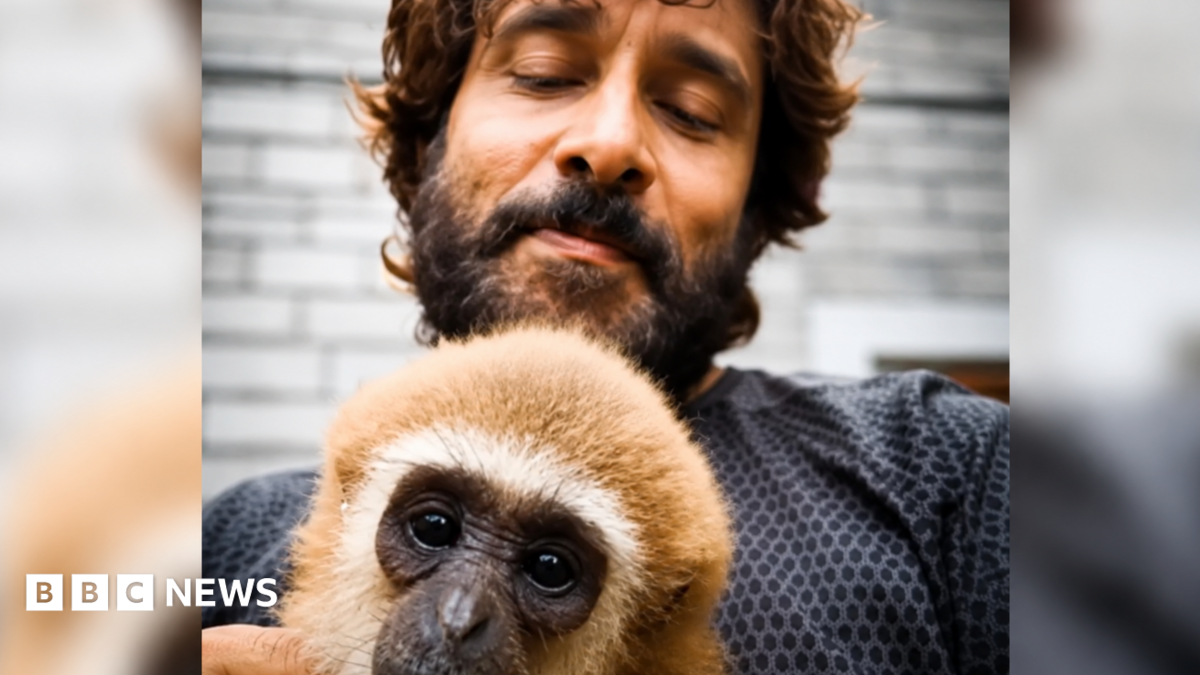
Indian wildlife authorities are investigating how an endangered lar gibbon came to be at a private home in Chennai after actor Vikram posted a video with it. The species is protected under international and Indian laws, and officials are tracing the animal's journey from Malaysia, through Manipur, to Tamil Nadu, scrutinizing permits and documentation at each stage.
Imagine there are special, rare animals, like the lar gibbon, that are like VIPs in the animal world because there aren't many left. To keep one, you need super special permission, like a secret handshake and lots of paperwork, to make sure it's safe and not stolen. A famous actor was seen with one, and now the animal police are checking if all the rules were followed, tracing the gibbon's journey like detectives to make sure it wasn't brought in illegally.
Analysis
The controversy surrounding actor Vikram's video with a lar gibbon has brought significant attention to the complex issue of exotic animal possession and trade within India. The incident, which quickly went viral, has forced wildlife authorities to launch a detailed investigation into the animal's provenance, revealing a multi-stage transfer process that raises questions about regulatory compliance. This case serves as a high-profile example of the broader challenges faced by conservation efforts in a region often identified as a hotspot for illegal wildlife trafficking.
Vikram
Vikram, a prominent and award-winning actor in India's Tamil-language film industry, found himself at the center of a wildlife controversy after posting a video on Instagram. The clip, which showed him interacting with a lar gibbon, was swiftly deleted but not before it garnered widespread attention and media reports. While Vikram has not publicly commented on the matter, his public relations officer indicated that a statement might be issued later. The actor's celebrity status has undoubtedly amplified the reach and impact of this story, drawing national headlines and intensifying scrutiny on the legalities surrounding exotic pets.
His involvement, even if indirect, has inadvertently shone a spotlight on the often-opaque world of exotic animal ownership. The initial media reports, which suggested the gibbon might be his new pet, fueled public interest and concern, prompting the rapid response from wildlife officials. This incident demonstrates how public figures can, intentionally or not, influence public perception and awareness regarding sensitive issues like wildlife conservation, making their actions subject to heightened scrutiny.
Lar Gibbons
Lar gibbons are small apes native to Southeast Asia, specifically found in countries like Thailand, Myanmar, and Malaysia. They are classified as an endangered species, primarily due to severe threats from habitat loss, hunting, and the pervasive illegal pet trade. Their protected status is reinforced by CITES (the Convention on International Trade in Endangered Species of Wild Fauna and Flora), an international agreement that imposes stringent controls on the trade of such vulnerable animals. India, as a signatory to CITES, has integrated these protections into its national wildlife laws, requiring permits and registration for the possession and transfer of CITES-listed species.
The legal framework in India mandates that individuals wishing to import exotic animals must obtain a Directorate General of Foreign Trade (DGFT) permit, a no-objection certificate, and a wildlife conservator's certificate. These regulations are designed to prevent illicit trade and ensure the welfare of protected species. The presence of a lar gibbon in a private residence in Chennai, therefore, immediately triggered concerns about whether these comprehensive legal requirements were met, given the species' endangered status and the tight international controls on its movement.
Manipur
The investigation into the lar gibbon's origins has traced a complex path, leading officials over 2,000 kilometers to India's northeastern state of Manipur. This region, bordering Myanmar, is unfortunately known as a significant route for the illegal trade of exotic wildlife. Records from India's PARIVESH portal, an official platform for registering exotic animals, indicate that eight lar gibbons, including the one in question, were declared by a Manipur-based individual in 2020, with Malaysia listed as their country of origin. This initial declaration is a critical point in the investigation, establishing a potential entry point into India.
Further investigation revealed a series of transfers: three gibbons were moved from Manipur to Perundurai in Tamil Nadu's Erode district in June of the current year, ostensibly for adoption. Subsequently, in August, one male and one female gibbon were transferred from Perundurai to Vikram's relative in Chennai. A key missing piece in this chain is the documentation proving that permission from Tamil Nadu's Chief Wildlife Warden was obtained for the animals to enter the state. The Wildlife Crime Control Bureau (WCCB), a federal agency, has also become involved, emphasizing the need to verify all documents and ensure compliance with CITES and national wildlife protection laws. The ongoing probe aims to establish the precise origins and legality of each step in the gibbons' journey, potentially uncovering a wider network of illegal trade.
Key points
- Indian actor Vikram posted a video with an endangered lar gibbon, which was later deleted, sparking a wildlife investigation.
- Lar gibbons are an endangered species, protected under CITES and Indian wildlife laws, with strict rules governing their possession and trade.
- The investigation by Tamil Nadu's forest department and the federal Wildlife Crime Control Bureau is tracing the gibbon's origins and transfer history.
- Records indicate the gibbon was among eight declared on India's PARIVESH portal in 2020, originating from Malaysia and transferred from Manipur to Tamil Nadu.
- Officials are scrutinizing whether necessary permits and documentation were obtained for the gibbon's movement and possession at each stage.
The high-profile nature of this investigation could significantly raise public awareness about the illegal wildlife trade and the plight of endangered species. Increased scrutiny and enforcement, spurred by this case, might lead to stricter adherence to wildlife protection laws and deter future illicit activities, ultimately benefiting conservation efforts.
Despite the investigation, there's a risk that the complexities of tracing exotic animals and the potential for loopholes in documentation could allow illegal trade networks to persist. If penalties are not sufficiently deterrent or if the full extent of the trafficking is not uncovered, it could embolden those involved in the illicit wildlife trade.