India's Modi forgives student protesters who abused him, says punishing them 'will not change situation'
Indian Prime Minister Narendra Modi said he wanted to forgive students who hurled expletives at him during protests in July, saying that punishing them and forcing them to appear repeatedly in court would not help resolve the situation.
Intelligence analysis by Llama
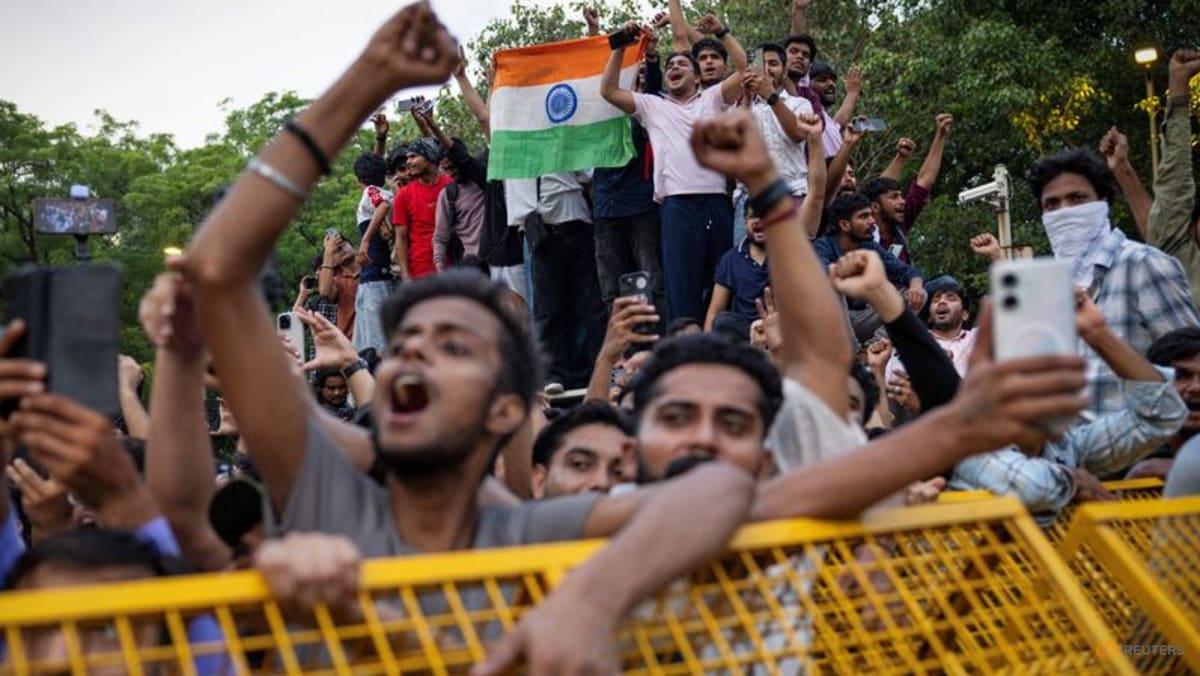
Indian Prime Minister Narendra Modi has forgiven students who abused him during protests in July, saying that punishing them would not change the situation. Modi's decision comes after the protests, which were sparked by the leak of national exam papers, forced a retest for 2 million students.
Imagine you're a student in India, and you take a big exam to get into college. But someone cheats and leaks the answers, so you have to take the exam again. You're really upset, so you go to the streets to protest and demand that the government does something about it. The government says sorry and promises to make things right, but some people are still mad and want to punish the students who protested. The prime minister says that punishing them won't help, and that we should focus on making sure this doesn't happen again in the future.
Analysis
A $60B Vote of Confidence
The protests in India have been a significant challenge for the government, with thousands of students taking to the streets to demand reforms in the exam system and the dropping of police cases against protesters. The government's response has been a key issue, with many calling for greater transparency and accountability in the exam system. The protests have also highlighted the growing youth population in India, with many young people feeling disillusioned with the current system and seeking change.
Why Cursor?
The protests have been sparked by the leak of national exam papers, which has led to a retest for 2 million students. The leak has been attributed to a group of students who were unhappy with the current system and sought to bring attention to their grievances. The protests have been peaceful, with many students using social media to organize and mobilize support. The government's response has been to file cases against hundreds of demonstrators, but many are calling for greater accountability and transparency in the exam system.
The Road Ahead
The protests in India have significant implications for the country's future. The growing youth population is a key demographic, and their desire for change is likely to shape the country's politics and economy in the years to come. The government's response to the protests will be a key test of its commitment to reform and its ability to address the grievances of young people. The protests have also highlighted the need for greater transparency and accountability in the exam system, and it is likely that the government will be forced to make significant changes in response to the protests.
Key points
- Indian Prime Minister Narendra Modi has forgiven students who abused him during protests in July
- The protests were sparked by the leak of national exam papers, which led to a retest for 2 million students
- The government has filed cases against hundreds of demonstrators, but many are calling for greater accountability and transparency in the exam system
- The protests have highlighted the growing youth population in India and their desire for change
- The government's response to the protests will be a key test of its commitment to reform and its ability to address the grievances of young people
The protests in India have shown that young people are willing to take action to demand change. If the government is able to respond to their demands and make significant reforms in the exam system, it could lead to a more transparent and accountable system that benefits all students.
The protests in India have also highlighted the risk of violence and unrest if the government is unable to respond to the demands of young people. If the government is seen as out of touch and unwilling to listen to the concerns of young people, it could lead to further unrest and potentially even more violence.