Indonesia takes on Malaysia in battle over palm oil pricing
Indonesia is launching a new commodity exchange to set prices for palm oil, nickel, and coal, aiming to gain pricing power currently held by Malaysia. The exchange is slated to begin operations on January 1.
Intelligence analysis by Gemini 2.5 Flash Lite
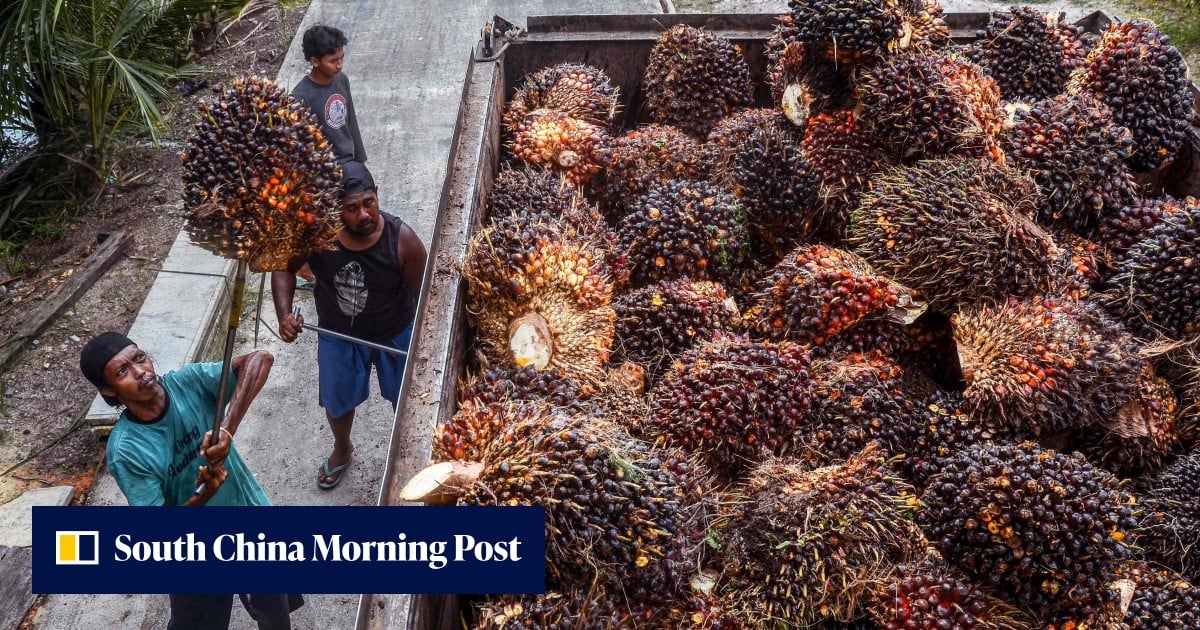
Indonesia, the world's largest palm oil producer, is challenging Malaysia's dominance in setting global prices for the commodity. President Prabowo Subianto announced a new Strategic Mineral and Commodity Exchange (BMKS) to oversee palm oil, nickel, and coal, aiming for greater state control over export volumes, prices, and revenue, starting January 1.
Imagine Indonesia grows the most apples in the world but lets another country decide how much they cost. Now, Indonesia wants to make its own apple price list so they can earn more money from their hard work, not just grow them.
Analysis
Strategic Mineral and Commodity Exchange (BMKS)
Indonesia's ambition to establish its own Strategic Mineral and Commodity Exchange (BMKS) signifies a significant shift in its approach to global commodity markets. President Prabowo Subianto has explicitly stated the nation's desire to move beyond being a mere producer to becoming a price-setter for commodities such as palm oil, nickel, and coal. This initiative, scheduled to commence operations on January 1, is under the purview of the Financial Services Authority, which has appointed a deputy commissioner to oversee its regulation and oversight. The exchange is intended to provide greater state control over export volumes, prices, and the revenue generated from these vital resources, reflecting a broader trend of resource nationalism in commodity-exporting nations.
Bursa Malaysia
The establishment of the BMKS directly challenges the long-standing dominance of Bursa Malaysia's crude palm oil futures contract (FCPO). For years, the FCPO has served as the principal reference for pricing and hedging in the global palm oil industry. Despite Indonesia's superior physical supply, it has historically deferred to Malaysian benchmarks for price discovery. Analysts, however, express skepticism about whether Indonesia's new exchange can readily persuade international traders to abandon the established FCPO contract. The inertia of existing market practices and the deep liquidity of Bursa Malaysia present formidable obstacles, suggesting that dominance in physical supply does not automatically confer pricing power.
Pricing Power
The core of Indonesia's strategy lies in wresting greater pricing power from international markets. By creating its own exchange, Jakarta aims to establish new benchmarks that reflect its position as a leading producer. This move is part of a larger economic policy shift under President Prabowo, focused on enhancing national revenue and asserting greater sovereignty over its natural resources. The success of the BMKS will hinge on its ability to attract sufficient trading volume and establish credibility among global buyers and sellers. If successful, it could lead to a recalibration of global commodity prices and reduce reliance on existing, often externally influenced, pricing mechanisms, potentially benefiting Indonesia's trade balance and economic influence.
Key points
- Indonesia is launching a new Strategic Mineral and Commodity Exchange (BMKS) to set prices for palm oil, nickel, and coal.
- The exchange aims to challenge Malaysia's dominance in palm oil pricing, with operations starting January 1.
- President Prabowo Subianto wants Indonesia to become a price-setter, not just a producer, for global commodities.
- Analysts are skeptical about whether the new exchange can displace Bursa Malaysia's established crude palm oil futures contract (FCPO).
If successful, Indonesia's new exchange could lead to more stable and potentially fairer pricing for key commodities, benefiting Indonesian producers and strengthening the nation's economic leverage on the global stage. It might also encourage other resource-rich nations to seek greater control over their commodity pricing.
The new exchange faces significant hurdles, including convincing international traders to shift from established benchmarks like Bursa Malaysia's FCPO, which could result in fragmented markets or limited adoption, leaving Indonesia's pricing influence largely unchanged.