Industrial Software Leaders Build Secure, Autonomous AI Engineers With NVIDIA NemoClaw
NVIDIA says NemoClaw lets industrial firms build secure AI engineers that automate design, simulation and reporting. Cadence, Siemens, Synopsys and startups are already using it.
Intelligence analysis by GPT-5.4 Mini
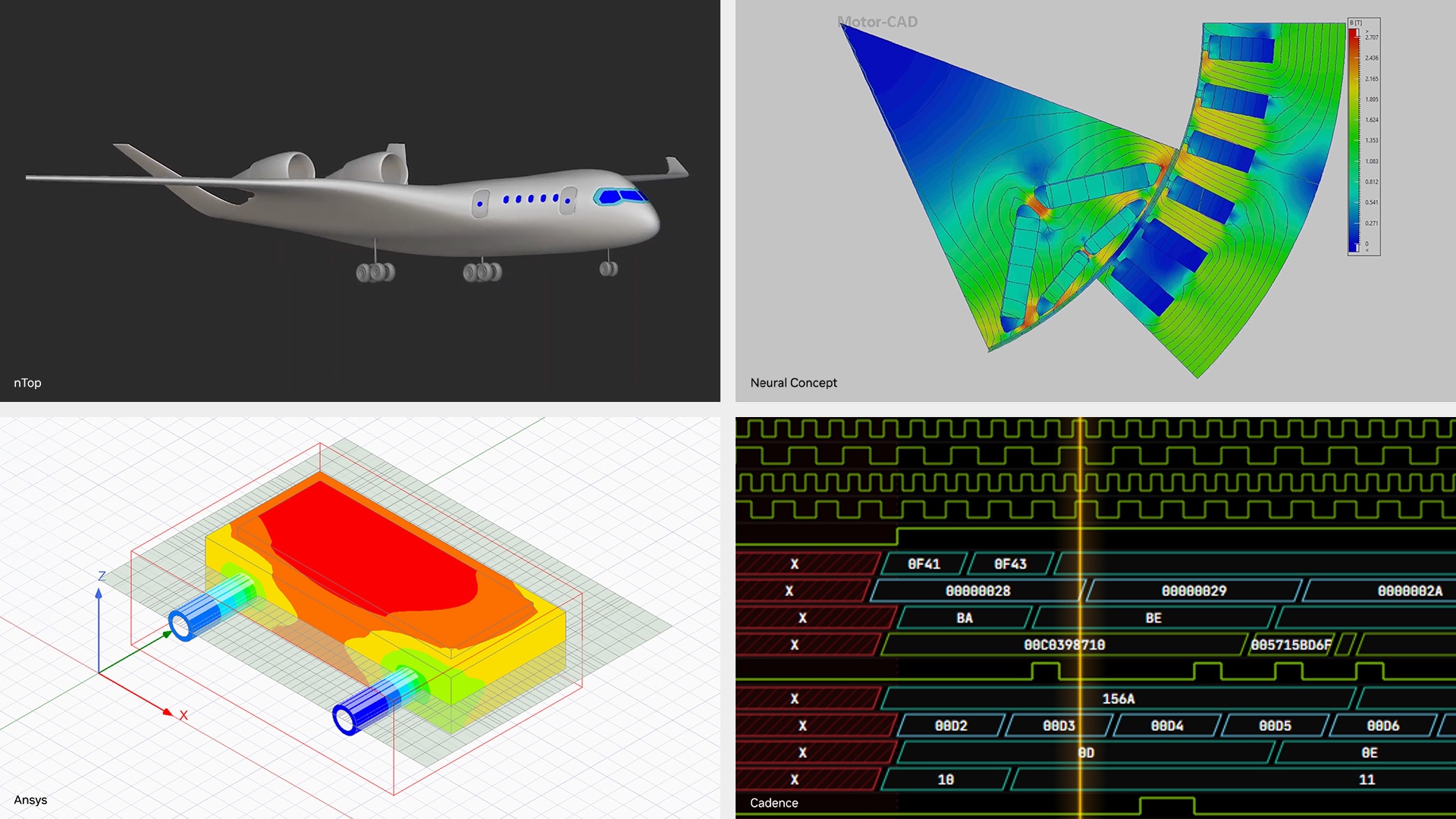
At COMPUTEX in Taipei, NVIDIA is positioning NemoClaw as a secure runtime for long-running AI engineers that can handle design, meshing, simulation setup, debugging and reporting. The pitch is that industrial workflows can move from weeks or days to hours.
NVIDIA is showing a robot helper for engineers. Instead of doing one tiny task, it can help with many steps in a big project, like drawing, testing, and writing reports, while staying inside strict safety rules.
Analysis
What NVIDIA is pitching
NVIDIA says the remaining bottleneck in industrial engineering is no longer raw simulation speed, but the surrounding workflow: CAD, meshing, setup, debugging, post-processing and report generation. At GTC Taipei at COMPUTEX, the company is showing autonomous AI agents that automate that end-to-end process.
The core of the approach is NemoClaw, which NVIDIA describes as an open blueprint for building specialized, long-running agents with a secure runtime and frontier models. It can plug into orchestration frameworks such as OpenClaw and Hermes, includes a model router and NeMo libraries for customization, and can run from DGX Spark personal AI supercomputers through enterprise data centers and cloud providers. NVIDIA says OpenShell, the open-source runtime at the core, controls access to files, networks and tools and applies policy-based security at every layer.
Who is using it
NVIDIA says industrial software leaders are building AI engineers for CAE and EDA across automotive, aerospace, semiconductors and manufacturing. Cadence is building an autonomous RTL engineer that orchestrates ChipStack for design and verification, with NVIDIA saying that workflow is cutting RTL verification from weeks to hours. Dassault Systèmes is productizing its 3DEXPERIENCE Agentic Platform in a secured environment powered by NemoClaw and OpenShell. Siemens is integrating the stack into Fuse EDA AI Agent for semiconductor, 3D integrated circuit and PCB design. Synopsys is applying it to end-to-end engineering workflows, including an Ansys Icepak demo for GPU cooling.
The startup examples follow the same pattern: Flexcompute for multiphysics optics design, Luminary for training physics models, Neural Concept for electric motor design, nTop for geometry iteration, PhysicsX for thermal simulation with Microsoft Surface, P-1 AI for mechanical and electrical engineering, SimScale for simulation agents, and Synera for injection molding. The throughline is the same: long-running agents are being used to chain multiple specialist tools into one managed workflow.
Key points
- NVIDIA says NemoClaw is an open blueprint for long-running, secure AI engineers.
- OpenShell is presented as the runtime that controls agent access to files, networks and tools.
- Cadence, Dassault Systèmes, Siemens and Synopsys are among the industrial software companies involved.
- NVIDIA says the agents can compress tasks like RTL verification, geometry iteration and thermal simulation from weeks or days to hours.
- Startups including Flexcompute, Luminary, Neural Concept, nTop, PhysicsX, P-1 AI, SimScale and Synera are also building on the stack.
If these systems work well in production, engineering teams could finish simulation-heavy tasks much faster and spend more time on design decisions. NVIDIA’s examples also suggest the same agent setup could be reused across many industries, from chips to aircraft to cooling systems.
The article also shows how much these agents depend on complex orchestration, security controls and tool integrations working correctly. If the runtime, model routing or policy enforcement fails, the very workflows meant to save time could become harder to trust and maintain.